Right then. Alabais, Kangals, and Anatolian Shepherds aren’t just big dogs, they’re working livestock guardian breeds, bred over centuries to patrol vast territories, stay alert through the night, and maintain a lean, powerful frame on a diet that would leave many companion breeds either underfed or seriously overweight. Feeding them like an average large breed dog, using the same portion guidelines and the same generic “large breed” kibble, often misses the mark badly. This guide breaks down what is the Best Guard Dogs diet, nutritionally, how to get portions right, and the Amazon UK products worth having in your feeding setup.
Why Guard Dog Diet & Nutrition Is Different
Livestock guardian breeds were developed for a working lifestyle very different from the average companion dog’s, and their nutritional needs reflect that heritage. There are five key differences worth understanding before choosing a feeding approach.
🏋️ Giant Size With Slower Growth
Alabais, Kangals, and Anatolians are giant breeds that can take up to two to three years to reach full maturity and considerably longer than smaller breeds. Feeding a growth-formula puppy food designed for faster-maturing breeds, or overfeeding during the growth phase, is strongly linked to joint problems like hip and elbow dysplasia in giant breeds.
Signs: Rapid weight gain during puppyhood, visible joint strain or awkward gait in a growing puppy.
Solution: A large or giant-breed-specific puppy formula with controlled calcium and calorie levels, feeding to a steady, moderate growth rate rather than maximum growth.
🔋 Lower Calorie Needs Than Their Size Suggests
Despite their size, working guardian breeds bred for endurance over explosive energy often have relatively moderate calorie requirements per kilogram of bodyweight compared to high-drive working breeds, particularly once they reach adulthood and settle into a patrol-and-rest routine rather than constant high-intensity activity.
Signs: Dog gains weight steadily despite “normal” large-breed portion sizes on packaging.
Solution: Portion based on your individual dog’s activity level and body condition, not just the weight-based chart on the food bag.
🍗 High Protein Needs for Muscle Maintenance
These breeds carry substantial muscle mass that needs ongoing support, particularly in working or highly active individuals, making a genuinely high-quality, meat-first protein source more important than in a sedentary companion breed.
Signs: Muscle tone appears soft or reduced despite adequate exercise. Slow recovery after activity.
Solution: A diet with a clearly named, high-quality animal protein as the first ingredient, at an appropriate percentage for an active large breed.
🦴 Joint Support Throughout Life, Not Just in Old Age
Given their size and predisposition to hip and elbow dysplasia, joint-supporting nutrients such as glucosamine and chondroitin are worth considering from adulthood onward, not only once mobility issues appear.
Signs: Stiffness after rest, reluctance to jump or climb stairs, more pronounced in adult and senior dogs.
Solution: A diet formulated for large/giant breeds with added joint support, or a separate joint supplement under vet guidance.
🍽️ Working Dogs May Need Different Feeding Schedules
Dogs actively working as livestock guardians outdoors, patrolling and staying alert through the night, may have different energy demands and feeding timing needs compared to a companion Alabai or Anatolian living primarily indoors as a family pet.
Signs: Working dogs losing condition on a companion-dog feeding schedule, or companion dogs gaining weight on a working-dog portion size.
Solution: Adjust both portion size and feeding timing to match your individual dog’s actual activity level and role, rather than a generic breed guideline.
Quick Reference Guide: Best Guard Dogs Diet
| What You’re Seeing | Likely Cause | Fix |
| Puppy gaining weight rapidly, joint strain | Overfeeding/wrong growth formula | Large/giant-breed puppy food, controlled growth rate |
| Steady weight gain on “normal” portions | Calorie needs overestimated for size | Portion by body condition and activity, not weight chart alone |
| Reduced muscle tone despite exercise | Insufficient quality protein | High-quality, meat-first protein source |
| Stiffness, reluctance to jump | Early joint strain | Joint-supporting nutrients from adulthood |
| Working dog losing condition | Feeding schedule doesn’t match activity | Adjust portions/timing to actual role and output |
| Dog begging or scavenging between meals | Meal timing/spacing mismatch | Reassess feeding frequency and portion distribution |
How to Feed Correctly: Step-by-Step Guide for Guard Dogs Diet
What you’ll need to know before setting a feeding plan:
- Your dog’s current weight, age, and body condition score
- Whether they’re a working outdoor guardian or a primarily indoor companion
- Any known joint issues or breed-specific health concerns
- Growth stage (puppy, adolescent, adult, senior)
Step 1: Choose a large or giant-breed-specific formula
For puppies especially, this is non-negotiable, giant-breed puppy formulas control calcium and calorie density specifically to support slower, steadier bone growth, reducing the risk of developmental joint problems.
Step 2: Feed to body condition, not just the bag’s chart
Weight charts on food packaging are a starting point, not a rule. Regularly check your dog’s body condition, you should be able to feel (though not necessarily see) the ribs with light pressure, with a visible waist from above and adjust portions accordingly.
Step 3: Prioritise named, high-quality protein sources
Look for a specific meat source (chicken, lamb, beef) named as the first ingredient, rather than vague terms like “meat meal” or “animal derivatives,” particularly given these breeds’ muscle maintenance needs.
Step 4: Split meals appropriately for the breed’s size
Large and giant breeds are at increased risk of bloat (gastric dilatation-volvulus), a serious and potentially fatal condition. Feeding two or more smaller meals a day, rather than one large meal, is commonly recommended to help reduce this risk.
Step 5: Introduce joint support proactively
Rather than waiting for signs of stiffness, consider a diet with built-in joint support or a vet-recommended supplement starting in early adulthood, particularly for dogs with a family history of joint issues.
Step 6: Adjust for activity level realistically
A working livestock guardian patrolling several acres daily has very different calorie needs to the same breed living as a house companion with moderate walks. Base portions on your dog’s actual output, not the breed’s working reputation alone.
Step 7: Reassess at every life stage
Nutritional needs shift meaningfully from puppy to adolescent to adult to senior in giant breeds, given their extended growth period and predisposition to joint and weight-related issues later in life. Revisit the feeding plan at each stage rather than setting it once and leaving it.
What NOT to Do with Guard Dogs Diet
🚫 Don’t feed a standard puppy formula to a giant breed puppy: Formulas designed for average or small breeds are typically too calorie- and calcium-dense for the slower, more careful growth giant breeds need, increasing developmental joint risk.
🚫 Don’t rely solely on the weight-based feeding chart on the packaging: These are general guidelines; your individual dog’s activity level, metabolism, and body condition matter more than the number on the bag.
🚫 Don’t feed one large meal a day to a large or giant breed: This is linked to increased bloat risk in deep-chested large breeds; splitting into two or more smaller meals is the safer default.
🚫 Don’t assume a working outdoor dog needs dramatically more food than a companion dog of the same breed: Needs vary by actual activity and climate, not assumption; overfeeding based on breed reputation alone leads to unnecessary weight gain.
🚫 Don’t wait until joint symptoms appear to consider joint support: Given these breeds’ predisposition to hip and elbow issues, proactive support from adulthood is generally more effective than reactive treatment once stiffness has set in.
The Best Amazon UK Feeding Products for Guard Dogs Diet
1. Royal Canin Giant Puppy – Giant Breed Puppy Food
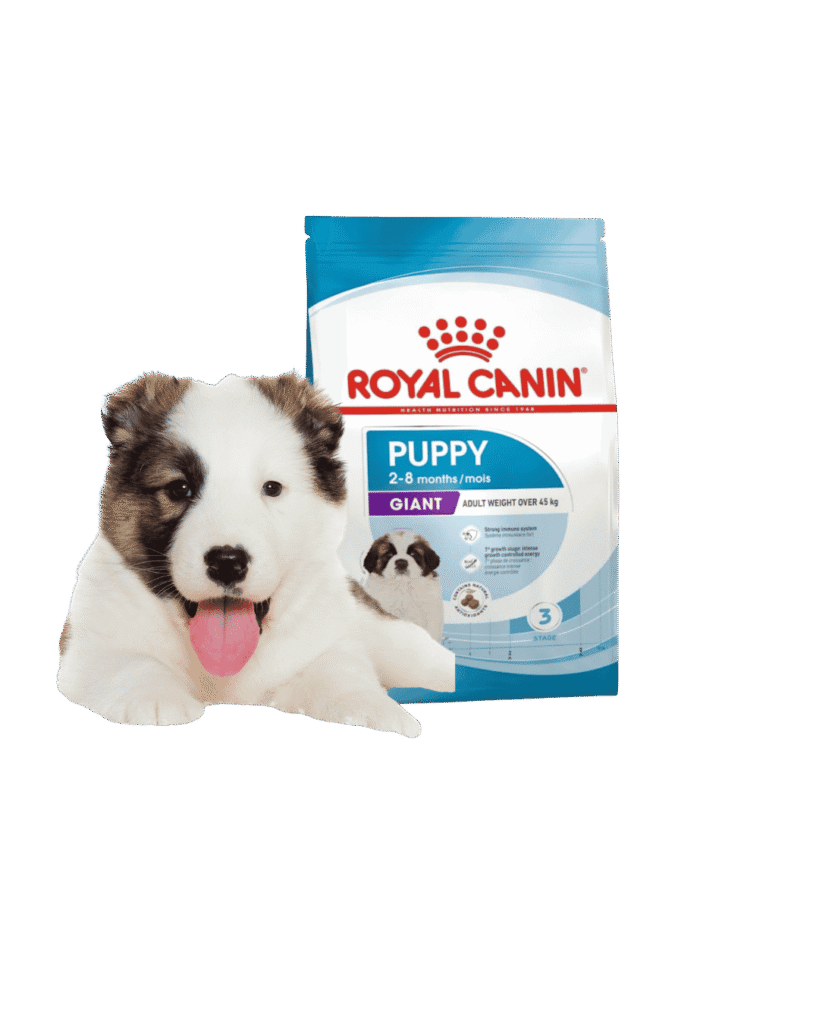
Specially formulated for puppies that will grow into giant breeds weighing over 45kg, Royal Canin Giant Puppy is designed to support the slower, steadier growth that livestock guardian breeds need. Its carefully balanced calcium and phosphorus levels help promote healthy bone development, while controlled energy content reduces the risk of excessive weight gain during the rapid growth phase. The formula also includes highly digestible proteins and prebiotics to support digestive health, along with antioxidants that help develop a strong immune system. Royal Canin recommends transitioning to Royal Canin Giant Junior from around 8 months of age until full maturity at 18-24 months.
Best for: Alabai, Kangal, and Anatolian Shepherd puppies from 2 months to around 18-24 months (using the Giant Puppy and Giant Junior range).
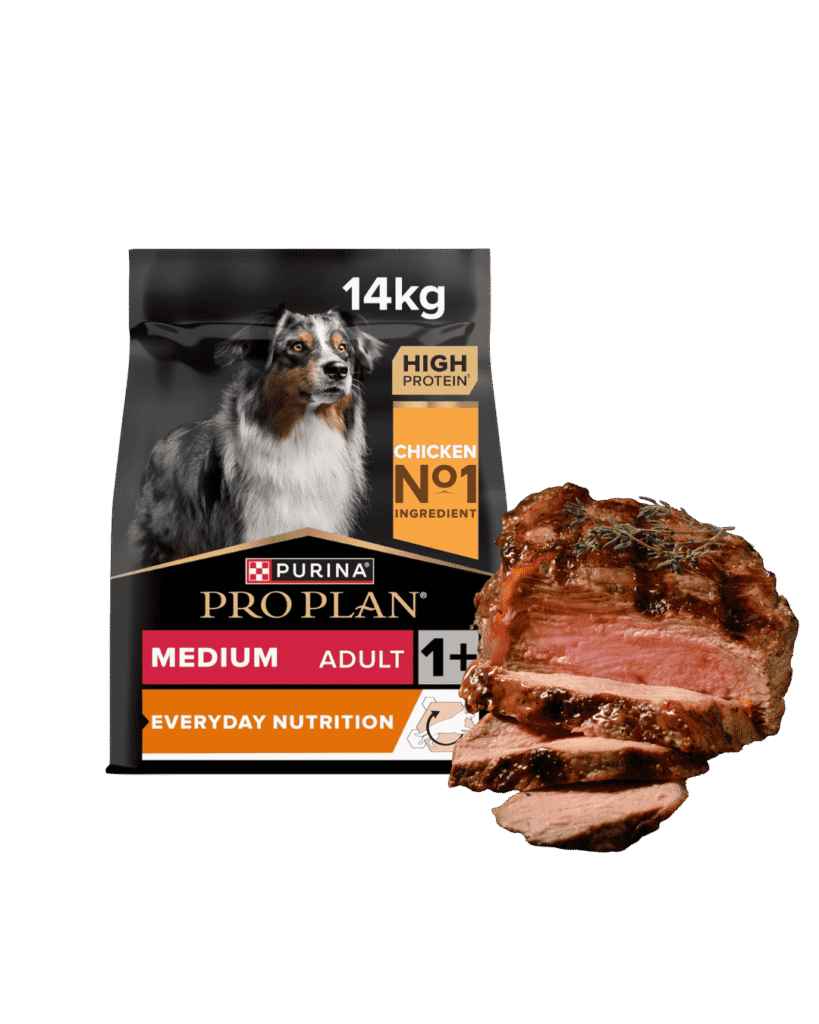
2. Purina Pro Plan Medium Adult Everyday Nutrition – Chicken (High-Protein Adult Dry Food)
A complete adult maintenance formula built around high-quality chicken as the primary protein source, designed to support lean muscle maintenance, daily energy needs, and overall health in active adult dogs. It focuses on clearly named animal protein rather than vague meat derivatives, with a balanced nutrient profile that supports digestion, coat condition, and sustained vitality.
A reliable UK option available on Amazon is Purina Pro Plan Medium Adult Everyday Nutrition – Chicken, a well-balanced formula trusted for everyday feeding and consistent quality.
Best for:
Medium-sized adult dogs with normal to high activity levels who need balanced daily nutrition, steady energy, and muscle maintenance without excess weight gain.
3. Lintbells YuMOVE Active Joint Supplements for Dogs (Glucosamine & Chondroitin Tablets)
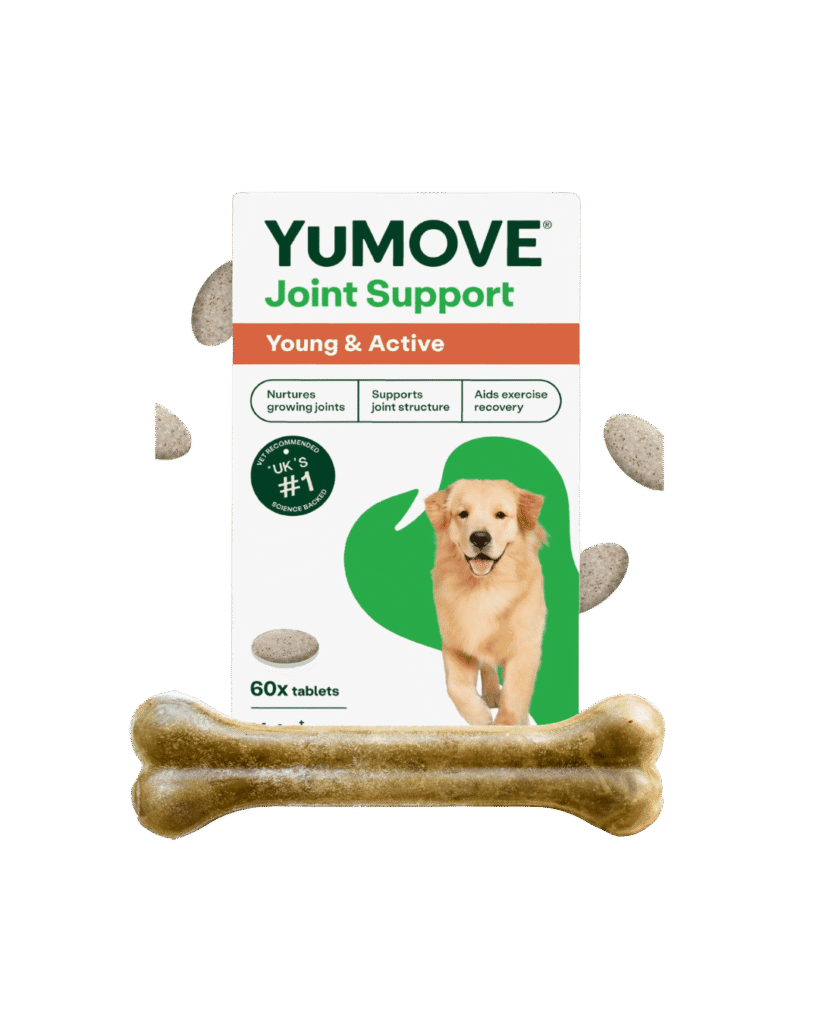
A clinically formulated daily joint supplement designed to support mobility, flexibility, and long-term joint comfort in active and ageing dogs. It contains key ingredients such as glucosamine, chondroitin, and green-lipped mussel, which work together to maintain healthy cartilage and reduce wear on joints under daily physical stress. The formula is designed as a proactive support system rather than a reactive treatment, making it suitable for long-term joint maintenance in working and large-breed dogs.
A well-established UK option available on Amazon is Lintbells YuMOVE Active Joint Supplement Tablets, one of the most widely used mobility supplements for dogs in the UK, trusted for consistent joint support and everyday use.
Best for:
Adult active dogs, working breeds, and senior dogs showing early stiffness or with a genetic predisposition to hip or elbow joint issues.
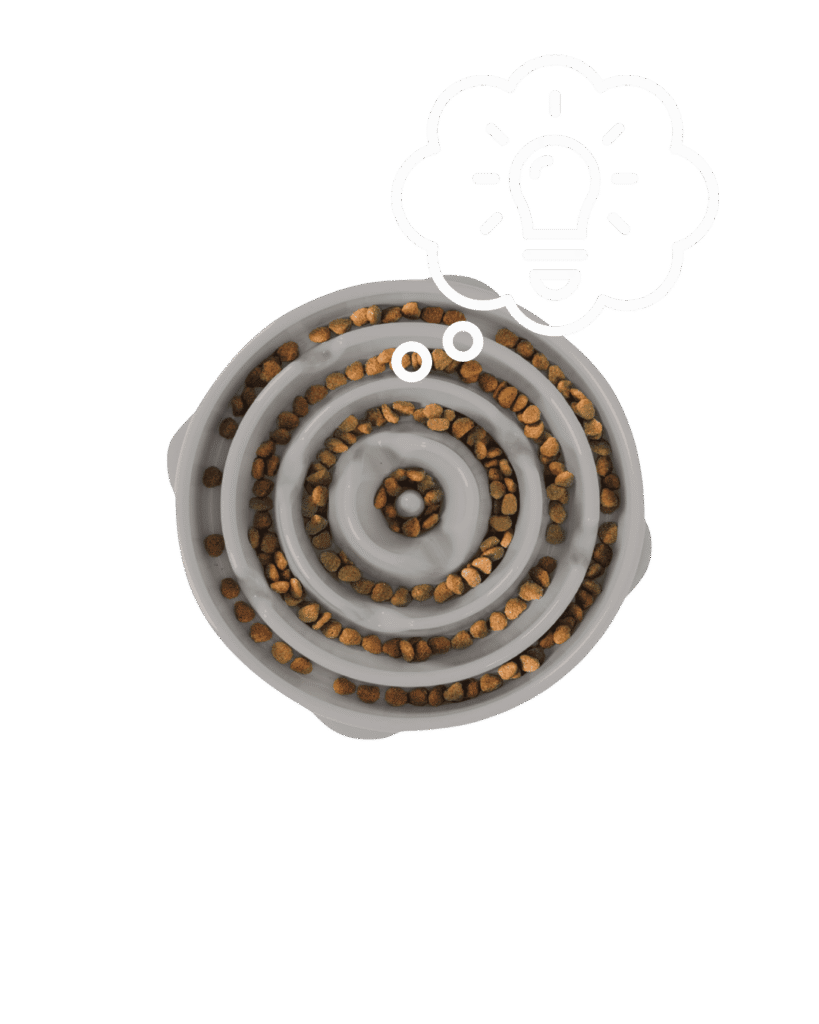
4. Outward Hound Fun Feeder Slow Bowl Large (Slow Feeder Bowl for Dogs)
A specially designed slow feeder bowl featuring maze-style ridges that help regulate eating speed and encourage healthier chewing habits. By slowing down rapid food intake, it supports better digestion and helps reduce the risk of bloating and gastric discomfort, particularly important for large, deep-chested breeds that are more vulnerable to digestive stress when eating too quickly. The structured maze design also provides mild mental stimulation, turning mealtime into a more controlled and engaging activity.
A widely used Amazon UK option is Outward Hound Fun Feeder Slow Bowl (Large), designed specifically for fast eaters and larger breeds needing controlled feeding.
Best for:
Fast-eating dogs, large and giant breeds, and deep-chested breeds prone to bloating and gulping food.
5. TOWEAR Digital Kitchen & Portion Scale (Portion Scale for Large Breed Feeding Control)
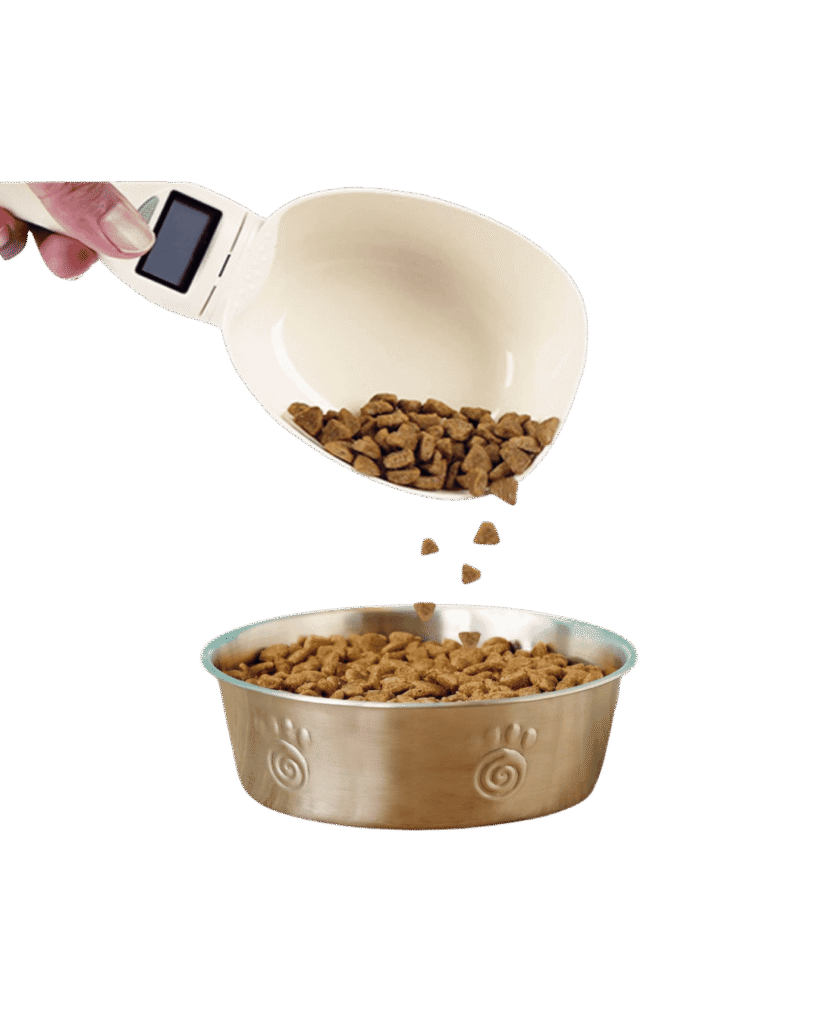
A precise digital portion scale designed to measure exact food quantities, helping owners maintain strict feeding control for large and giant guarding breeds. Unlike smaller companion dogs, breeds such as Alabai, Kangal, and other guardian types require carefully managed calorie intake due to their slower growth rates, heavier frames, and higher risk of joint stress from even minor overfeeding. Accurate portioning ensures consistency in daily nutrition, preventing gradual weight gain that often goes unnoticed in large dogs until it begins affecting mobility and joint health.
A practical UK option available on Amazon is TOWEAR Digital Measuring Kitchen Scale, commonly used for precise pet food portioning and structured feeding plans.
Best for:
Large and giant guarding breeds on controlled diets, working dogs requiring strict calorie management, and owners tracking exact daily food intake for weight and joint health control.
🐕 Amazon UK Guard Dog Diet Kit: Quick Reference Table
| Product | What It’s For | Best Suited To | Amazon UK |
| 🥩 Royal Canin Giant Puppy | Controlled growth, bone development, reduced joint stress during rapid growth phase | Alabai, Kangal, Anatolian Shepherd puppies (2-18/24 months) | Click Here |
| 🍖 Purina Pro Plan Medium Adult Everyday Nutrition – Chicken | Muscle maintenance, daily balanced nutrition | Adult working/companion dogs with moderate to high activity levels | Click Here |
| 🦴 YuMOVE Active Joint Supplements for Dogs | Proactive joint support (cartilage, mobility, long-term joint health) | Adult and senior dogs, working breeds, early stiffness or joint-risk genetics | Click Here |
| 🍽️ Outward Hound Fun Feeder Slow Bowl (Large) | Slower eating, improved digestion, reduced bloat risk | Fast eaters, deep-chested large and giant breeds | Click Here |
| ⚖️ TOWEAR Digital Kitchen & Portion Scale | Precise food portion control, weight management tracking | Large/giant guarding breeds on structured feeding plans | Click Here |
Long-Term Feeding Tips for Guard Dogs Diet
📏 Reassess portions at every life stage: Puppy, adolescent, adult, and senior needs differ significantly in giant breeds, given their extended growth period.
⚖️ Track body condition, not just weight on a scale: A visible waist and ribs felt with light pressure are more meaningful day-to-day indicators than weight alone, especially for breeds with dense muscle mass.
🍽️ Split meals to reduce bloat risk: Two or more smaller meals a day is generally safer than one large meal for large, deep-chested breeds.
🐾 Match feeding to actual role and activity: A working outdoor guardian and an indoor companion of the same breed can have meaningfully different calorie needs; feed the individual dog, not the breed stereotype.
🩺 Involve your vet in major diet changes: Particularly around growth formulas, joint supplements, and any switch prompted by weight or mobility concerns.
FAQs: Feeding Alabais, Kangals, and Anatolian Shepherds
Q: How much should I feed my Alabai, Kangal, or Anatolian Shepherd?
This depends heavily on individual weight, age, and activity level rather than breed alone. Use the feeding chart on your chosen food as a starting point, then adjust based on your dog’s body condition over the following weeks.
Q: Do these breeds need a special large or giant breed puppy food?
Yes, this is one of the most important nutritional decisions for these breeds. A large or giant-breed-specific puppy formula controls calcium and calorie density to support slower, joint-friendly growth, reducing the risk of developmental problems linked to overly fast growth in giant breeds.
Q: Are livestock guardian breeds prone to bloat?
Large, deep-chested breeds in general carry an increased risk of gastric dilatation-volvulus (bloat), a serious and potentially fatal condition. Feeding smaller, more frequent meals and using a slow feeder for fast eaters are commonly recommended precautions, alongside avoiding vigorous exercise immediately before or after meals.
Q: Should a working outdoor guard dog eat more than a companion dog of the same breed?
Often yes, but this should be based on the individual dog’s actual energy output and climate rather than assumed automatically, some companion dogs are surprisingly active, and some “working” dogs spend much of the day resting and alert rather than in constant motion.
Q: When should I start giving my dog a joint supplement?
Many owners of predisposed giant breeds start proactive joint support from early adulthood, rather than waiting for signs of stiffness, though it’s worth discussing timing and dosage with your vet given individual health history.
Q: My Kangal or Anatolian seems underweight despite eating a full portion: what should I check?
First rule out parasites, dental issues, or an underlying medical cause with your vet. If your dog is genuinely healthy, a working or highly active individual may simply need a higher-calorie formula or larger portion than a standard weight chart suggests.
When to Get Veterinary Input about Guard Dogs Diet
Most feeding adjustments can be made at home with careful monitoring, but it’s worth involving your vet if:
- A puppy is gaining weight unusually fast or shows any signs of joint discomfort during growth
- Your adult dog is losing or gaining weight steadily despite consistent portions
- You notice signs associated with bloat, such as a visibly distended abdomen, unproductive retching, or restlessness after eating, this is an emergency requiring immediate veterinary attention
- You’re considering a significant diet change, growth formula switch, or starting a joint supplement
Final Thoughts on Guard Dogs Diet
Alabais, Kangals, and Anatolian Shepherds carry a working heritage that shapes their nutritional needs just as much as it shapes their size and temperament. Getting feeding right means choosing a genuinely giant-breed-appropriate formula, feeding to body condition rather than a generic chart, supporting joints proactively, and adjusting for your individual dog’s real activity level rather than breed assumptions alone.
Our top picks? A large/giant breed puppy formula from day one for growing dogs, transitioning to a high-protein adult formula with a named meat source, and a joint supplement introduced proactively in early adulthood rather than waiting for stiffness to appear.
Looking for more guard breed advice? Read our guide on what Alabais actually need to rest, or browse our full dog care and nutrition section on FetchStop.
⚠️ Affiliate Disclosure: This post contains Amazon affiliate links. If you purchase through these links, we may earn a small commission at no extra cost to you.