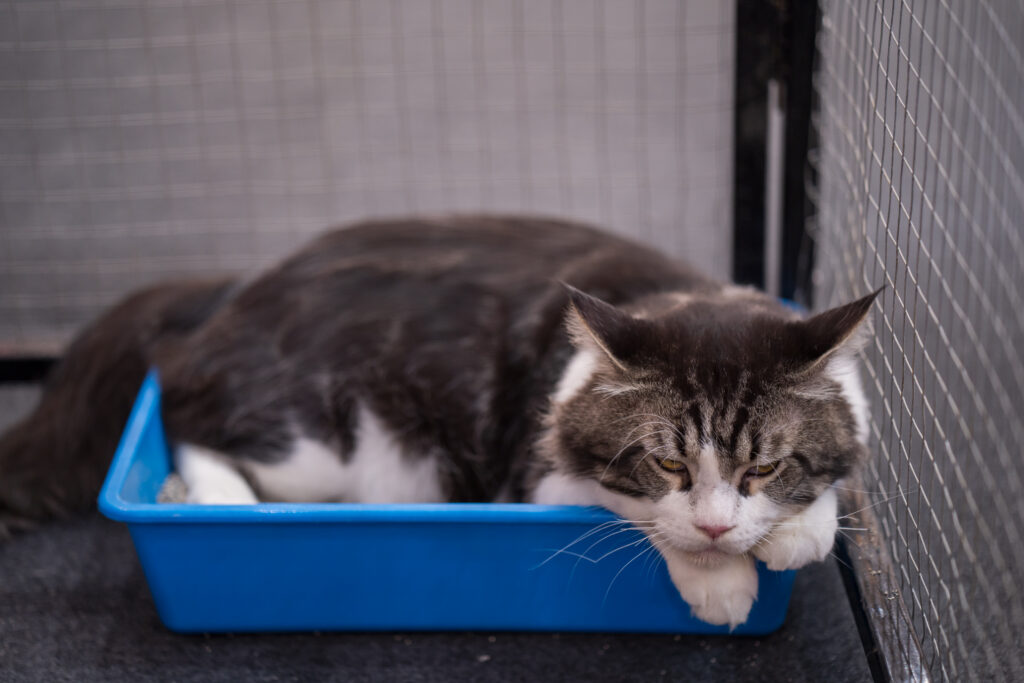
Imagine, It’s 3am. You’re wide awake. Your cat is standing on your chest, or at the bottom of the stairs, or outside your bedroom door meowing like the world is ending. This is one of the most common complaints cat owners bring up, and thankfully, it’s also one of the most explainable. Cats don’t wake up and decide to be difficult at 3am for no reason. There’s almost always a specific cause behind it, and once you identify which one you’re dealing with, the fix is usually straightforward. Cat Anxiety is more than what we think.
This guide covers the real reasons cats meow at 3am, how to tell which one applies to your cat, and the products that genuinely help.
Why Do Cats Meow at 3am Specifically, Is it Cat Anxiety Signs?
The 3am timing isn’t a coincidence. Cats are naturally crepuscular, meaning they’re biologically wired to be most active at dawn and dusk, which for many cats lands somewhere in the early hours of the morning. Layer a specific trigger on top of that natural activity window, and you get the classic 3am meowing session. There are six main causes worth ruling in or out.
🌙 Natural Crepuscular Activity
This is the baseline explanation for most healthy adult cats. Their internal clock is tuned to hunting hours at dawn and dusk, not human sleep schedules, so a burst of energy and vocalisation in the early hours is often simply instinct rather than a problem.
Signs: Cat is otherwise healthy, eating and behaving normally. Meowing is accompanied by playful energy, running, or “zoomies.”
Solution: A structured play and feeding routine timed to tire your cat out before your own bedtime.
🍽️ Hunger and Feeding Schedule
A cat’s stomach empties several hours after their last meal, and many owners feed dinner early in the evening, leaving a long stretch until breakfast. Waking to demand food in the small hours is one of the most common and easily fixed causes of night meowing.
Signs: Meowing stops immediately once fed. Cat leads you toward the kitchen or food bowl.
Solution: A late-evening feeding, or an automatic feeder set to dispense a small meal in the early hours.
😿 Loneliness or Attention-Seeking
Cats that are under-stimulated during the day particularly single cats in households where owners work long hours, may seek out attention and interaction at night simply because that’s when their humans are finally still and reachable.
Signs: Meowing stops as soon as you interact, pet, or pick up the cat. More common in only-cats or recently adopted cats still settling in.
Solution: More daytime enrichment and interactive play, plus a firm, consistent response to night meowing (see the step-by-step section below).
😰 Stress or Anxiety
Changes in the household like a house move, a new pet, new furniture, building work, or even a change in your own routine, can genuinely unsettle cats, and night meowing is a common way that stress surfaces, since the quiet of night can make an anxious cat feel more exposed or unsettled.
Signs: Meowing coincides with a recent change at home. Other stress signs present, such as hiding, over-grooming, or reduced appetite.
Solution: Identify and reduce the stressor where possible, alongside calming aids and a predictable night-time routine.
🧓 Cognitive Dysfunction in Senior Cats
In cats aged roughly 10 and older, loud, often disoriented-sounding meowing at night can be a sign of feline cognitive dysfunction syndrome, the feline equivalent of dementia which can cause confusion, disrupted sleep-wake cycles, and distress that peaks after dark.
Signs: Cat is a senior. Meowing sounds different which can be louder, more plaintive, or distressed. Cat appears disoriented, stares blankly, or gets “stuck” in corners.
Solution: A vet visit is essential here, as cognitive dysfunction can be managed with diet, environmental adjustments, and in some cases medication.
🩺 Underlying Medical Issues
Conditions such as hyperthyroidism, kidney disease, high blood pressure, or pain from arthritis can all cause increased vocalisation, particularly at night when the house is quiet and the cat is less distracted. Hyperthyroidism in particular is well known for causing excessive night-time yowling in middle-aged and older cats.
Signs: New or worsening meowing in a cat over 8-10 years old. Accompanied by weight loss, increased thirst, vomiting, or changes in coat condition.
Solution: A vet check with bloodwork to rule out or identify the underlying condition.
Quick Diagnosis Guide: For Cat Anxiety Symptoms
| What You’re Seeing | Likely Cause | Action |
| Playful energy, otherwise normal | Natural crepuscular activity | Evening play session before bed |
| Stops the moment you feed them | Hunger | Late feeding or automatic night feeder |
| Stops the moment you give attention | Loneliness/attention-seeking | More daytime enrichment, consistent boundaries |
| Started after a household change | Stress or anxiety | Reduce stressor, calming aids, routine |
| Senior cat, disoriented, distressed sound | Cognitive dysfunction | Vet visit for diet and environment management |
| Weight loss, increased thirst, new behaviour | Underlying medical issue | Vet visit with bloodwork |
How to Reduce Night Meowing: Step-by-Step guide to understand Cat Anxiety
What you’ll need:
- An interactive toy (wand toy, laser pointer, or puzzle feeder)
- A consistent feeding schedule
- A calm, low-stimulation bedtime routine
- Patience — behavioural fixes take one to two weeks to show results
Step 1: Rule out medical causes first
Before assuming a behavioural cause, especially in a senior cat or one whose meowing has started suddenly, book a vet check. Ruling out pain, thyroid issues, or cognitive changes first prevents weeks of behavioural work aimed at the wrong problem.
Step 2: Schedule an active play session before bed
A 15-20 minute session with a wand toy or laser pointer that mimics the stalk-chase-catch sequence of hunting, finished with a small meal, closely mirrors a natural hunt-eat-sleep cycle and genuinely tires cats out.
Step 3: Feed a small meal late in the evening
Timing the last meal closer to your own bedtime reduces the chance of your cat waking from hunger in the early hours. A slightly larger or higher-protein evening meal can help sustain them longer.
Step 4: Use an automatic feeder for early-morning hunger
If your cat consistently wakes around the same time each night, setting an automatic feeder to dispense a small portion at that time removes the need for them to wake you.
Step 5: Don’t respond to attention-seeking meowing
This is the hardest step, but the most important one. Getting up, feeding, or even scolding a cat who’s meowing for attention all count as attention in a cat’s mind, and reinforce the behaviour. Wait for a pause in meowing before interacting, so you’re not rewarding the vocalisation directly.
Step 6: Increase daytime enrichment
Puzzle feeders, window perches, cat trees, and rotating toys reduce boredom-driven attention-seeking and stress, which often shows up disproportionately at night.
Step 7: Keep the bedroom environment calm and dark
A blackout environment and a consistent bedtime routine help reinforce your cat’s association between night and rest, particularly useful for stressed or anxious cats.
What NOT to Do
🚫 Don’t get up and feed a cat meowing purely for attention: This directly teaches your cat that meowing at 3am gets a response, making the behaviour more persistent, not less.
🚫 Don’t punish or shout at a meowing cat: This adds stress on top of whatever is already driving the behaviour and can damage trust, particularly in cats meowing due to anxiety or pain.
🚫 Don’t assume it’s “just attention-seeking” in a senior cat: Sudden or changed meowing patterns in older cats warrant a vet check before being written off as behavioural.
🚫 Don’t lock a distressed cat out of the bedroom without addressing the cause: This can escalate anxiety-driven meowing rather than resolve it, particularly if the underlying stressor hasn’t been addressed.
🚫 Don’t ignore accompanying symptoms: Weight loss, increased thirst, vomiting, or disorientation alongside meowing are not something to wait out; they need veterinary attention.
The Best Amazon UK Products for Night Meowing and Calm Cat Anxiety
1. PETLIBRO Automatic Cat Feeder with Timer
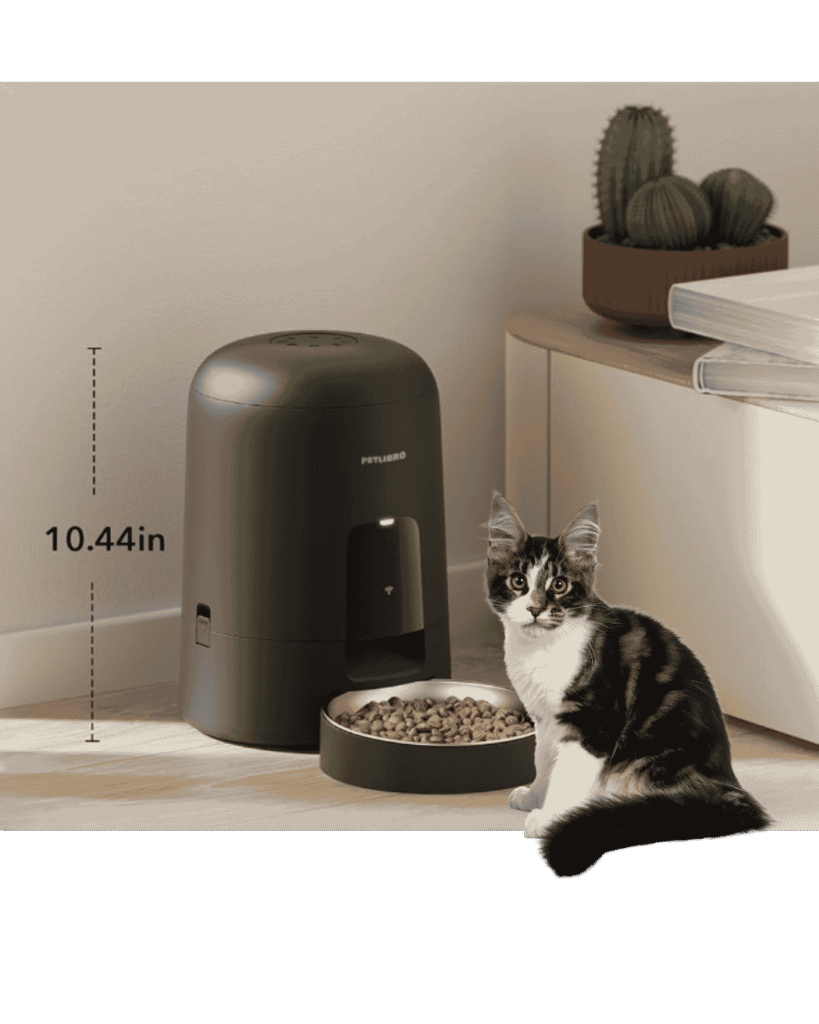
A scheduled feeder removes one of the most common causes of 3am wake-ups: hunger-driven meowing. By dispensing controlled, pre-set portions during the night or early morning, the PETLIBRO Automatic Cat Feeder helps break the cycle of your cat waking you for food and gradually builds a more consistent feeding routine. It’s especially useful for cats that repeatedly meow at night out of habit rather than genuine hunger, as it removes the need for owner involvement while still meeting their dietary schedule.
Best for: Cats that wake you specifically for food
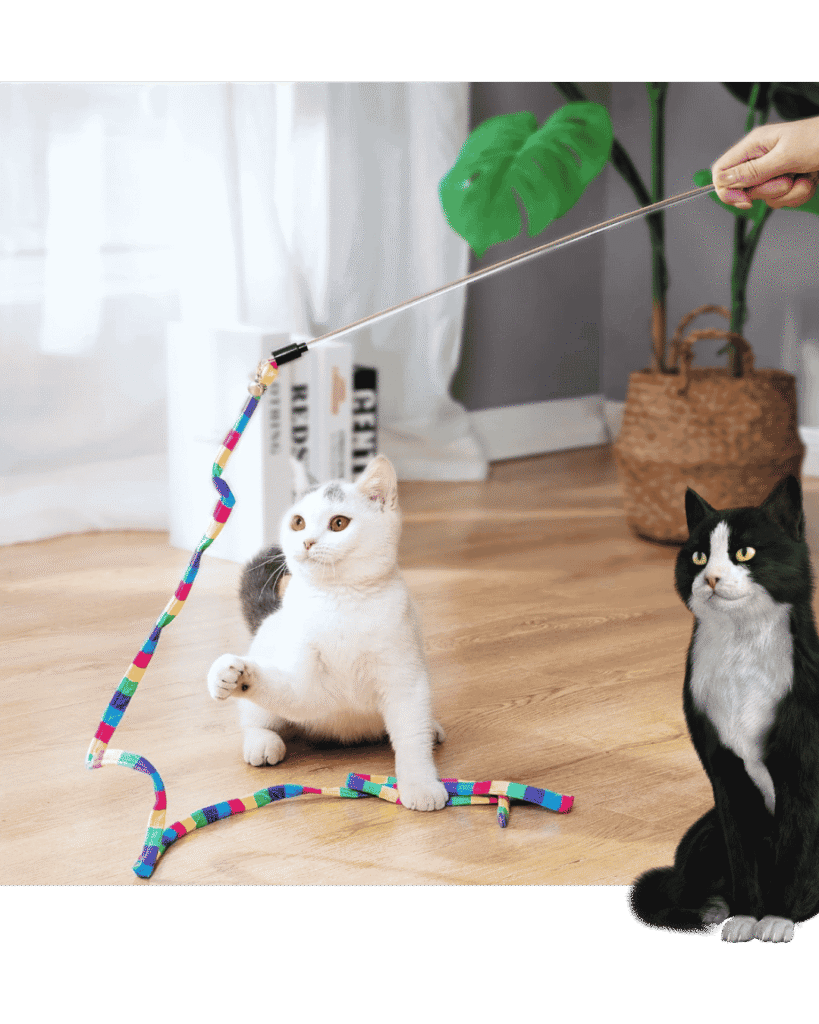
2. FYNIGO Feather Interactive Retractable Cat Wand Toy
A wand toy like the FYNIGO Feather Interactive Retractable Toy is designed to mimic a cat’s natural hunting cycle like stalk, chase, and catch, which is one of the most effective ways to burn off excess energy before bedtime. The retractable design makes it easy to control movement, while the feather and refill attachments keep the play unpredictable and engaging, which is key for preventing boredom-driven night-time zoomies and 3am meowing sessions. Regular pre-bed play sessions with this type of toy help reset your cat’s energy levels so they’re more likely to settle and sleep through the night.
Best for: High-energy cats or indoor cats needing more stimulation
3. Senses 2.0 Digger Interactive Puzzle Feeder
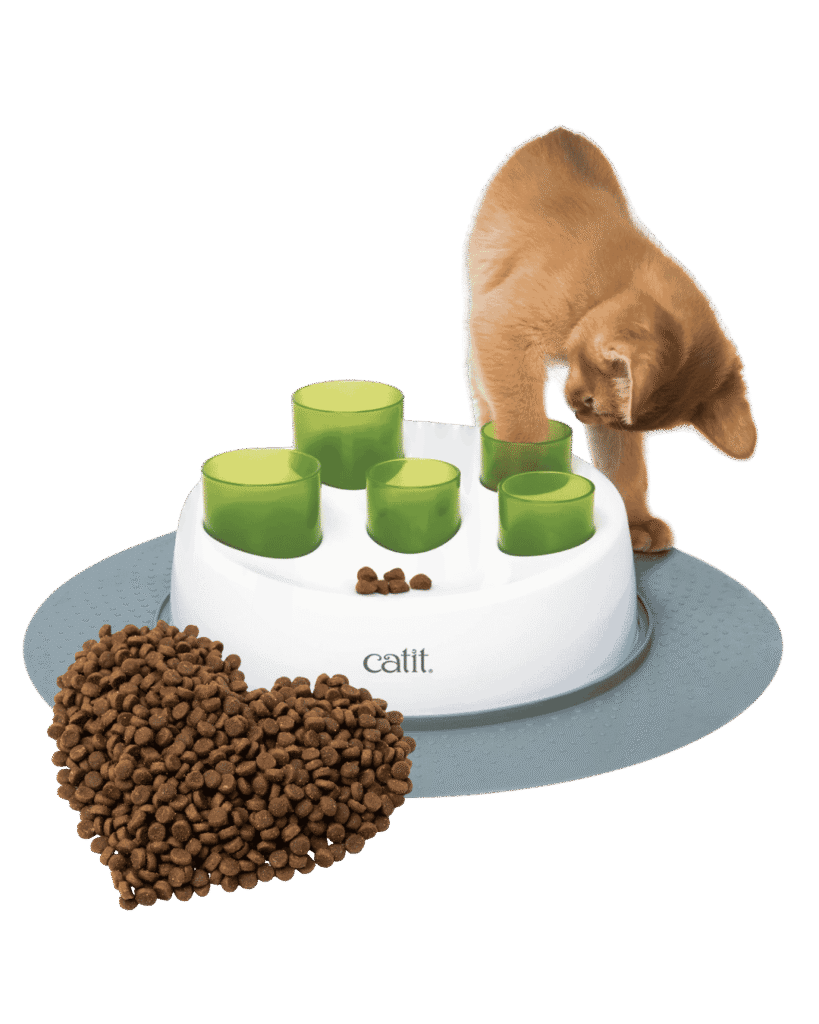
Puzzle feeders like the Catit Senses 2.0 Digger turn everyday feeding into a mentally engaging activity by encouraging cats to paw, dig, and work for their food. This slows down eating while also providing important cognitive stimulation during the day, which helps reduce boredom-driven behaviours that often peak at night. The different tube depths make it especially effective for cats who eat too quickly or those who need more enrichment in their daily routine to prevent attention-seeking meowing at 3am.
Best for: Indoor cats, fast eaters, and boredom-driven night activity
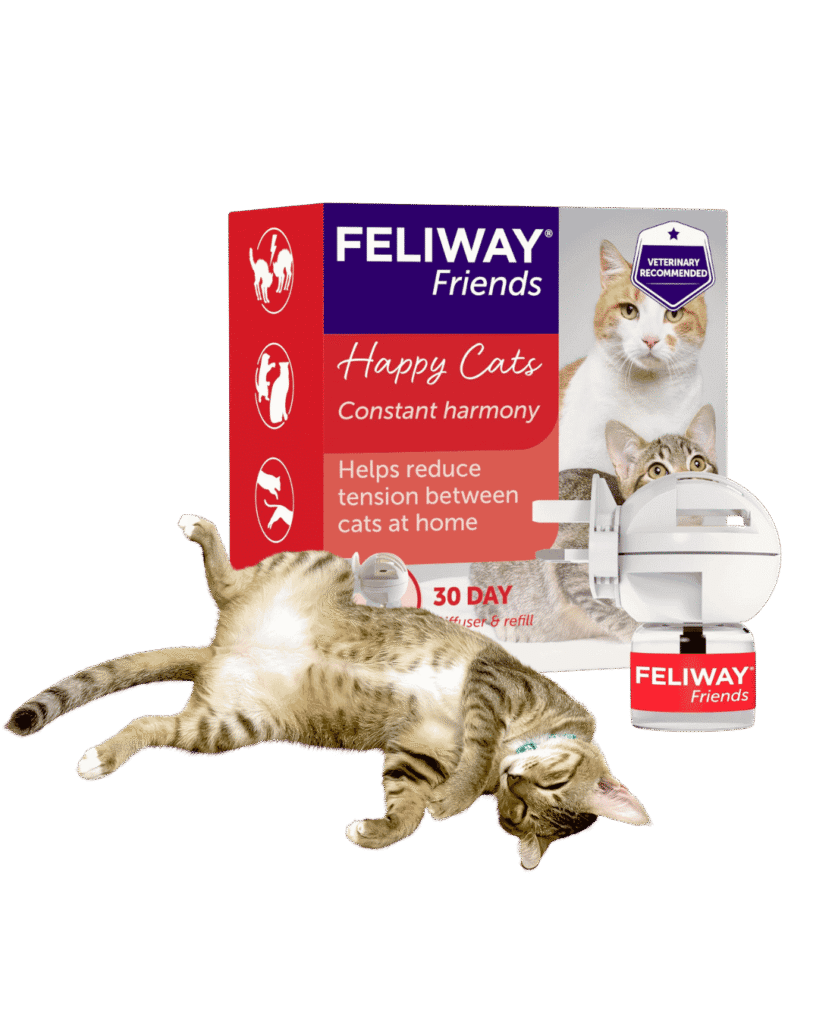
4. FELIWAY Friends Calming Pheromone Diffuser Starter Kit
The FELIWAY Friends Diffuser helps reduce stress-related behaviours in cats by releasing synthetic pheromones that mimic natural calming signals. It’s particularly useful in multi-cat households or homes where tension, change, or new introductions have triggered night-time vocalisation. By creating a more stable and reassuring environment, it can help reduce anxiety-driven behaviours such as pacing, crying at night, or 3am meowing linked to insecurity or disruption in routine.
Best for: Multi-cat households, anxiety, new environments, and stress-related night vocalisation
5. PEFUNY Cordless Folding Cat Window Hammock
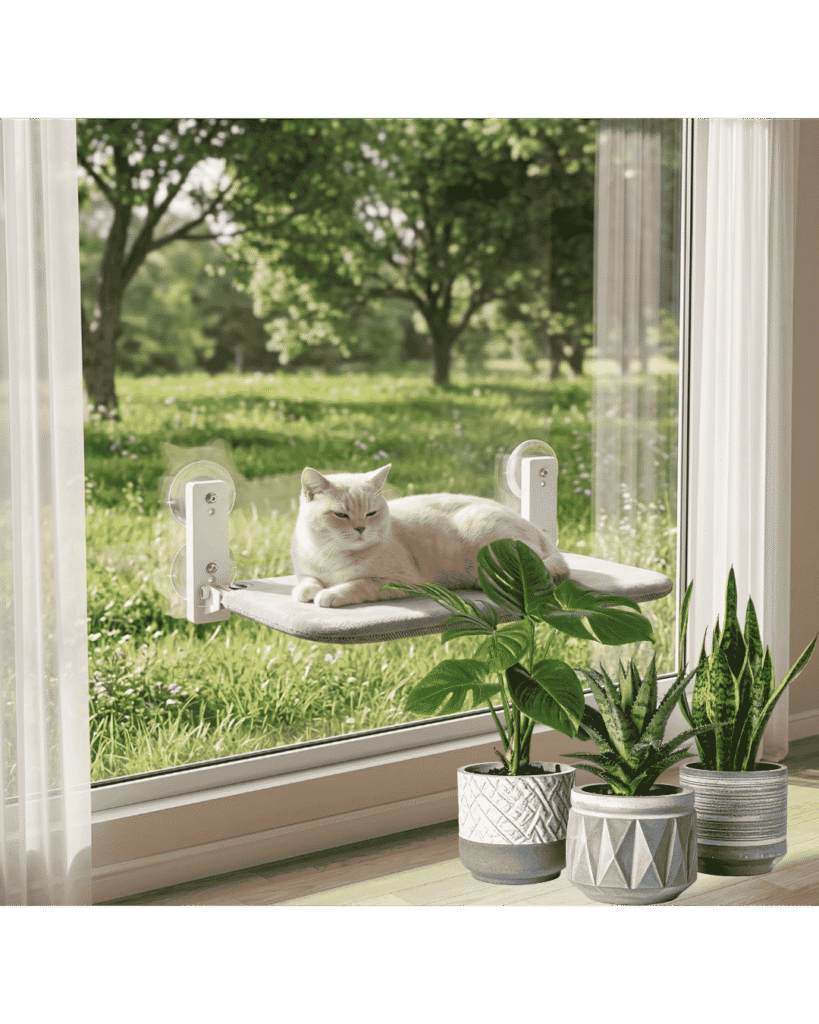
The PEFUNY Cordless Folding Cat Window Hammock gives cats a raised, comfortable resting space that attaches directly to windows, allowing them to observe the outside world while relaxing safely indoors. This type of elevated perch supports natural feline behaviour by offering height, security, and environmental stimulation, all of which help reduce boredom and restlessness that can often show up as night-time pacing or 3am vocalisation. The folding design also makes it practical for smaller spaces or homes where flexibility is important.
Best for: Indoor cats, anxious cats, and boredom-related night activity
Best Amazon UK Products for Cat Anxiety and Night Meowing Relief : Quick Reference Table
| Product | What It’s For | Best Suited To | Amazon UK |
| PETLIBRO Automatic Cat Feeder with Timer | Prevent hunger wake-ups by delivering scheduled portions overnight or early morning | Food-driven meowing | Explore |
| FYNIGO Feather Interactive Retractable Cat Wand Toy | Pre-bed hunting-style play to burn excess energy and reduce night zoomies | High-energy cats / indoor stimulation | Explore |
| Catit Senses 2.0 Digger Interactive Puzzle Feeder | Mental stimulation through foraging-style feeding that reduces boredom | Indoor cats / fast eaters / attention-seeking behaviour | Explore |
| FELIWAY Friends Calming Pheromone Diffuser Starter Kit | Reduces stress and multi-cat tension that can trigger night vocalisation | Anxiety, new environments, multi-cat households | Explore |
| PEFUNY Cordless Folding Cat Window Hammock | Provides elevated resting space and visual stimulation to reduce boredom | Indoor cats / anxious cats / environmental enrichment | Explore |
Long-Term Tips to Prevent Night Meowing and Cat Anxiety
🕐 Keep feeding and play times consistent: Cats thrive on routine, and a predictable daily rhythm reduces the likelihood of confused or attention-seeking waking.
🧸 Rotate toys regularly: Introducing “new” toys by rotating them in and out keeps daytime play more engaging, which supports better rest at night.
🩺 Book annual vet check-ups, especially for cats over 8: Many medical causes of night meowing are far easier to manage when caught early.
🌗 Give it time: Behavioural changes typically take one to two weeks of consistency to show results; expecting overnight success often leads to giving up too soon.
🚪 Consider a consistent sleeping arrangement: Whether that’s inside or outside the bedroom, consistency helps a cat settle into a predictable night-time pattern rather than testing boundaries each night.
FAQs About Cat Meowing at 3am: All about Cat Anxiety
Q: Is it normal for cats to meow at 3am?
Some night-time activity is completely normal, since cats are naturally most active around dawn and dusk. Persistent, loud, or distressed-sounding meowing, particularly if it’s new or worsening which is worth investigating rather than dismissing as purely normal behaviour.
Q: Should I ignore my cat meowing at night?
If you’ve ruled out medical causes and hunger, ignoring attention-seeking meowing (rather than getting up or feeding on demand) is generally the right approach, since responding reinforces the behaviour. This should be paired with more daytime enrichment, not used in isolation.
Q: Why has my older cat suddenly started meowing loudly at night?
Sudden or changed night meowing in a senior cat is one of the more common early signs of feline cognitive dysfunction or an underlying medical issue such as hyperthyroidism. This warrants a vet visit rather than a behavioural fix alone.
Q: Will feeding my cat right before bed stop the meowing?
For hunger-driven waking, yes, a late evening meal or an automatically timed early-morning feed often resolves the issue within days. For attention-seeking or stress-driven meowing, feeding won’t address the underlying cause and may accidentally reinforce the behaviour if given in direct response to meowing.
Q: Can stress really cause my cat to meow at night?
Yes. Household changes, new pets, building work, or even a change in your own schedule can all unsettle cats, and vocalisation particularly at night, when the environment is quieter that is a common way that stress presents.
Q: My cat meows at night and paces or seems confused, what does that mean?
This combination, particularly in a cat aged 10 or older, can indicate feline cognitive dysfunction syndrome. It’s worth booking a vet appointment rather than assuming it’s a behavioural or attention-driven issue.
When to See a Vet about Cat Meowing and Anxiety
Most 3am meowing is manageable with routine and enrichment changes, but book a vet visit if:
- Your cat is a senior (roughly 10+) and the meowing is new, worsening, or sounds distressed or disoriented
- Meowing is accompanied by weight loss, increased thirst or urination, vomiting, or changes in appetite
- Your cat seems confused, gets “stuck” in corners, or stares blankly
- The meowing started suddenly with no obvious behavioural or environmental trigger
- Home strategies haven’t helped after two to three weeks of consistent effort
Final Thoughts on Cat Anxiety
A cat meowing at 3am isn’t difficult for the sake of it, there’s almost always a genuine cause behind it, whether that’s natural instinct, hunger, loneliness, stress, or, particularly in older cats, an underlying medical issue. The key is identifying which one applies to your cat before reaching for a fix, since the right solution for hunger looks very different from the right solution for anxiety or cognitive decline.
Our top picks? An automatic feeder for hunger-driven waking, paired with a proper pre-bed play session using an interactive wand toy for cats waking from natural energy or boredom. For senior cats or sudden changes in meowing patterns, a vet visit should always come first.
Looking for more cat behaviour advice? Read another detailed blog here, or browse our full cat health and behaviour section on FetchStop.
⚠️ Affiliate Disclosure: This post contains Amazon affiliate links. If you purchase through these links, we may earn a small commission at no extra cost to you.