In the wild, a budgie or a parrot spends a huge chunk of its day doing one thing: working to find food. Cracking seed pods, stripping bark, investigating, manipulating, problem-solving and foraging isn’t a side activity, it’s practically a full-time job. Put that same bird in a cage with a bowl that magically refills itself, and you’ve removed one of the single biggest behavioural outlets it has. That gap doesn’t just disappear. It tends to show up as screaming, feather plucking, cage aggression, or plain old boredom. This blog will talk about Foraging Toys for Budgies and other birds.
This guide covers why foraging toys matter so much for budgies and parrots, how to introduce them properly, and the specific Amazon UK products worth adding to your bird’s setup.
Why Do Birds Need to Work for Their Food?
In the wild, foraging can occupy a significant proportion of a parrot’s waking day, involving searching, manipulating, and problem-solving to access food. A bowl that provides an entire day’s food in one easy, effortless serving removes that need almost entirely and for a highly intelligent species with time and energy to spare, that gap gets filled with something, whether or not it’s something you’d choose.
🧠 Intelligence Without an Outlet
Parrots and budgies are highly intelligent, and problem-solving is a core part of how that intelligence evolved to be used day to day. Without a genuine mental challenge, that same intelligence often turns toward less desirable outlets, figuring out how to open cage latches, destroying furniture, or fixating on repetitive behaviours.
Signs: Bird seems restless or “bored,” repeatedly tests cage latches or bars, destroys anything reachable outside of designated toys.
Solution: Regularly rotated foraging toys that require genuine problem-solving to access food.
🪶 Feather Plucking and Over-Preening
Chronic boredom and lack of mental stimulation is one of several recognised contributors to feather-destructive behaviour in captive parrots, alongside medical and stress-related causes. Foraging enrichment is a commonly recommended part of addressing behavioural (non-medical) feather plucking.
Signs: Bald or thinning patches, particularly on the chest and easily reachable areas. Excessive preening beyond normal maintenance.
Solution: A vet check first to rule out medical causes, followed by increased foraging and environmental enrichment if the cause is behavioural.
📢 Excessive Screaming or Vocalisation
While vocalisation is entirely normal for parrots, excessive or attention-driven screaming is often linked to under-stimulation, particularly in birds left alone for long stretches with nothing to occupy them.
Signs: Screaming increases specifically during periods of inactivity or when left alone. Reduces when given attention or activity.
Solution: Foraging toys that occupy independent time, alongside a consistent enrichment and interaction schedule.
😐 Apathy and Reduced Activity
Less dramatic than plucking or screaming, but just as telling like some under-stimulated birds simply become less active, spending more time sitting still and less time exploring, playing, or vocalising normally.
Signs: Noticeably quieter and less active than expected for the species and age. Reduced interest in existing toys.
Solution: Introducing novel foraging challenges, since familiar toys can lose their enrichment value over time without rotation.
Quick Diagnosis Guide on Why We Need Foraging Toys for Budgies
| What You’re Seeing | Likely Cause | Fix |
| Tests latches, destroys reachable items | Under-stimulated intelligence | Rotating foraging toys, problem-solving challenges |
| Bald patches, excessive preening | Possible feather-destructive behaviour | Vet check first, then increase enrichment |
| Screaming increases when left alone | Boredom-driven vocalisation | Independent foraging toys, consistent routine |
| Quiet, inactive, disinterested in toys | Understimulation / toy fatigue | Introduce novel foraging challenges, rotate regularly |
| Bird ignores new foraging toys entirely | Toy too difficult or unfamiliar | Start simpler, reward-visible foraging first |
| Food finished instantly, no engagement | No foraging element in feeding | Introduce food-dispensing or hidden-food toys |
How to Introduce Foraging Toys for Budgies Safely: Step-by-Step
What you’ll need:
- A selection of foraging toys suited to your bird’s species and confidence level
- Your bird’s usual treats or a portion of their regular diet
- Patience — some birds take days or weeks to engage with a new toy
Step 1: Start with visible, easy foraging
Begin with toys where the food is visible but requires a simple action to access like lifting a flap, pulling a string, or nudging a ball. This builds confidence before moving to more complex, hidden foraging.
Step 2: Use part of the daily diet, not just extra treats
Making a portion of your bird’s actual meal come from foraging toys, rather than treats on top of a full bowl like genuinely reintroduces the “work for food” element rather than just adding a bonus activity.
Step 3: Rotate toys regularly
Even a highly effective foraging toy loses its challenge once a bird has fully mastered it. Rotating toys in and out keeps the mental challenge fresh and prevents the “solved it, moving on” plateau.
Step 4: Increase difficulty gradually
Once your bird confidently solves simpler toys, introduce ones requiring multiple steps like unwrapping paper, opening several compartments, or manipulating a puzzle mechanism, to keep pace with their growing skill.
Step 5: Mix material types
Combining paper, wood, foraging boxes, and hanging toys targets different natural behaviours (shredding, chewing, manipulating) rather than relying on a single skill repeatedly.
Step 6: Place some toys away from the perch
Encouraging movement around the cage or play area, rather than foraging only from a fixed spot, adds a physical activity element alongside the mental one.
Step 7: Don’t remove the bowl entirely on day one
For birds unfamiliar with foraging, a sudden switch to 100% foraging-based feeding risks inadequate food intake if they haven’t learned to engage yet. Introduce gradually, monitoring that your bird is still eating enough.
What NOT to Do With Foraging Toys for Budgies
🚫 Don’t switch to fully foraging-based feeding overnight: A bird unfamiliar with foraging toys may simply not eat enough if the easy bowl disappears before they’ve learned to engage with the alternative.
🚫 Don’t use toys with small detachable parts, sharp edges, or toxic materials: Always check that foraging toys are specifically designed and marketed for birds, avoiding household items repurposed without checking safety.
🚫 Don’t leave the same toys in place indefinitely: Foraging toys lose their enrichment value once mastered; without rotation, you’re back to a low-stimulation environment even with toys present.
🚫 Don’t assume feather plucking is purely behavioural: Medical causes (skin conditions, pain, hormonal issues, nutritional deficiencies) are common contributors and need ruling out by an avian vet before addressing enrichment alone.
🚫 Don’t force a nervous bird to engage with a difficult toy immediately: Starting too complex too fast can cause a bird to give up on foraging toys altogether; always start simple and build up.
The Best Amazon UK Foraging Toys for Budgies
1. MinrzPet Wooden Bird Foraging Puzzle
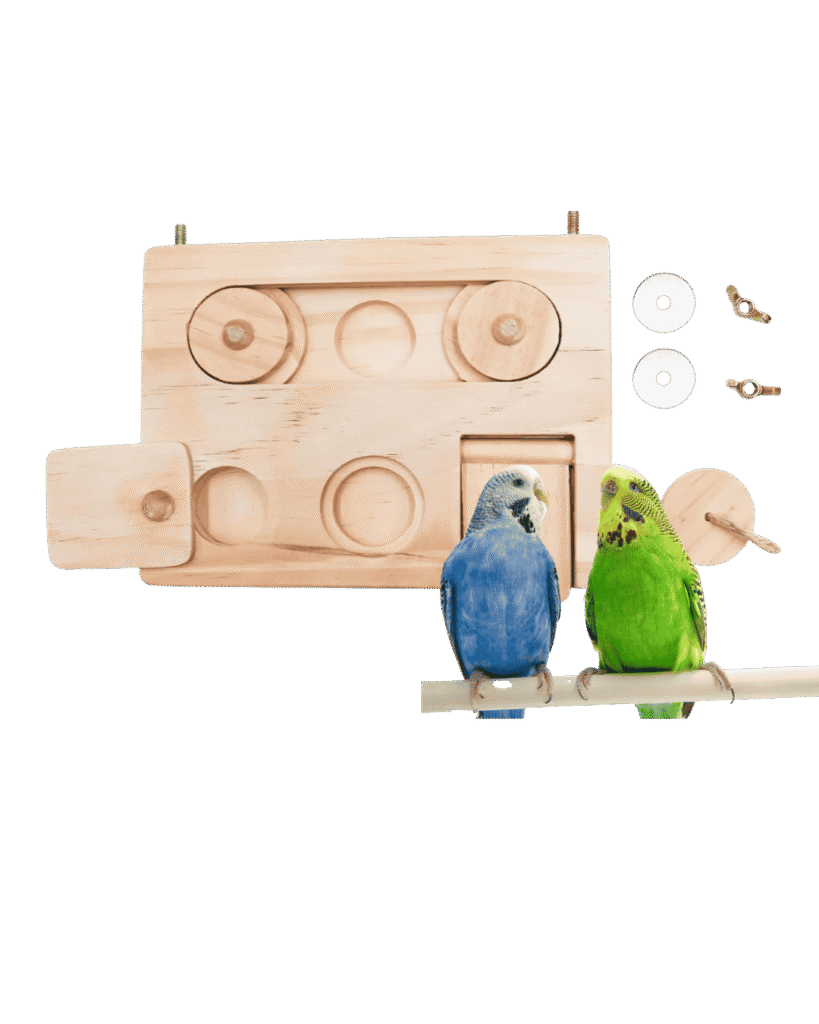
A sliding-block puzzle toy with locking compartments, sized specifically for small-to-medium birds like budgies rather than scaled down from a larger-parrot design. It mounts securely to the cage with spacers and butterfly nuts, giving a genuine multi-step challenge once your budgie has mastered simpler toys.
Best for: Budgies ready for a bigger step up in foraging difficulty
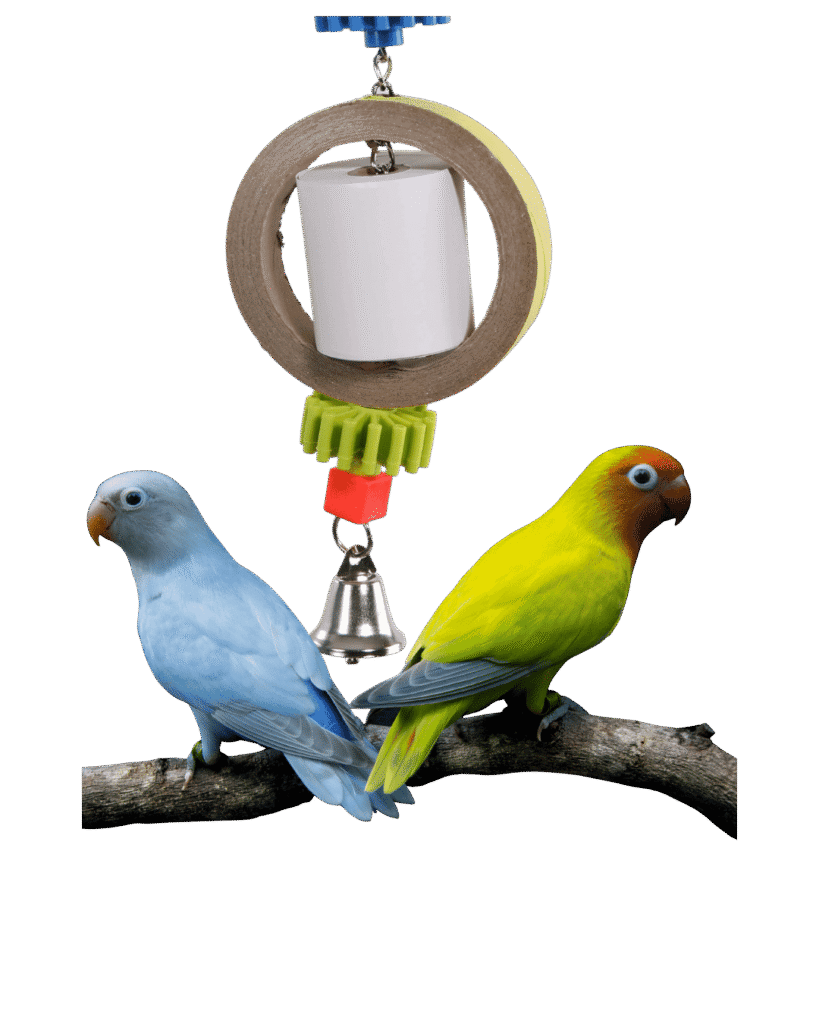
2. Paper Dispenser Shreddable Parrot Toy (Medium)
A durable “birdie bangle” ring loaded with a chunky paper roll for shredding while sized appropriately for budgies rather than only larger parrots, and refillable once your budgie works through the roll.
Best for: Budgies that enjoy shredding, an easy low-cost starting point
3. Sosoport Wooden Foraging Box
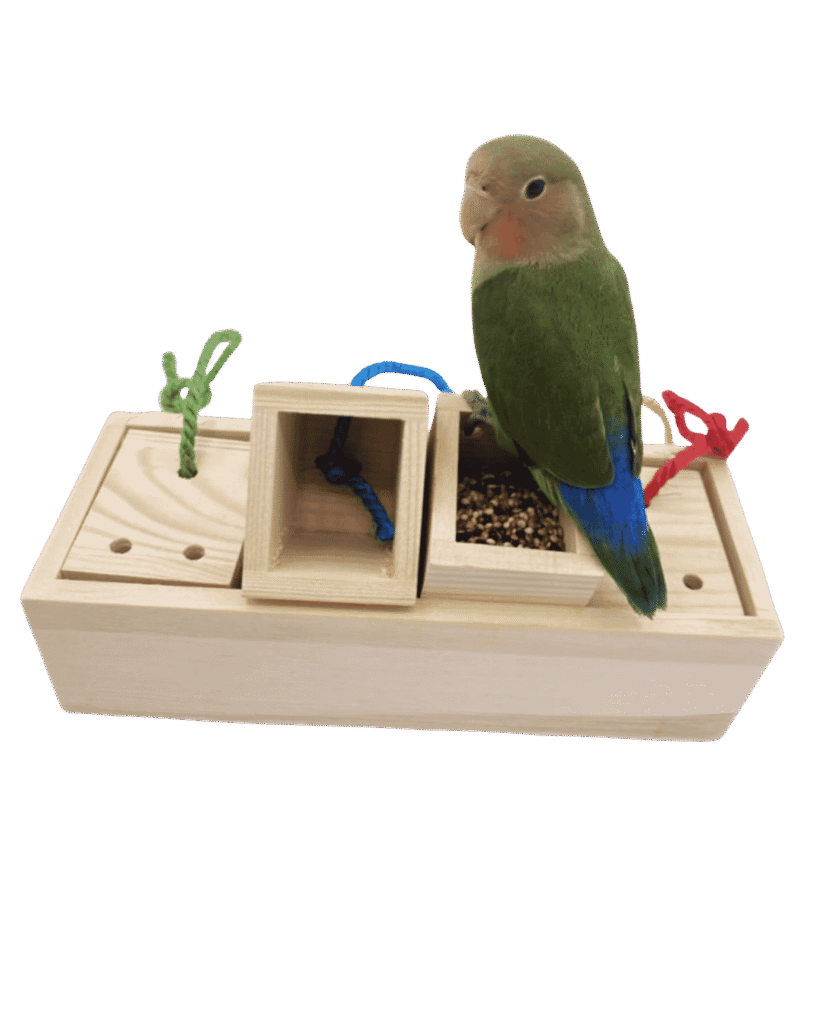
A small natural wood feeding box that hangs in the cage, combining chewing with a genuine hide-and-find element for treats or seed. Reviewers note it holds up well against regular beak use.
Best for: Budgies that like to chew as part of foraging
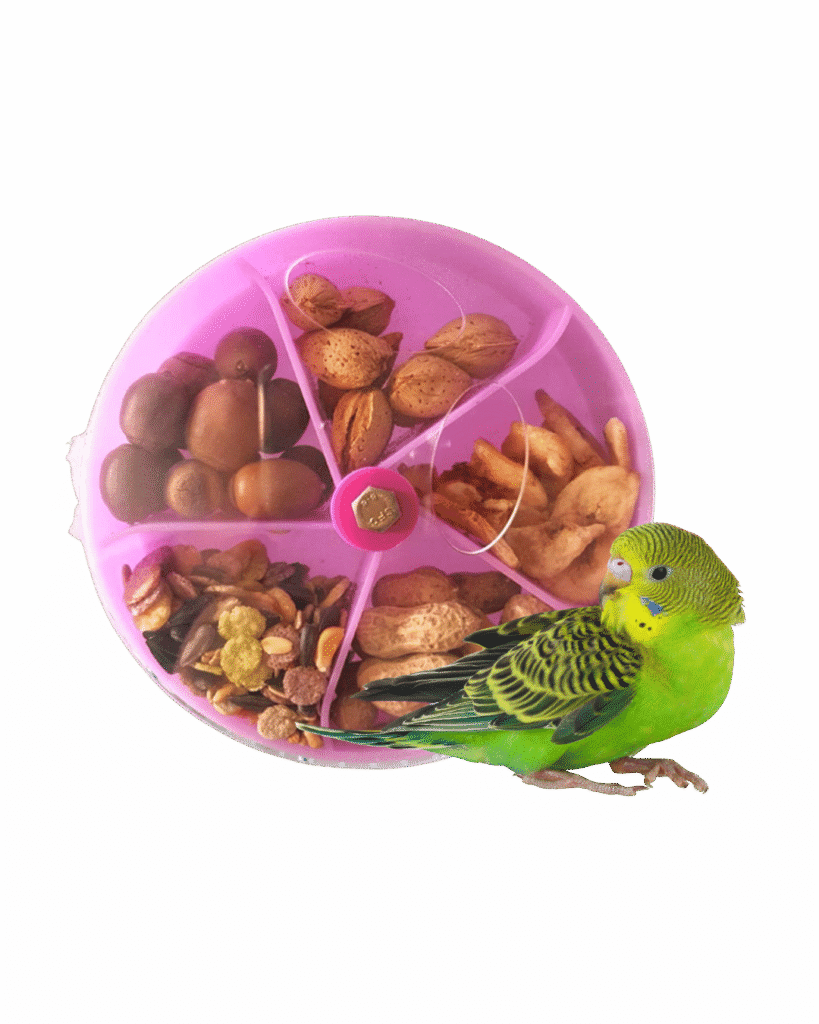
4. Bird Foraging Seed Food Ball Rotate Wheel
A transparent acrylic wheel that dispenses small amounts of seed as it’s rotated, explicitly sized and marketed for budgies and parakeets. The clear design lets your budgie see the food inside, which helps at the “visible, easy foraging” starting stage.
Best for: Budgies and smaller species, encouraging movement around the cage
5. Bird Rope Perch with Bell – Colourful Chewing, Shredding & Foraging Set
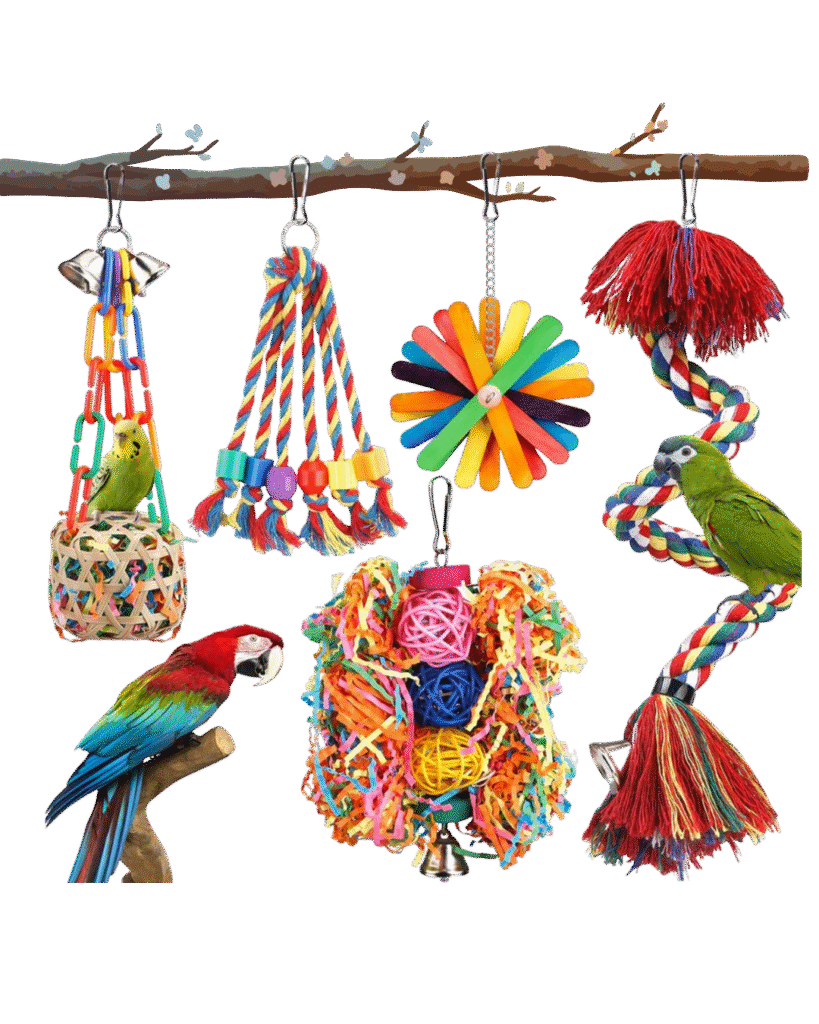
A set of five varied hanging toys mixing rattan balls, rope, wooden popsicle sticks, and plastic beads, letting you hide treats across several different textures at once. A reviewer specifically notes giving the smaller pieces to their Bourkie parakeets after finding them too small for larger conures, a useful confirmation this set genuinely suits budgie-sized birds.
Best for: General enrichment, mixed-behaviour engagement
Amazon UK Kit Foraging Toy for Budgies: Quick Reference Table
| Product | What It’s For | Best Suited To | Direct Link |
| MinrzPet Wooden Foraging Puzzle | Multi-step, layered foraging | Budgies ready for advanced challenges | Buy Here |
| Paper Dispenser Shreddable Toy | Shredding + hidden food | Budgies, easy starting point | Buy Here |
| Sosoport Wooden Foraging Box | Chewing + puzzle-solving | Budgies that like to chew | Buy Here |
| Seed Food Ball Rotate Wheel | Movement + visible foraging | Budgies, active smaller birds | Buy Here |
| Hanging Mixed-Material Toy Set | Multi-behaviour enrichment | General budgie enrichment | Buy Here |
Long-Term Tips for Keeping Foraging Enrichment Effective
🔄 Rotate toys weekly: Keeping two to three toys active at once and swapping in “new” ones from a rotating stock maintains novelty without requiring constant new purchases.
🍽️ Move a portion of daily food into foraging toys permanently: Once your bird is confidently engaging, keep a meaningful share of their diet foraging-based rather than reverting fully back to bowl feeding.
🧠 Increase difficulty as your bird’s skill grows: A toy that was challenging six months ago may now be solved in seconds; matching difficulty to current skill keeps the enrichment value genuine.
👀 Watch engagement, not just presence: A toy sitting untouched in the cage provides no enrichment value regardless of how well-designed it is; if your bird isn’t engaging, reassess difficulty or type.
🩺 Pair enrichment with regular vet check-ups: Particularly for birds showing feather-destructive or screaming behaviours, since ruling out medical causes alongside enrichment gives the best chance of resolving the behaviour.
FAQs: Foraging Toys for Budgies
Q: Do budgies need foraging toys as much as larger parrots?
Yes, budgies are highly intelligent for their size and benefit significantly from foraging enrichment, though toys should be scaled appropriately in size and difficulty compared to those designed for larger parrot species.
Q: How do I get my bird to actually use a new foraging toy?
Start with visible, easy-to-access food rather than fully hidden treats, and consider placing a treat partially exposed the first few times to demonstrate the concept. Patience is key, some birds take days or weeks to engage confidently with something new.
Q: Can foraging toys stop feather plucking?
Increased foraging and enrichment is a commonly recommended part of managing behavioural feather-destructive behaviour, but medical causes should always be ruled out by an avian vet first, since plucking often has multiple contributing factors.
Q: Should I remove my bird’s food bowl completely once I introduce foraging toys?
Not immediately. Introduce foraging gradually and monitor that your bird is eating enough before reducing bowl access, to avoid the risk of inadequate food intake during the learning period.
Q: How often should I rotate foraging toys?
Weekly rotation is a reasonable starting point for most households, though this can be adjusted based on how quickly your individual bird masters each toy, the goal is keeping the challenge genuinely engaging rather than following a fixed schedule.
Q: Are DIY foraging toys safe to make at home?
Many owners make effective DIY foraging toys from bird-safe materials such as untreated paper, cardboard, or coconut shells, but always check that any materials, dyes, or adhesives used are non-toxic and free of small ingestible parts before offering them to your bird.
When to Get Professional Input
Foraging toys address boredom and understimulation, but it’s worth speaking to an avian vet if:
- Feather plucking or skin damage is present, since medical causes need ruling out before assuming a purely behavioural cause
- Screaming or destructive behaviour is severe, sudden, or worsening despite increased enrichment
- Your bird shows no interest in any foraging toy over an extended period, which may point to an underlying stress or health issue
- You notice changes in appetite or weight alongside a switch to foraging-based feeding, to confirm intake remains adequate
Final Thoughts on Foraging Toys for Budgies and Other Birds
Foraging isn’t an optional extra for parrots and budgies, it’s one of the most natural, instinctive behaviours these birds have, and removing it from a captive environment leaves a real gap that tends to surface as screaming, plucking, or general restlessness. The fix is straightforward in principle: reintroduce genuine problem-solving into how your bird accesses food, start simple, build up difficulty, and keep things rotating so the challenge stays real.
Our top picks for budgies? The paper dispenser shreddable toy as an easy, low-cost starting point, paired with the MinrzPet wooden foraging puzzle once your budgie is confidently engaging and ready for a bigger challenge.
Looking for more bird care advice? Read our guide on bird cage liners and cleaners, or browse our full bird care and enrichment section on FetchStop.
⚠️ Affiliate Disclosure: This post contains Amazon affiliate links. If you purchase through these links, we may earn a small commission at no extra cost to you.