
FetchStop

Dog Guide

What is a Dog Park
Dog Guide

What Is a Dog Park? Definition, Rules & How to Make the Most of One in the UK

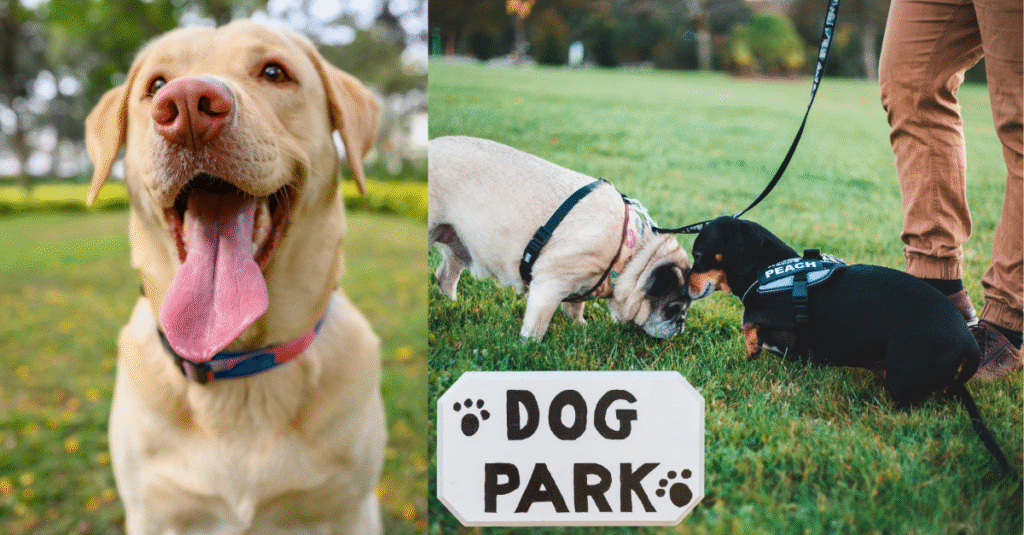
You’ve seen the signs. You’ve probably driven past the fenced-off green spaces where dogs sprint around like they’ve had three espressos. But if you’ve never taken your dog to one or you’re new to the concept altogether, you might be wondering: what actually is a dog park, and is it right for my dog? This guide covers everything: the definition of what is a dog park, the rules, the etiquette, what to bring, and whether your dog is cut out for park life. Plus, we’ve rounded up the best Amazon essentials to pack before your first visit. What Is A Dog Park: Definition A dog park is a designated, enclosed public space where dogs are permitted to exercise and socialise off-lead, under the supervision of their owners. Unlike a standard public park, where dogs may need to be on the lead and share space with cyclists, children, and picnickers, a dog park is specifically designed for canine use. Most are fully fenced with a double-gated entry system (known as an airlock) to prevent dogs from bolting when the gate opens. In the UK, dog parks are sometimes called dog exercise areas, dog fields, or off-lead enclosures. Some are free to use (managed by local councils), while others are privately run and charge a small hourly or session fee. Are Dog Parks Common in the UK? Dog parks are significantly more common in the US and Australia, but they’re growing fast in the UK. You’ll now find them in most major cities like London, Manchester, Edinburgh, Birmingham, Bristol, as well as popping up in smaller towns and rural areas. Some UK dog parks are basic: a fenced field, a water tap, and a poo bin. Others are more developed, with agility equipment, seating areas, dog-washing stations, and separate sections for large and small dogs. Dog Park Rules in the UK: What to Know Rules vary from park to park, but here are the most common ones you’ll encounter at UK dog parks: Dogs must be supervised at all times: You cannot leave your dog unattended, even briefly. Pick up after your dog: Always. Most parks have poo bags and bins on site, but bringing your own is good practice (see our Amazon picks below). Dogs must be vaccinated and healthy: Don’t bring a sick dog or one that hasn’t completed their vaccination schedule. Puppies under 16 weeks are generally advised to avoid dog parks entirely. No aggressive dogs: If your dog has shown aggression towards other dogs or people, a dog park is not appropriate until you’ve worked with a trainer. Use the airlock properly: Always close the first gate before opening the second. This double-gate system is the most important safety feature of any dog park. Keep it treat-aware: Many parks ask you not to bring food or treats into the park, as it can cause resource guarding and conflict between dogs. Check the park’s specific rules. Respect designated zones: Many parks have separate areas for small and large dogs. Use the right section. Is My Dog Ready for a Dog Park? A dog park isn’t right for every dog, and that’s completely fine. Here’s a quick checklist: Your Dog Ready? Vaccinated and up to date on flea/worm treatments âś… Yes Plays well with other dogs in one-to-one settings âś… Yes Comes back reliably when called (recall) âś… Recommended Over 16 weeks old âś… Yes Has shown aggression to other dogs or people ❌ Not yet Is in season (female) ❌ No as this can cause significant disruption Unneutered male with reactive tendencies ⚠️ Use caution Has an unknown history with other dogs ⚠️ Try a private field first Dog Park Etiquette: The Unwritten Rules Beyond the posted rules, dog parks come with a set of social expectations that make the experience better for everyone. Watch your dog, not your phone. Distracted owners are the number one cause of dog park incidents. Your dog needs you to be present and attentive. Don’t let your dog mob the entrance. When a new dog arrives, the last thing they need is five dogs rushing at them. Redirect your dog away from the gate when newcomers arrive. Read the body language. Stiff posture, a tucked tail, excessive barking, or pinning another dog down are all signals that play is tipping into stress. Intervene calmly before it escalates. Don’t feed other dogs. Even well-meaning treats can cause guarding behaviour or trigger allergies. Always ask before offering anything to a dog that isn’t yours. Step in, don’t shout across the park. If your dog is causing a problem, walk over and deal with it. Shouting commands from distance rarely works and tends to stress everyone out more. What to Bring to a Dog Park: The Essential Kit This is where you can seriously level up your dog park visits and where we come in with some excellent Amazon recommendations to make your trip smoother. 1. Collapsible Dog Bowl for Hydration Dogs work hard at the park. A portable, foldable water bowl clips onto your bag and means you can offer water anytime, anywhere, most parks have a tap or water point. 2. Dog Treat Pouch for Recall & Rewards Even in an off-lead park, having treats on hand is essential especially for reinforcing recall (the “come back to me” command). A hands-free treat pouch clips to your waist so you’re always ready. 3. Dog Poo Bags, Never Be Without Them A non-negotiable. Even if the park has bags on site, they run out. Carrying your own is basic dog park etiquette and keeps you covered everywhere you go. 4.  A High-Visibility Dog Toy Not all parks allow personal toys (check the rules), but where they do, bringing your dog’s own ball or tug toy keeps their attention on you and gives you a recall anchor. A brightly coloured ball is easy to spot in long grass. 5. A Dog Towel or Drying Mitt UK weather being what it is, your dog will almost certainly

Dog Care, Dog Care, Dog Guide

Complete Comfort Dog Harness Guide For Every Breed And Size

If you have ever watched your dog pull against a collar or seen them flinch when you clip a stiff harness on before a walk, you already know how much the right equipment matters. A good comfort dog harness changes the whole experience, for your dog and for you. The problem is that the harness market is absolutely packed. There are dozens of styles, dozens of brands, and very little clear guidance on what actually works for different dogs. A harness that is perfect for a Labrador can be completely wrong for a French Bulldog, and a design that suits an anxious rescue may be useless for a bouncy puppy. This guide breaks it all down simply. It covers what to look for, which harness styles suit which dogs, what to avoid, and five well-researched products you can find easily on Amazon right now. Why A Comfort Harness Is Better Than A Collar Alone Collars are fine for carrying ID tags, but they are not the ideal tool for walking, especially for dogs that pull, have respiratory issues, or have narrow heads that make collar slipping a real risk. A harness spreads pressure across the chest and shoulders instead of concentrating it on the neck and throat. For dogs with tracheal issues, flat-faced breeds like Pugs and French Bulldogs, or small dogs prone to collapsing trachea, a harness is not just more comfortable. It is genuinely safer. Even for healthy dogs that pull enthusiastically, removing that collar pressure can make walks noticeably calmer and more enjoyable for everyone. What Makes A Harness A Comfort Harness Not every harness earns the comfort label. A genuine comfort harness should have padding across the chest and back panel, wide straps that do not dig in, a design that allows natural shoulder movement, and adjustable points at multiple places so it can be fitted properly to your dog’s actual shape. The key things to look for include: If a harness only adjusts at one or two points, it is very unlikely to fit well across different body shapes, even within the same breed. Which Harness Style Suits Your Dog There is no single harness style that works for every dog, which is exactly why so many people end up buying two or three before finding the right one. Knowing which style suits your dog before you buy saves a lot of frustration. Step-in harnesses are brilliant for dogs that dislike having something slipped over their head. The dog steps in with both front paws and the harness clips over the back. Great for anxious dogs, small breeds, and dogs recovering from injuries. Over-the-head harnesses are the most common style and offer excellent coverage and padding. They slip over the head and clip around the girth. Ideal for confident dogs that are comfortable with handling. Y-front or H-front harnesses have a Y-shaped or H-shaped front panel that sits on the chest without restricting the shoulders. These are particularly popular for active dogs and breeds with deep chests. No-pull harnesses have a front clip on the chest that redirects a pulling dog back toward you. Useful for training, but should not be used as a permanent solution without checking that the fit does not restrict shoulder movement. Vest harnesses cover a broader area across the chest and back, which makes them very comfortable and a popular choice for small breeds, older dogs, and post-surgery recovery. Rabbitgoo No-Pull Dog Harness The Rabbitgoo harness is one of the most consistently well-reviewed comfort harnesses on Amazon UK and is easy to find by searching the brand name directly. It features a padded chest plate, a breathable mesh back panel, and both a front and back clip, which makes it versatile for everyday walks and training. Search Rabbitgoo Dog Harness on Amazon to find it quickly. It comes in a wide range of sizes from extra small through to extra large, covering most breeds comfortably. This is a great starting harness for most medium-sized dogs and works well for pulling dogs when used with the front clip attachment. Measuring Your Dog For A Harness One of the biggest reasons harnesses fail is incorrect sizing. Most people guess based on breed or weight, but body shape varies enormously even within the same breed. The most important measurement for a harness is the girth, which is the circumference of the widest part of the chest, just behind the front legs. To measure your dog correctly: If your dog falls between two sizes, size up rather than down. A harness that is slightly large can be adjusted. One that is too tight cannot. Fun Fact French Bulldogs and English Bulldogs are famously difficult to harness because of their wide chest and narrow waist. Many standard harnesses simply do not fit them well at all, which is why breed-specific harness designs have become increasingly popular for brachycephalic dogs. Julius-K9 IDC Powerharness The Julius-K9 is one of the most recognised harnesses in the dog world and is very easy to find on Amazon UK by searching the brand name. It is a heavy duty, padded, over-the-head style harness with a handle on the back and a highly secure closure system. Search Julius-K9 IDC Powerharness on Amazon. It is available in sizes from baby 1 through to size 3 and is particularly popular for medium to large breeds including Labradors, Spaniels, and German Shepherds. This is a particularly good choice for strong dogs, active dogs, and larger breeds that need a robust, secure fit Common Harness Mistakes To Avoid Even the right harness becomes a problem if it is used or fitted incorrectly. A few mistakes come up repeatedly among dog owners and are worth knowing before you buy. Fitting the harness too loose is one of the most common issues. A loose harness shifts around during a walk, can rub in unexpected places, and in some cases allows a dog to wriggle free entirely. If you can fit more than two fingers under any strap, it likely needs tightening. Fitting the harness too

Dog Accessories, Dog Care, Dog Care, Dog Food, Dog Guide

How To Find The Perfect Puppy Bed Your New Dog Will Actually Love

Bringing a new puppy home is one of the most exciting things you can do. Everything feels fresh, everything feels important, and the list of things to buy seems to grow every time you look at it. Somewhere near the top of that list, right after food and a collar, is a bed. And yet the puppy bed is one of those purchases most new owners rush through. A quick scroll, something that looks soft, add to basket, done. Then two weeks later the puppy ignores it completely, chews through the side, or outgrows it before they have even settled in. Getting the bed right from the start saves money, saves frustration, and genuinely helps your puppy feel more settled and secure in their new home. This guide walks you through everything you need to know, with five well-researched products you can find easily on Amazon UK right now. Why Puppies Need A Proper Bed? Puppies sleep between sixteen and twenty hours a day. That is not an exaggeration. Sleep is when their brain develops, their muscles grow, and their immune system builds strength. A good-quality bed supports all of that by providing a space that is warm, comfortable, supportive, and genuinely theirs. Beyond the physical benefits, a dedicated bed also plays a big role in how quickly a puppy settles into a new home. Dogs are den animals by instinct. Having one consistent place that smells familiar, feels safe, and is always available helps reduce anxiety, supports crate training, and gives your puppy a place to go when the world feels a bit overwhelming. What To Look For In A Puppy Bed 🛏️ Not all puppy beds are created equal, and the differences matter more than they might look at first glance. Here are the most important things to look for before you buy. Size that suits now and soon: Puppies grow fast, especially larger breeds. A bed that fits perfectly at eight weeks may be useless by twelve. Choose a size that gives your puppy room to stretch out comfortably with a little extra space, but not so large that they feel exposed or unsettled. For large breeds, going one size up from what they currently need is usually the right call. Washable material: Puppies have accidents. It is not a matter of if but when. A bed with a removable, machine washable cover is not a luxury. It is a necessity. If you cannot wash it easily, you will end up replacing it far sooner than you need to. Good support underfoot: Growing joints and developing muscles benefit from proper support. A completely flat, thin cushion offers very little. Look for beds with some depth to the filling, or memory foam and orthopaedic options if your breed is prone to joint issues later in life. Starting with good support early is always worthwhile. Non-slip base: Puppies jump in and out of their beds enthusiastically and not always gracefully. A non-slip base keeps the bed in place on hard floors and reduces the chance of the whole thing skidding across the room every time they climb in. No loose parts or hazards: Puppies chew. Buttons, zips that are easily accessible, loose ribbons, and decorative extras are all potential choking hazards. Keep things simple, especially in the early months. Best Friends By Sheri Calming Donut Dog Bed The calming donut bed style has become genuinely popular with puppy owners for a good reason. The raised bolster rim around the edge mimics the feeling of being curled up against a littermate, which many puppies find deeply reassuring during the first weeks in a new home. Search Best Friends By Sheri Calming Donut Bed on Amazon UK to find it quickly. It comes in multiple sizes and has thousands of strong reviews across small, medium, and large puppy breeds. This is particularly good for anxious puppies, puppies that like to curl up, and breeds that were separated from their litter at the standard eight weeks. Bedsure Orthopedic Dog Bed For Puppies For larger breeds or puppies that already show a preference for stretching out rather than curling up, a flat orthopaedic style bed offers more surface area and better joint support than a donut bed. Search Bedsure Orthopedic Dog Bed on Amazon UK. It is one of the most well-reviewed and consistently available orthopaedic dog beds on the platform, comes in multiple sizes, and is very easy to find. This is a great option for Labradors, Golden Retrievers, German Shepherds, and other medium to large breeds that will grow quickly and benefit from solid support from the start. Where To Put The Puppy Bed? The location of the bed matters just as much as the bed itself. A perfect bed in the wrong place will still get ignored. Puppies feel most secure when they can see what is happening around them without being right in the middle of it. A corner of the room, slightly away from heavy foot traffic but still within sight of the family, tends to work well. Avoid draughty areas, spots near radiators that get very hot, and anywhere too isolated. During the first few nights, many owners keep the bed in the bedroom so the puppy can hear and smell them while they sleep. This is a personal choice, but it does tend to reduce night crying significantly in the early settling-in period. Puppy Crate Mat With Washable Cover If you are crate training your puppy, a flat crate mat that fits neatly inside the crate is a much more practical option than a bulky bolster or donut bed. Crate mats are designed to fit standard crate sizes, stay flat without bunching, and most come with washable covers that make the inevitable accidents much easier to deal with. Search Puppy Crate Mat Washable on Amazon UK to find a range of sizes that match standard crate dimensions. This is the most practical bed option for the first few months if crate training is part of your routine, and it can always

Scroll to Top
Verified by MonsterInsights