If you own a bird, you already know the cage can go from spotless to genuinely unpleasant faster than almost any other pet enclosure. Birds are messy by nature like scattering seed, kicking up dust, and producing droppings throughout the day rather than in one contained spot and the wrong liner or cleaner can leave you fighting a losing battle against smell, bacteria, and mess. The right combination, on the other hand, makes daily upkeep genuinely quick. We will talk about best bird cage liners and cleaning products for you.
This guide breaks down why cages get grim so fast, what actually works for liners and cleaners, and the specific Amazon UK products worth having in your cleaning kit.
Why Do Bird Cages Get Dirty and Smelly So Fast?
Unlike a litter tray or a dog bed, a bird cage doesn’t have one central “mess zone” the droppings, discarded food, feather dust, and moisture from water spills are distributed across the entire base, bars, and often the surrounding floor. There are four main reasons cages get grim quickly, and understanding each one shapes what liner and cleaner combination actually solves it.
💩 Constant, Distributed Droppings
Birds produce droppings frequently throughout the day, and because they perch and move around the cage rather than using one spot, waste ends up spread across the entire cage base rather than concentrated in one easily-scooped area.
Signs: Droppings stuck across the whole base, not just under a favourite perch. Staining that builds up daily.
Solution: A liner that can be fully replaced or wiped clean in one motion, rather than spot-cleaned.
🌾 Scattered Seed, Husks, and Food Debris
Many birds husk their seed before eating it, flicking shells and debris well beyond the food bowl, while messy eaters like parrots and cockatiels can fling chunks of fresh food across the cage entirely.
Signs: Debris accumulating outside the cage on the floor. Old food going unnoticed and going mouldy under a liner.
Solution: A liner with enough surface area to catch scatter, changed frequently enough that food debris doesn’t have time to spoil.
💨 Feather Dust and Dander
Powder-down species in particular (cockatiels, cockatoos, African greys) produce fine dust as part of normal feather maintenance, which settles on every surface in and around the cage, including the liner, bars, and nearby furniture.
Signs: Visible fine white or grey dust on the cage and surrounding surfaces. Liner appears dusty even shortly after changing.
Solution: Regular wipe-downs of bars and surfaces in addition to liner changes, plus keeping the cage away from strong airflow that spreads dust further.
💧 Moisture From Water and Fresh Food
Spilled water, wet fresh food, and bathing water (for birds that bathe in-cage) create damp patches that, combined with organic waste, become an ideal environment for bacterial and mould growth if not addressed quickly.
Signs: Musty or sour smell developing within a day or two. Damp patches on the liner or cage base.
Solution: An absorbent liner material, plus a genuinely disinfecting cleaner rather than water alone.
Quick Diagnosis Guide for fixes involving Bird Cage Liners and Cleaners
| What You’re Seeing | Likely Cause | Fix |
| Droppings smeared across the whole base | Distributed waste pattern | Full-base liner, changed daily |
| Debris outside the cage on the floor | Seed husking, messy eaters | Wider liner tray or seed catcher guard |
| Fine dust on cage and nearby surfaces | Feather dust/dander | Regular surface wipe-downs, dust-trapping liner |
| Musty or sour smell within a day or two | Moisture + organic waste | Absorbent liner, disinfecting cleaner |
| Liner tears or shreds quickly | Birds chewing/shredding liner | Move to a non-chewable liner type (paper or grid-based) |
| Cleaner leaves residue or strong scent | Unsuitable cleaning product | Bird-safe, fragrance-free disinfectant only |
How to Choose and Use Bird Cage Liners and Cleaners: Step-by-Step
What you’ll need:
- Cage-appropriate liner (see options below)
- Bird-safe disinfectant cleaner
- A soft brush or scraper for stuck-on debris
- Gloves
- A well-ventilated space for cleaning
Step 1: Choose a liner suited to your bird’s mess level
Light mess (budgies, canaries) can usually be managed with simple paper-based liners. Heavier mess or messier eaters (larger parrots, cockatiels) benefit from thicker, more absorbent liners or a grid-based system that lets debris fall through and out of reach.
Step 2: Change the liner daily where possible
Daily changes prevent droppings and food debris from sitting long enough to develop odour or bacterial growth. For busier households, every-other-day changes are workable if paired with a quick spot-clean in between.
Step 3: Wipe down bars and perches, not just the base
Feather dust, droppings, and food residue accumulate on bars and perches too, and are often missed if attention goes only to the liner. A quick daily wipe with a bird-safe cleaner prevents buildup.
Step 4: Use a bird-safe disinfectant, not household cleaners
Standard household cleaners often contain chemicals that are toxic to birds even in small residual amounts, particularly given how sensitive avian respiratory systems are. Always choose a product explicitly labelled safe for use around birds.
Step 5: Do a full deep clean weekly
Beyond daily liner changes, a full weekly clean like removing all accessories, washing the cage base and bars thoroughly, and letting everything dry completely before reassembling also prevents the gradual buildup that daily spot-cleaning alone can miss.
Step 6: Let everything dry fully before returning your bird to the cage
Residual dampness combined with new droppings restarts the bacterial growth cycle almost immediately, undoing the benefit of the clean.
Step 7: Ventilate the room during and after cleaning
Fumes from cleaning products, even bird-safe ones, are best dispersed with good airflow before your bird returns, given how sensitive their respiratory systems are compared to mammals.
What NOT to Do
🚫 Don’t use scented or ammonia-based household cleaners: Bird respiratory systems are highly sensitive, and fumes from standard household cleaning products can cause serious harm, even at concentrations that seem mild to humans.
🚫 Don’t use sand or gravel-based liners as a primary base for most birds: These can harbour bacteria in the gaps and are linked to digestive impaction risk in some species if ingested; paper, grid, or specifically designed cage liners are safer defaults.
🚫 Don’t let a liner go unchanged for several days to “save on liners”: This is the single biggest contributor to persistent cage odour and creates a genuinely unhealthy environment for your bird.
🚫 Don’t spray cleaner directly into the cage with your bird still inside: Always remove your bird to a separate, safe space before cleaning and disinfecting.
🚫 Don’t ignore the tray edges and corners: Debris and moisture tend to accumulate at tray corners and edges even when the centre looks clean, and this is often where odour actually originates.
The Best Amazon UK Bird Cage Liners and Cleaners
1. Kagesan Sand Sheets for Bird Cages, Extra Large (55x30cm), Case of 110
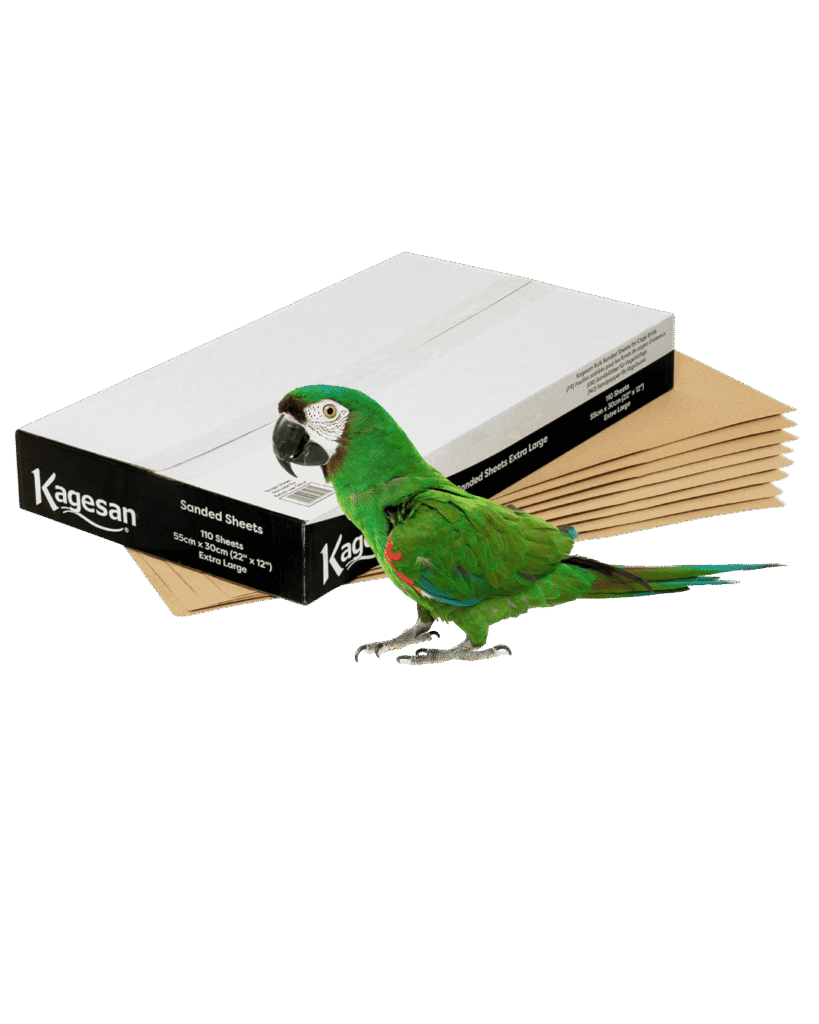
A well-established name in the UK cage-liner space is a pre-cut, sanded sheets sized to fit most common cage trays, with reviewers noting they hold up well and last months even with heavy daily use across multiple birds.
Best for: Daily changes, budgies, canaries, cockatiels
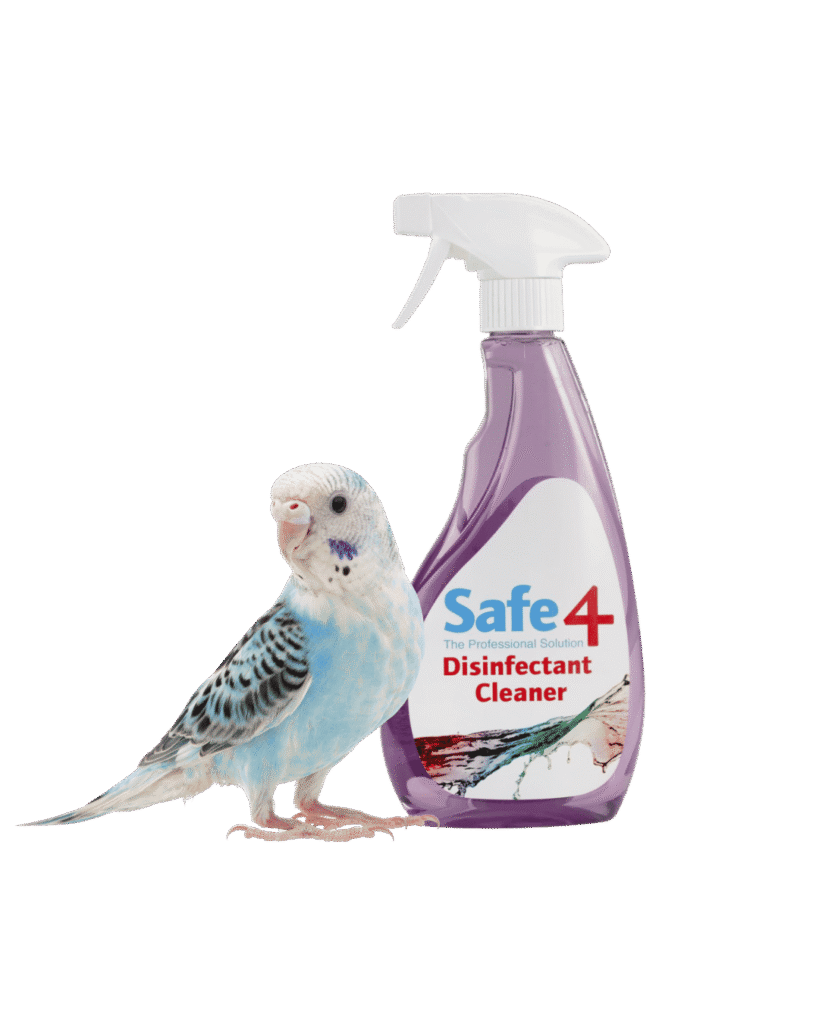
2. Safe4 Professional Surface Disinfectant, Ready to Use (500ml)
DEFRA-approved and pre-diluted for immediate use with no mixing needed. Trusted across UK vet clinics, zoos, and animal care settings, with reviewers specifically praising it for cage cleaning.
Best for: Quick daily/every-other-day spot-cleaning
3. Johnsons Clean and Safe Cage Bird Disinfectant Spray (500ml)
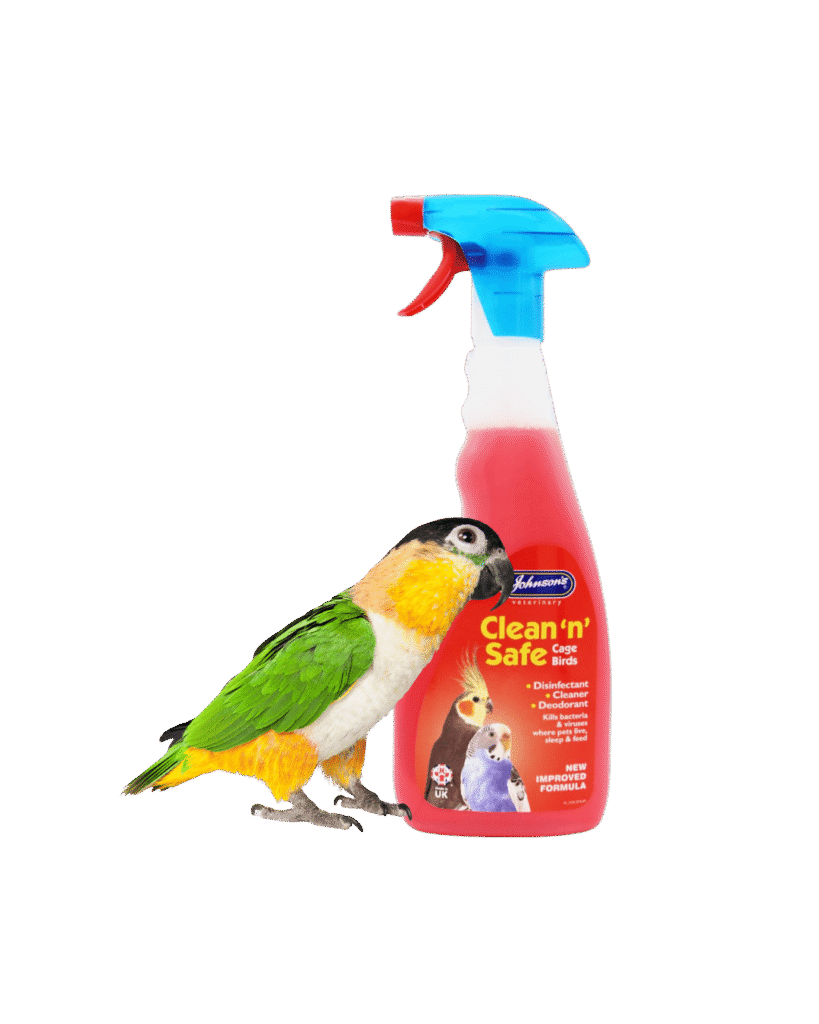
A trusted vet-brand name in UK pet care, formulated specifically for bird environments, killing bacteria and viruses without leaving a harsh chemical smell.
Best for: Weekly deep cleans, disinfecting bars and perches
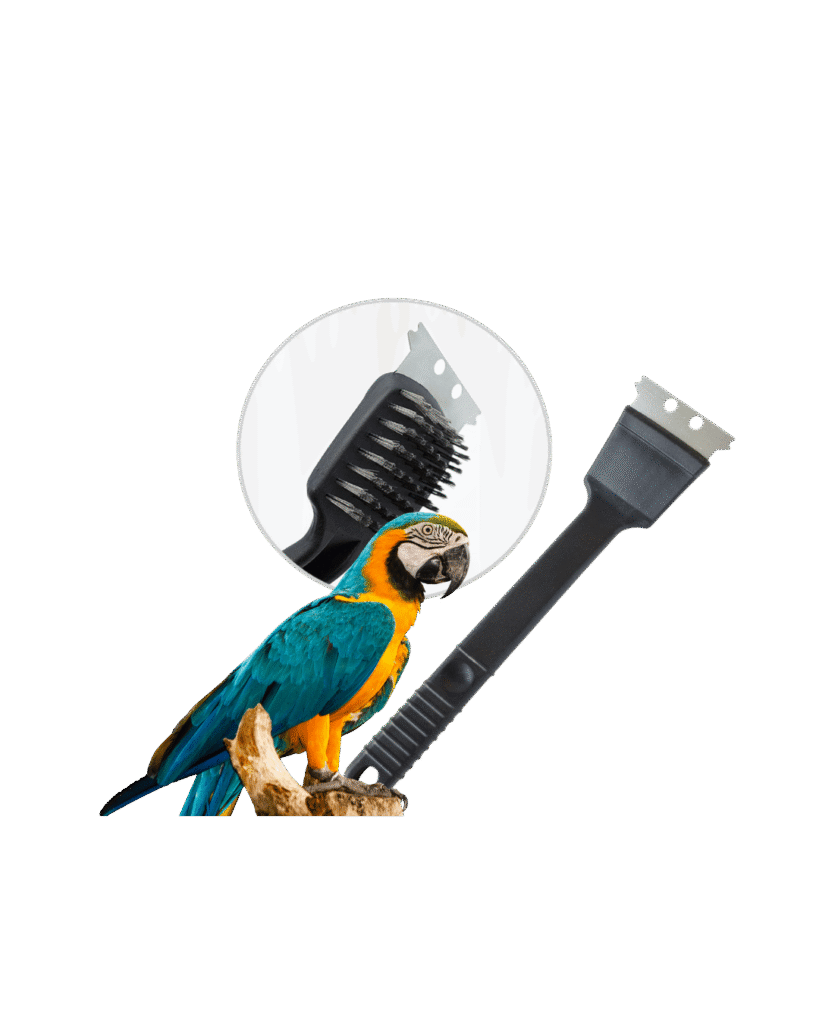
4. Stainless Steel Bird Droppings Cleaning Brush with Scraper
A dual-head design combining a stiff wire brush with a flat scraper, reviewers praise it for cutting through dried, caked-on droppings on wooden perches and cage bars.
Best for: Weekly deep cleans, stubborn dried-on mess
5. ASOCEA Adjustable Bird Cage Seed Catcher Skirt (200x70cm)
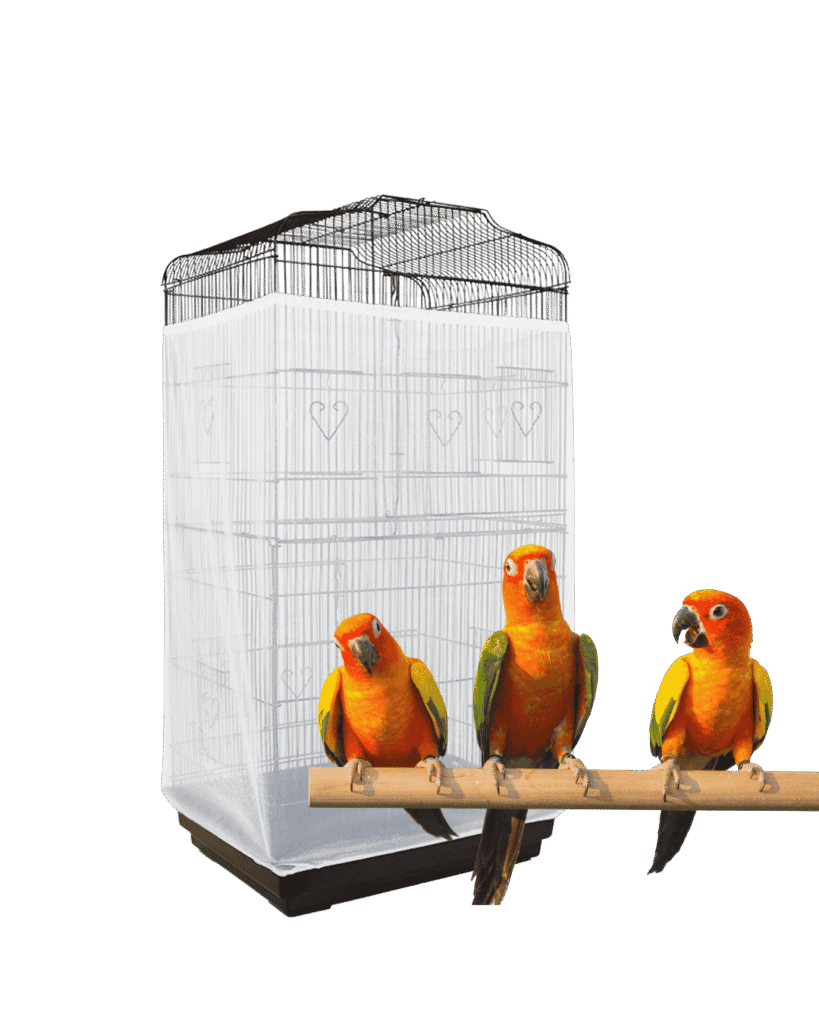
A soft nylon mesh skirt with an adjustable drawstring top and bottom, sized to wrap most round and square cages and stop scattered seed landing on the surrounding floor.
Best for: Messy eaters, larger parrot species, reducing floor mess
Amazon UK Bird Cage Cleaning Kit: Quick Reference Table
| Product | What It’s For | Best Suited To | Direct Link |
| Kagesan Sand Sheets (110pk) | Daily base changes | Most cages, light-to-moderate mess | Buy Here |
| Safe4 Ready to Use Disinfectant | Quick spot-clean of bars/perches | Daily touch-ups, no mixing needed | Buy Here |
| Johnsons Clean and Safe Spray | Bacteria and odour removal | Weekly deep cleans | Buy Here |
| Stainless Steel Droppings Brush | Stuck-on residue removal | Weekly deep cleans | Buy Here |
| ASOCEA Seed Catcher Skirt | Catching scattered seed/debris | Messy eaters, larger parrots | Buy Here |
Long-Term Tips to Keep a Bird Cage Genuinely Fresh
🗓️ Build a daily and weekly routine: Daily liner changes plus a proper weekly deep clean prevents the gradual buildup that spot-cleaning alone misses.
🧽 Wipe bars and perches as often as you change the liner: Odour and bacteria build up on surfaces beyond the base tray just as readily.
🌬️ Position the cage away from draughts but with good airflow: This helps disperse feather dust naturally without creating an uncomfortable environment for your bird.
🍽️ Remove fresh food and wet treats within a few hours: Uneaten fresh food spoils fast and is a major contributor to cage odour if left in place too long.
🧴 Stick to products explicitly labelled bird-safe: Given how sensitive avian respiratory systems are, this is worth prioritising over price or scent when choosing any cleaning product.
FAQs: Bird Cage Liners and Cleaners
Q: What’s the best liner for a bird cage?
This depends on your bird’s mess level and behaviour. Disposable paper liners work well for most light-to-moderate mess situations and daily changes, while grid-based tray inserts suit birds that dig, chew, or scatter debris heavily.
Q: How often should I change my bird’s cage liner?
Daily changes are ideal for most birds, given how quickly droppings and food debris can start to smell or harbour bacteria. Every-other-day changes are workable for lighter mess if paired with spot-cleaning in between
Q: Can I use household cleaning products on a bird cage?
No, standard household cleaners, particularly those containing ammonia or strong fragrances, can be genuinely harmful to birds due to their sensitive respiratory systems. Always use a product specifically labelled safe for bird cages.
Q: Is sand or gravel a good base liner for a bird cage?
Generally not recommended as a primary liner for most pet birds, it can harbour bacteria and carries some risk of digestive impaction if ingested. Paper-based or grid-based liners are the safer default for most species.
Q: Why does my bird’s cage smell bad even though I clean it regularly?
This is often down to missed areas like tray corners, bars, perches, or debris caught under a liner rather than the frequency of cleaning itself. A thorough weekly deep clean covering the whole cage, not just the base, usually resolves persistent odour.
Q: My bird chews or shreds the cage liner, what should I use instead?
A grid-based tray insert that sits above the liner prevents direct access to the paper, letting debris fall through while removing the temptation to chew or dig at the liner itself.
When to Rethink Your Cleaning Routine
Most cage odour and mess issues are fixed with the right liner and cleaning schedule, but it’s worth reassessing your setup if:
- Odour persists within a day of a full clean despite daily liner changes
- You notice mould or damp patches recurring in the same spot
- Your bird shows signs of respiratory irritation, such as sneezing or laboured breathing, which may indicate a cleaning product isn’t suitable
- Feather dust buildup seems unusually heavy despite regular wipe-downs, which may be worth mentioning to an avian vet in case it points to a health issue
Final Thoughts on Bird Cage Liners and Cleaners
A genuinely fresh bird cage comes down to matching the liner to your bird’s specific mess pattern, sticking to a daily-plus-weekly cleaning routine, and using products that are actually safe for a bird’s sensitive respiratory system, not just whatever’s already under the sink. Get those three things right and the daily upkeep becomes quick rather than a constant losing battle.
Our top picks? Disposable paper liner rolls for straightforward daily changes, paired with a bird-safe disinfectant spray for the weekly deep clean. If your bird is a chewer or a particularly messy eater, add a grid-based tray insert or seed catcher skirt to the setup.
Looking for more bird care advice? Read our guide on best bird cages, or browse our full bird care and cage accessories section on FetchStop.
⚠️ Affiliate Disclosure: This post contains Amazon affiliate links. If you purchase through these links, we may earn a small commission at no extra cost to you.