
If you’ve ever looked at your dog’s plain kibble and thought, “You deserve better than this beige buffet!” you’re not alone. Mixing wet & dry dog food is a simple way to turn everyday dinners into something that looks (and smells) a bit more like a treat – without losing the balance and convenience of kibble.
Think of it as giving your dog crunchy biscuits with a little gravy, instead of the same dry bowl every day.
Why Mix Wet & Dry Dog Food in the First Place?
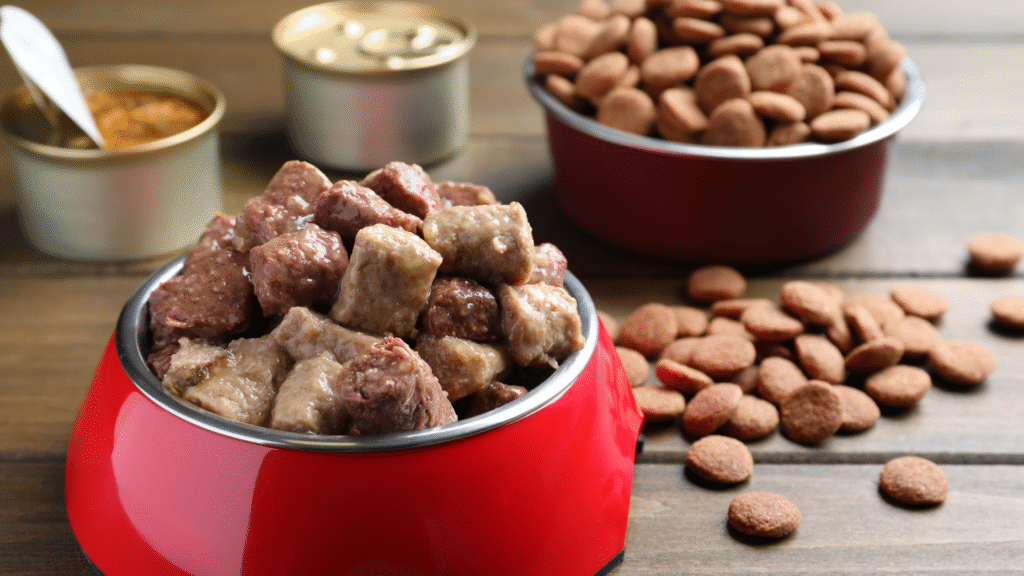
Mixed feeding, using both wet and dry food, gives you the best of both worlds:
- Dry food keeps things convenient and adds that all‑important crunch.
- Wet food boosts flavour and smell, which is great for fussy eaters or dogs who “go on strike” with plain kibble.
- The extra moisture from wet food can help with hydration, especially for dogs who don’t always drink much water.
The trick is to mix them in a way that’s tasty, gentle on the tummy, and still balanced.
Step 1: Decide Your “Base” Kibble
Before you start throwing gravy around, pick a solid dry food as your base. This is the backbone of your dog’s diet, so you want something complete, balanced, and easy to portion.
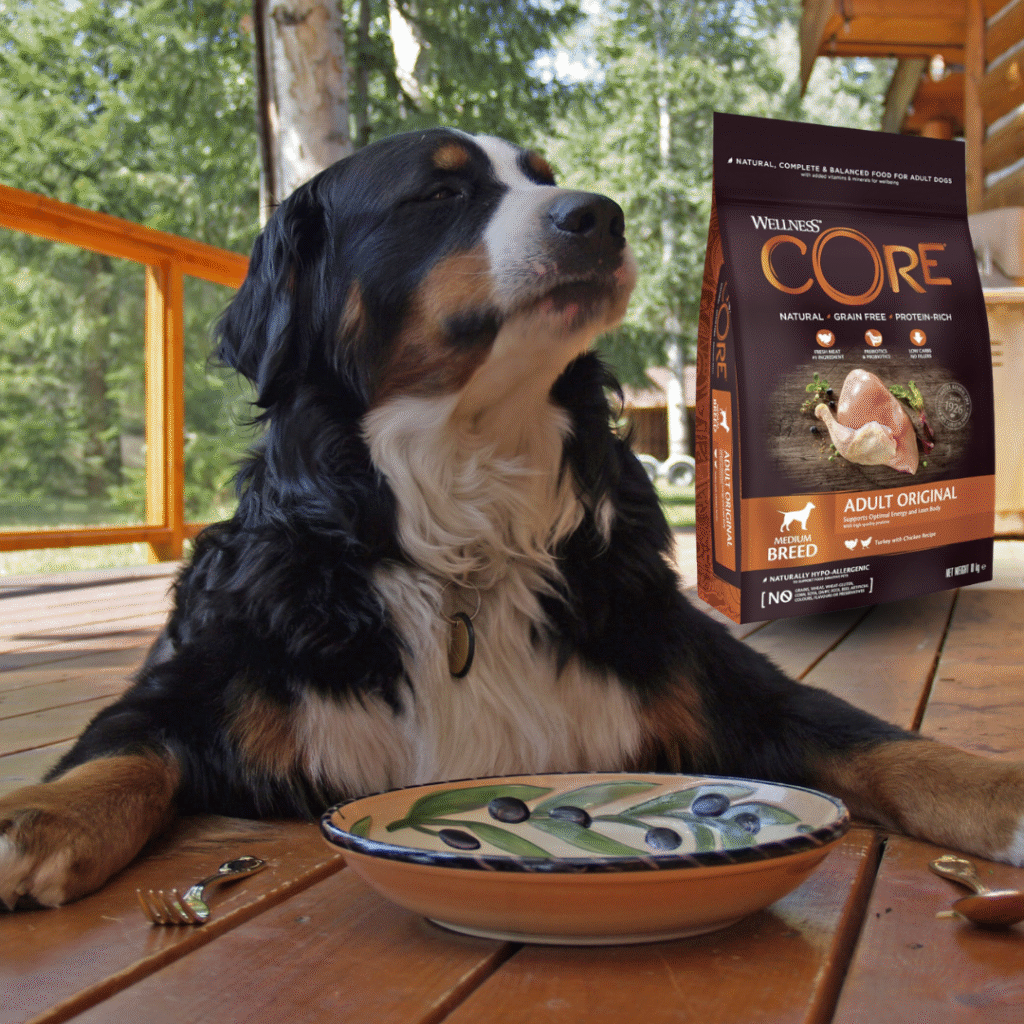
A great example is Wellnessnes Core, which works really well as a main kibble. It has clear feeding guidelines on the bag, so it’s easy to adjust portions when you start adding wet food, and it’s designed to be used as a complete daily diet.
Not only that, choosing a grain-free kibble, high in protein, will make building their complete nutrient plate a breeze.
Step 2: Swap, Don’t Stack
Here’s the biggest mistake people make: they add wet food on top of the usual amount of kibble and then wonder why their dog is suddenly getting… chunkier.
Instead, you’re going to swap:
- If your dog normally has one full cup of dry food, you might give ¾ cup of kibble and “trade” the remaining ¼ for wet food.
- The exact ratio is flexible; some dogs do well with just a spoonful of wet, others with a half‑and‑half mix, but the total calories should stay roughly the same.
Think of it like changing the sauce on your pasta, not doubling the entire meal.
Step 3: Pick Your Wet “Topper Style”
Different wet foods give different vibes, so you can choose based on your dog’s personality and habits.
For everyday meals, something like Pooch & Mutt wet dog food with chunks of meat and veg is a brilliant option. It mixes easily through kibble and has a rich smell that’s especially helpful for picky eaters or dogs who are bored of plain biscuits. You can literally see the pieces of meat and vegetables, which makes the whole bowl look more appetising.
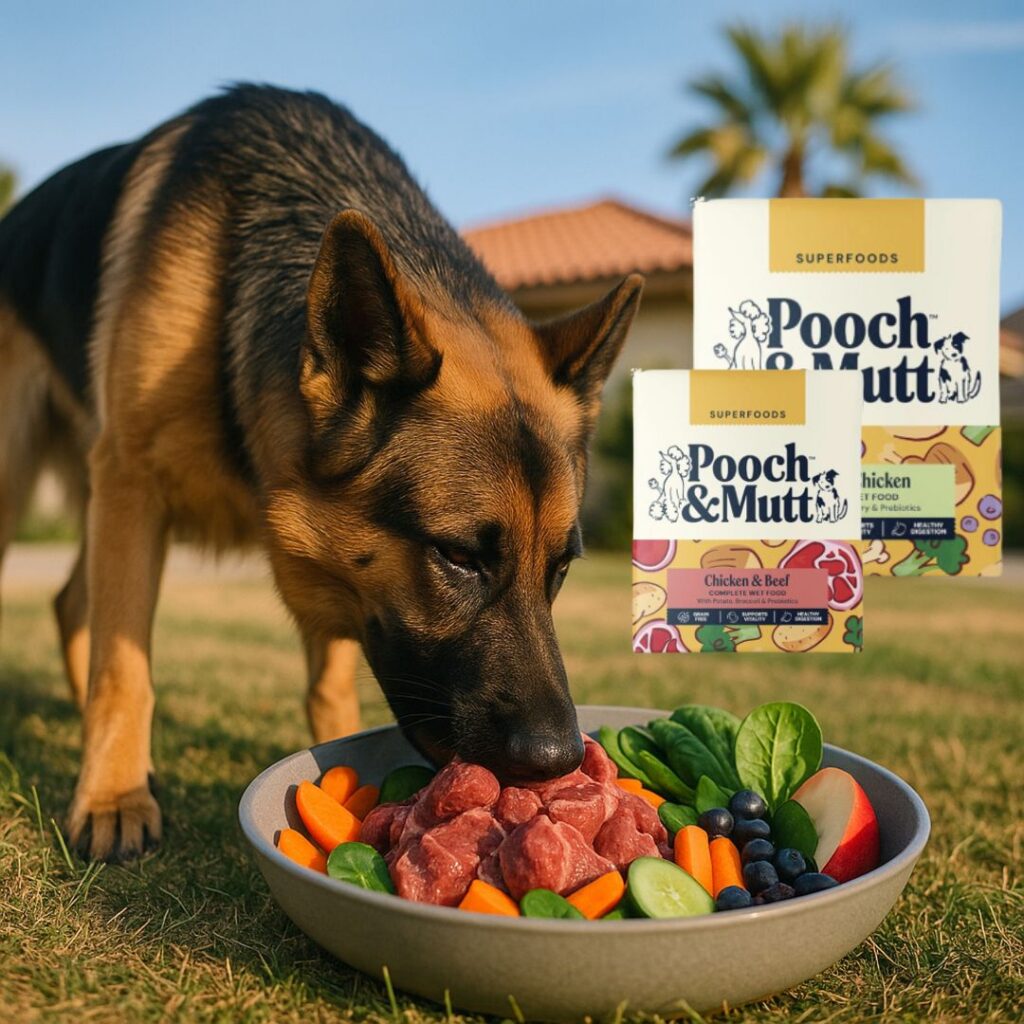
A couple of ideas for how to use it:
- Add one or two tablespoons to the kibble, then mix well so every piece gets lightly coated.
- Adjust the amount depending on your dog’s size, what looks generous for a small terrier will look like a garnish for a Lab.
Step 4: Introduce the Mix Slowly
Dogs’ stomachs can be dramatic. Even a good change can cause chaos if you do it overnight.
- Days 1 – 3: Mostly dry food with just a small spoonful of wet mixed through.
- Days 4 – 6: Increase the wet food a bit and reduce the kibble to match.
- Day 7 onwards: Settle into the ratio that works for your dog’s appetite and their poo (yes, we’re going there).
If you notice loose stools, gas, or vomiting, just slow things down and pull back the wet portion temporarily. Every dog has their own pace.
Step 5: Tailor It to Your Dog’s Needs
For Dogs Watching Their Waistline
If your dog is a bit “fluffier” than the vet would like, mixed feeding can still work, you just need a sensible dry base and good portion control.
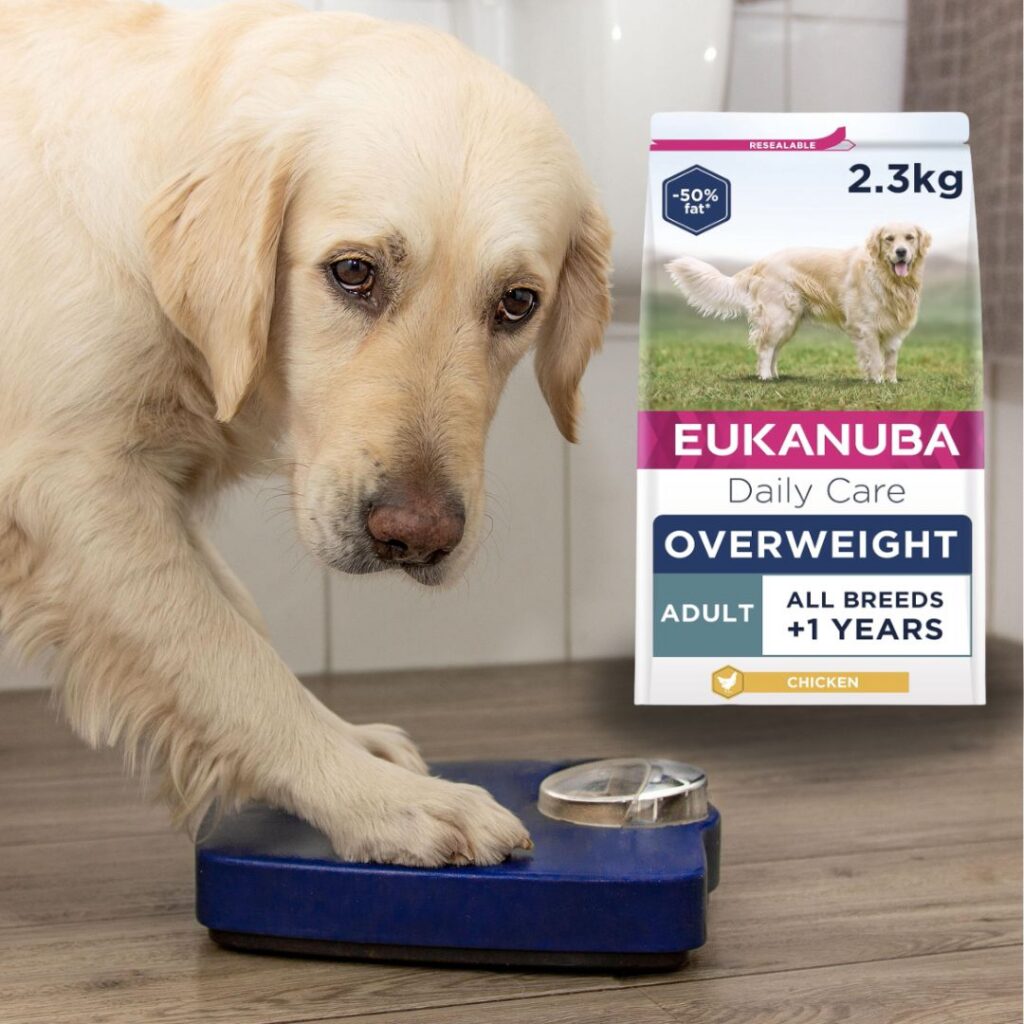
This is where Eukanuba dry dog food formulated for healthy weight management comes in handy. It’s designed to support healthy weight while still being tasty enough to use as your base kibble.
The clear calorie information and portion guides make it much easier to shave off some of the kibble and replace it with wet food without playing guess‑the‑portions.
To keep things on track:
- Do regular weigh‑ins or body checks (you should be able to feel ribs without pressing hard).
- Use a scoop or kitchen scales instead of pouring straight from the bag.
- Keep treats in mind too, mixed feeding plus lots of extras can add up quickly.
For Sensitive Tummies
Some dogs react if you even look at their food wrong. For them, the type of wet food you choose matters a lot.
If your dog has a delicate stomach, stick with simple, gentle recipes and introduce new foods in tiny amounts. A teaspoon of wet food mixed into their usual dry is enough to test the waters. Give their digestive system a few days to respond before you increase the amount.
If they’re on a vet‑recommended diet, always check before adding anything new, even if it’s “just a topper”.
For Seniors or Tiny Breeds
Older dogs and small breeds often have their own feeding quirks: fewer teeth, smaller jaws, or just a sense of drama about hard kibble.
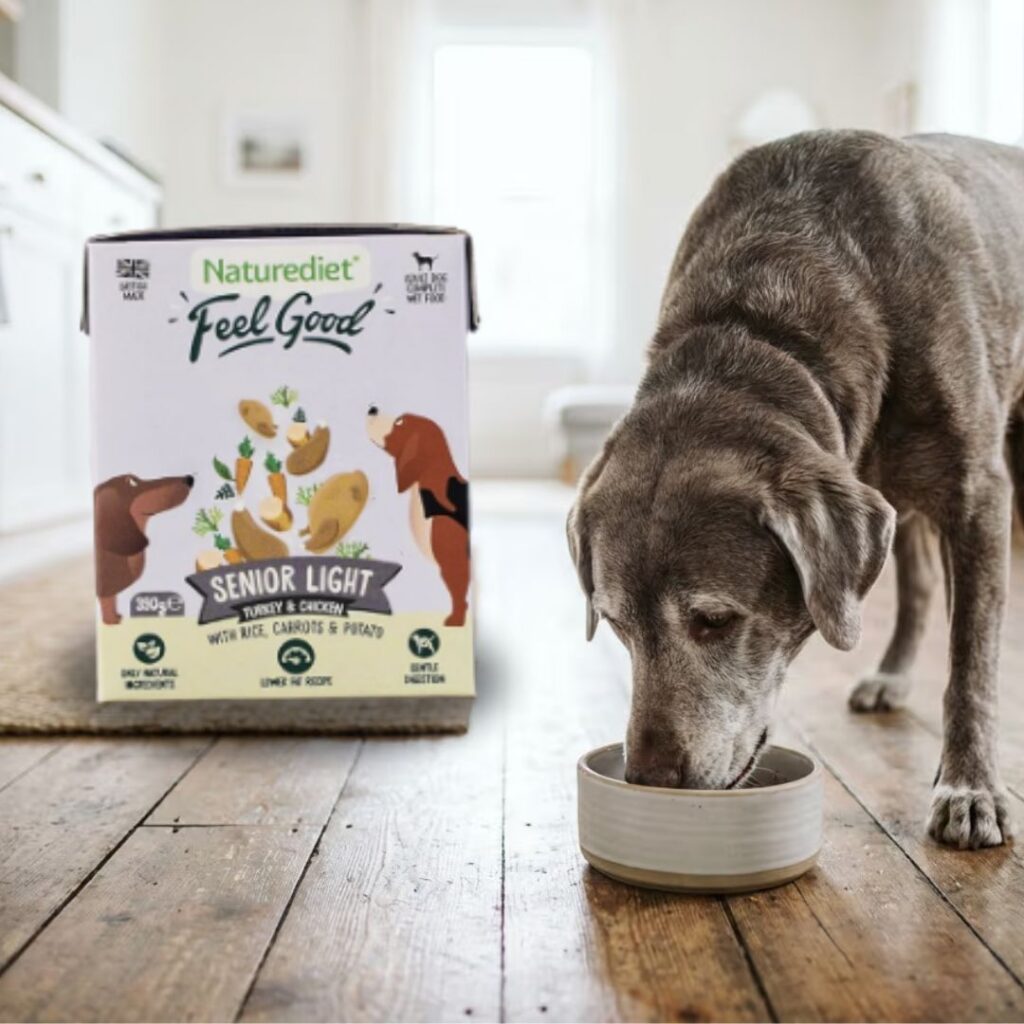
This is the perfect moment to bring in Feel Good wet dog food for seniors. You can easily mash it into smaller‑bite kibble to create a softer, more comfortable texture that’s easier on older teeth but still gives them something to chew.
This is also a great choice for smaller breeds as the fat content is reduced while keeping full nutrition.
You can:
- Mash a small amount of pâté through their kibble with a fork and add a splash of warm water for a gentle “gravy” effect.
- Pair it with smaller-bite kibble so the mix is easier for tiny mouths to handle.
- Use it to encourage dogs with reduced appetites; the smell and softness can tempt them back to the bowl.
Morning Crunch, Evening “Treat”
You don’t have to mix every single meal in the same way. A lot of owners like this simple routine:
- Morning: Dry food only! Quick, easy, and fine for most dogs.
- Evening: Mixed meal with wet + dry, so dinner feels like the “special” one.
As long as the total daily amount of food stays within the feeding guidelines for your dog’s size and activity level, splitting it this way keeps things flexible while still giving your dog something to look forward to.
Little Extra Tips for Mixed Feeding Wet & Dry Dog Food
- Store opened wet food in the fridge and use it within a couple of days.
- If you’re using it straight from the fridge, add a splash of warm water to take the chill off and boost the smell.
- Always keep fresh water available, even if you’re adding more moisture through wet food.
- Stick to one change at a time! If you swap food, don’t also change treats, routines, and everything else in the same week.

Bringing It All Together
Mixed feeding doesn’t have to be complicated: pick a reliable dry base, choose a wet food that suits your dog’s needs, swap rather than stack portions, and introduce changes slowly.
With a bit of trial and error, you’ll land on a combo that makes your dog light up at mealtimes and still keeps you in control of their nutrition.
⚠️ Affiliate Disclosure: This post contains Amazon affiliate links. If you purchase through these links, we may earn a small commission at no extra cost to you.
Need more similar tips? Visit our other blog to get on top of your pet parenthood Dog Essentials | Things You Need for a New Dog