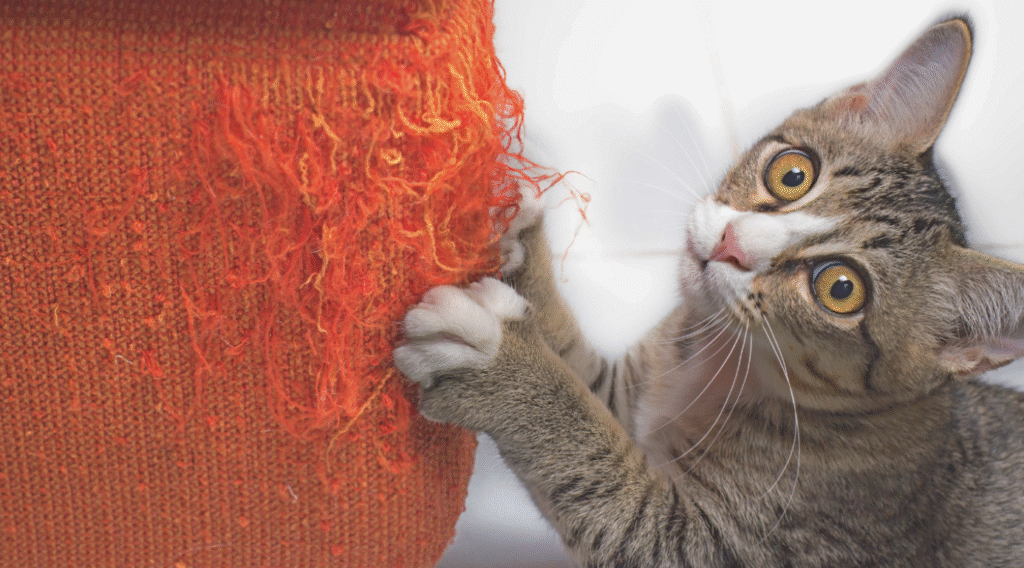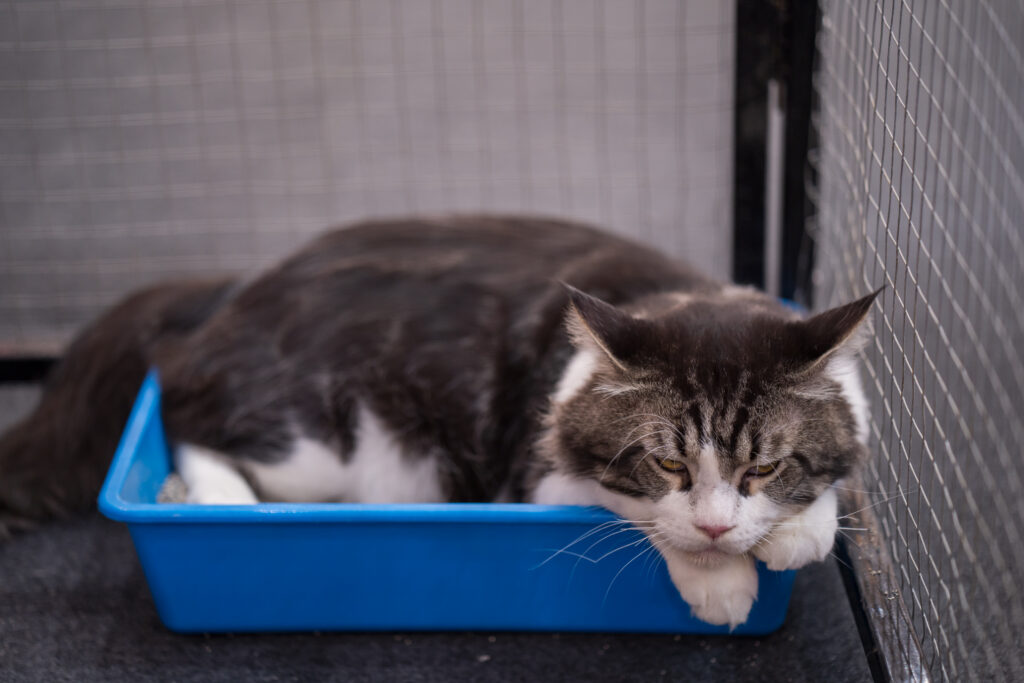
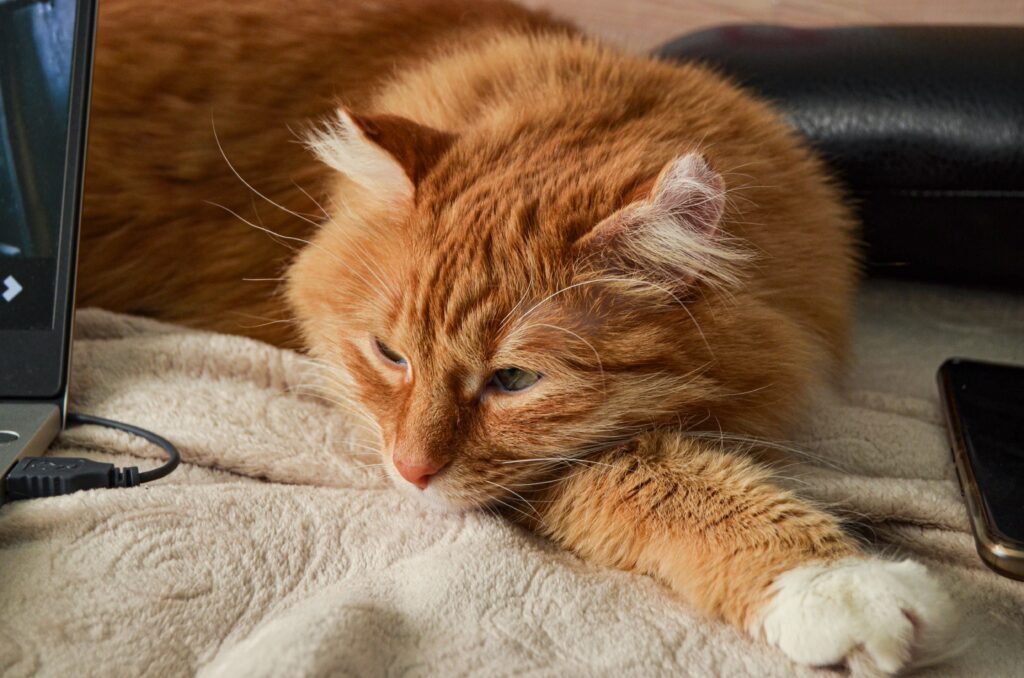
If your cat turns into a furry rocket at 2am, you are not alone.
One minute they are asleep. The next they are sprinting down the hallway, bouncing off furniture and launching themselves across the bed.
These outbursts are called zoomies. They can be harmless fun.
They can also be a sign your cat is bored, overstimulated or quietly anxious.
This guide explains
- why cats get zoomies at night
- how to tell playful energy from hidden anxiety
- how to use simple products and routine tweaks to calm the chaos
Interactive Wand Toy For Evening Play
For Cats Who Have Too Much Energy Before Bed
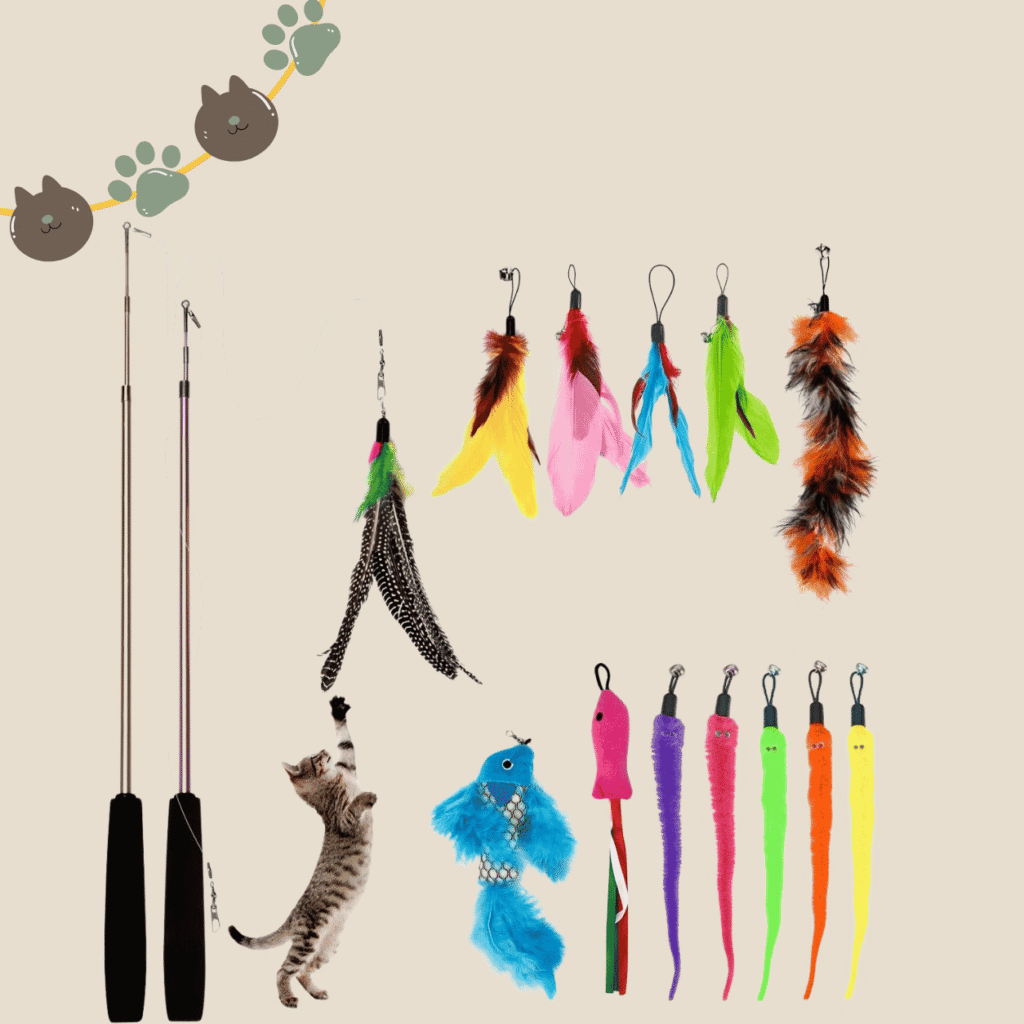
If your cat sleeps all day then explodes into zoomies at night, they probably have a lot of unused energy. A daily play ritual before bed can turn those chaotic sprints into calmer sleep.
A simple interactive wand toy is a great starting point because
- you control the movement, speed and direction
- it lets your cat stalk, chase and pounce in a safe way
- ten to fifteen focused minutes can burn more energy than hours of pacing
You can
- schedule a wand toy session one to two hours before you go to sleep
- end the session with a small meal so your cat follows a hunt, eat, sleep pattern
- rotate different wand attachments so your cat does not get bored
This is the kind of toy you use when your cat’s zoomies are clearly playful, but you want that play to happen before you get into bed, not after.
Puzzle Feeder For Evening Meals
For Cats Who Need A Brain Workout, Not Just A Full Bowl
Some cats get zoomies because their body is full but their brain is not.
They eat in two minutes, then look for something to do.
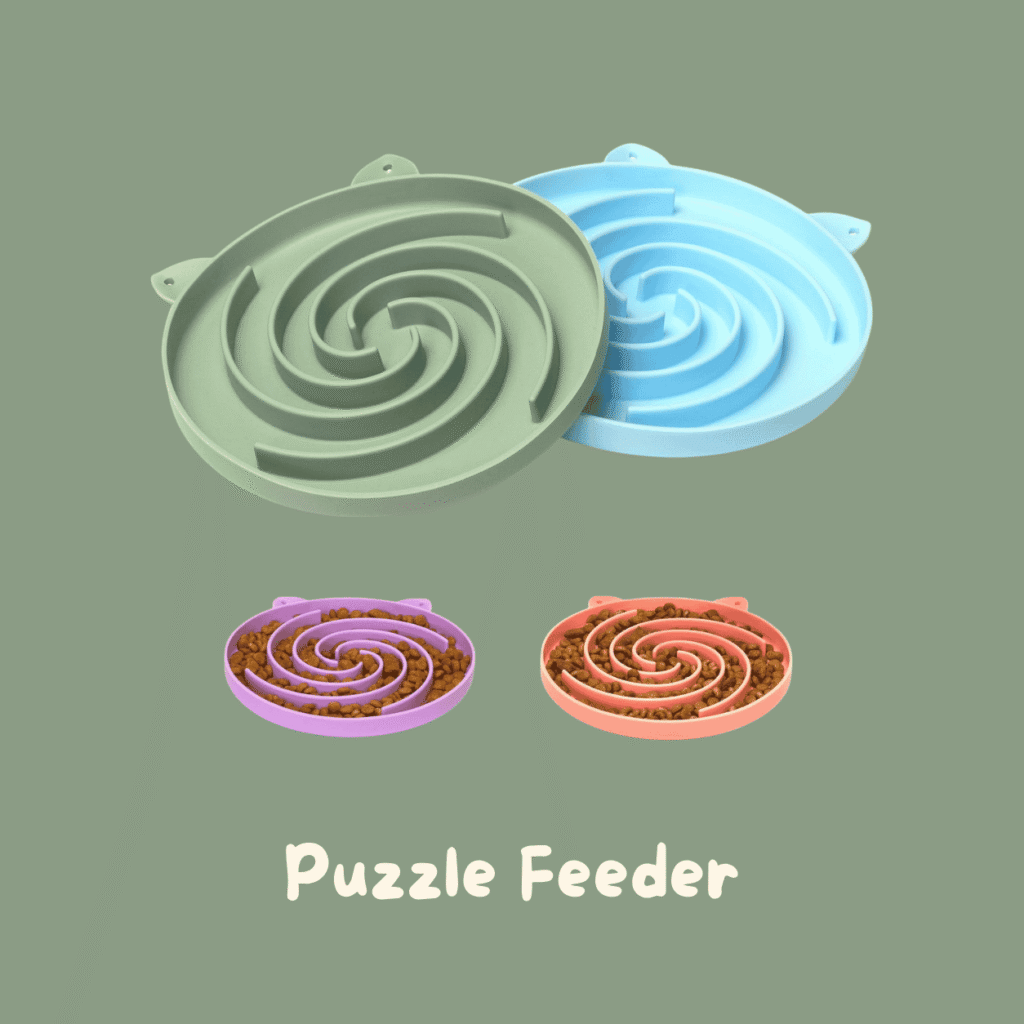
Puzzle feeders turn dinner into a game by
- breaking food into small sections or pockets
- making cats work, paw and think for each bite
- slowing down eating and providing mental enrichment
You can
Use puzzles with dry food or certain treats depending on your vet’s advice
Serve part of your cat’s evening portion in a puzzle feeder and the rest in a normal bowl
Change the pattern each night to keep them guessing
This is the kind of product you reach for when your cat finishes dinner and immediately starts racing around the house as if the meal never happened.
Cat Tree Or Climbing Station
For Cats Who Will Always Climb And Zoom
Not all zoomies are a problem. Some cats simply love climbing and jumping.
Trying to stop them completely often fails. Redirecting the chaos works better.
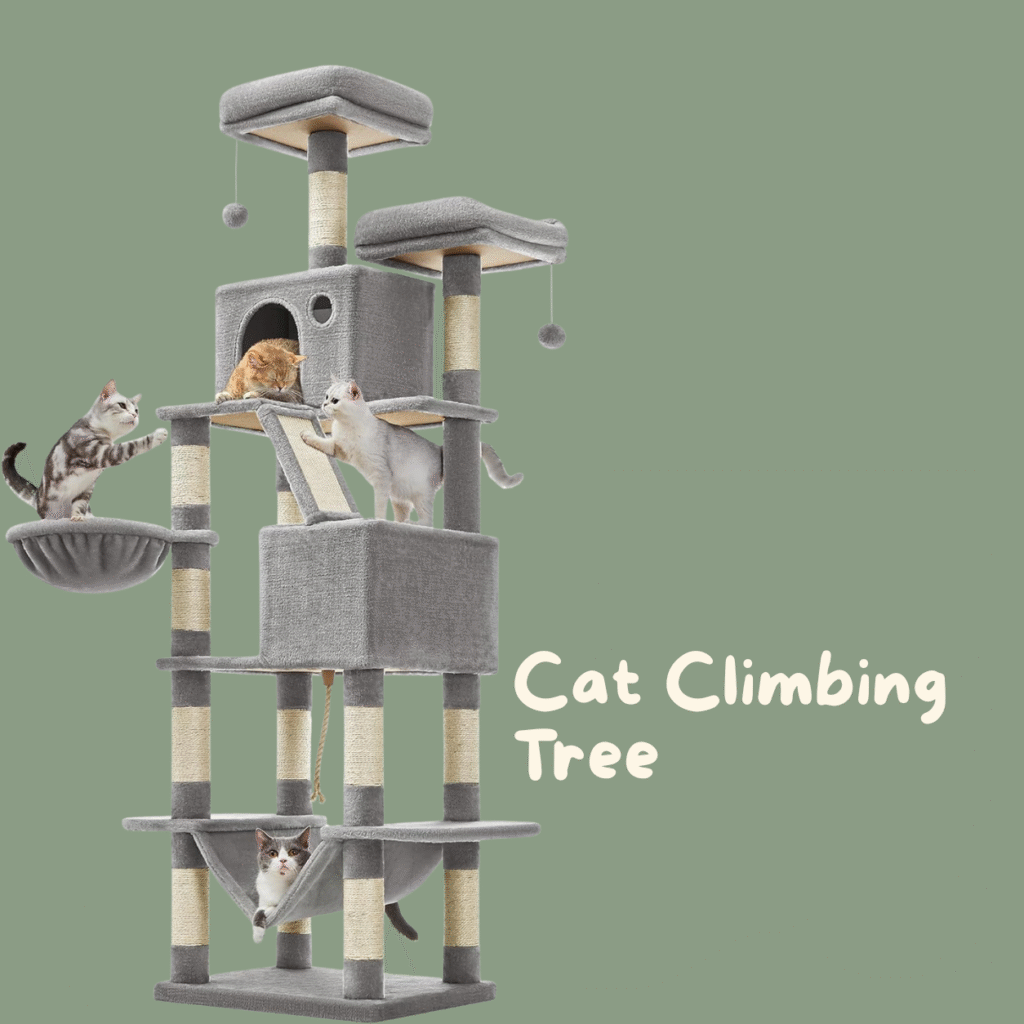
A good cat tree or activity station gives your cat
- vertical space to climb and jump
- scratching posts to protect your sofa
- perches and hammocks to rest once the zoomies are done
You can
- place the tree in a room or hallway away from your bedroom
- put it near a window so your cat can watch outside quietly
- reward your cat with treats and toys when they use the tree instead of fragile furniture
This type of product is ideal for cats who are natural climbers and will always move at night.
You are not trying to stop their instincts, just give them a safer and more controlled playground.
Feline Pheromone Diffuser
For Cats Whose Zoomies Are Driven By Anxiety
If your cat’s night time behaviour looks tense rather than playful, calming pheromone diffusers can help.
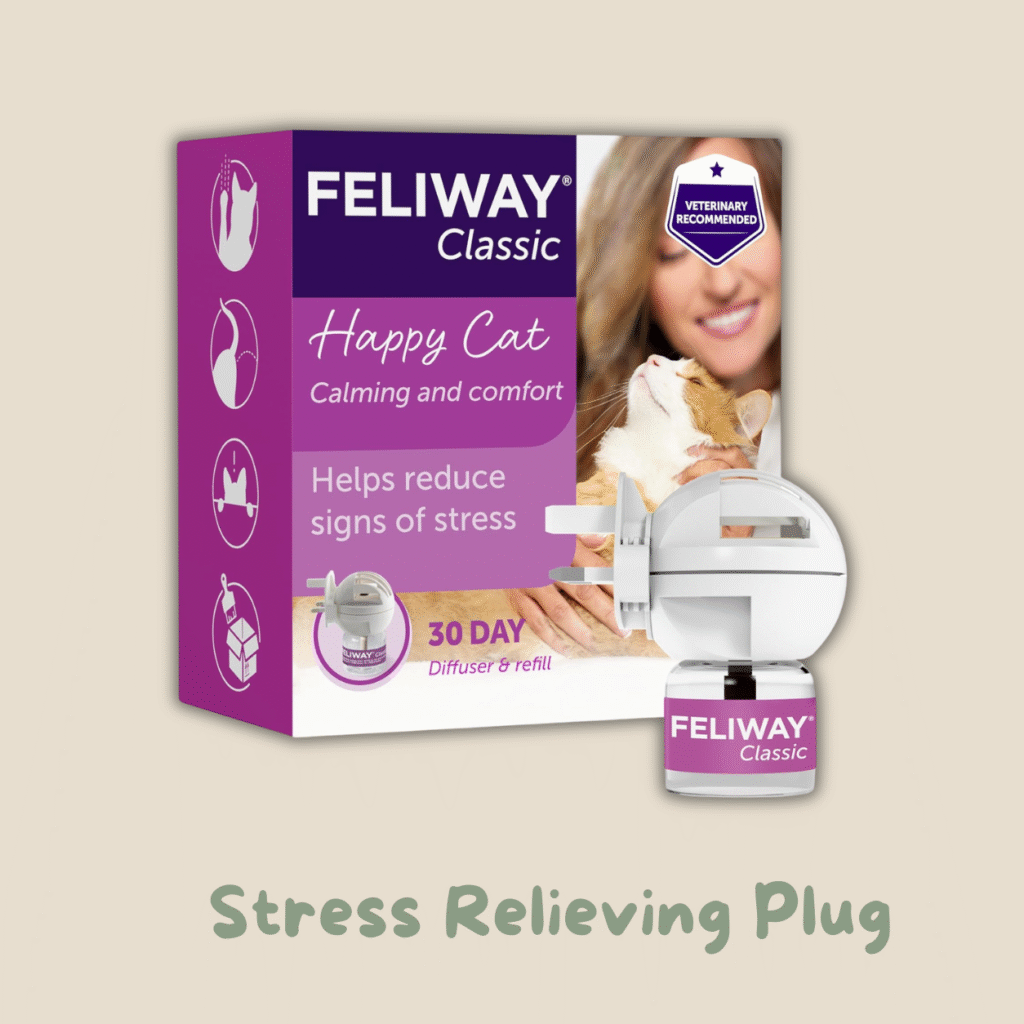
These plug in diffusers
- release synthetic calming pheromones based on the scent cats use when they feel safe and secure
- are designed to reduce stress related behaviours such as pacing, spraying and scratching
- work continuously once plugged in, so the environment feels more stable
You can
- plug one into the room where your cat spends most of their night time
- combine it with more daily play, better hiding spots and predictable routines
- give it a couple of weeks before you judge the full effect
This is the kind of product you add when your cat’s zoomies come with wide eyes, flattened ears, crying or hiding.
It does not replace play or routine, but it supports a calmer baseline.
Automatic Feeder For Night Snacks
For Cats Who Wake You Because They Are Hungry
Some cats run around and meow at night primarily because they want food.
If their zoomies cluster around certain hours and end at the bowl, hunger may be a big driver.
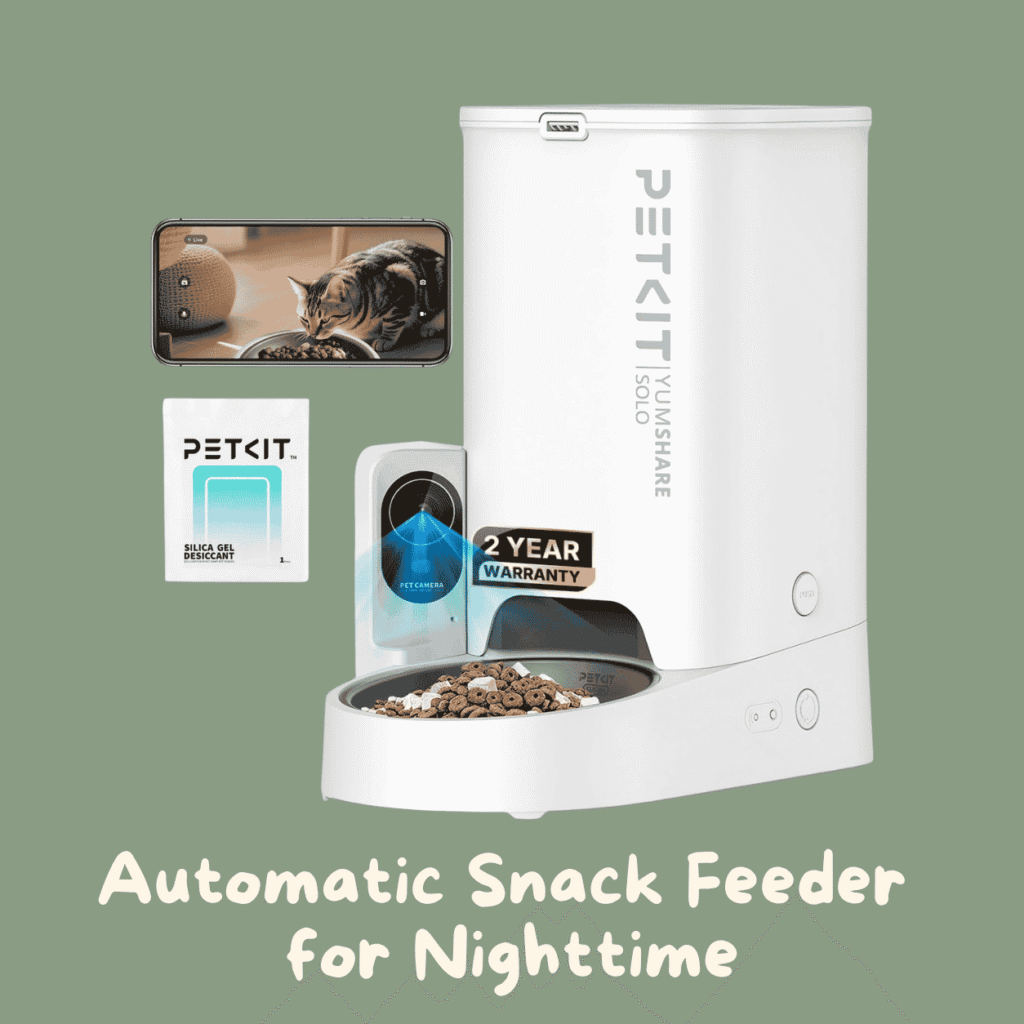
An automatic feeder can
- provide a small scheduled snack in the early hours
- keep portions controlled so your cat does not overeat
- reduce night time meowing at your bedroom door
You can
- program a tiny portion of dry food for one night time feed
- keep proper meals in the morning and evening
- gradually adjust times if your cat starts waking earlier or later
This product is useful for cats who are calm most of the time but consistently wake you to ask for food and then zoom once they have eaten.
Lick Mat Or Slow Feeder For Anxious Cats
For Cats Who Are Nervous Or Overwhelmed At The Bowl
Not every zooming cat is full of joy. Some are nervous.
They hover near the bowl, nibble, walk away and then start zooming as if they do not know what to do with themselves.
Lick mats and slow feeder bowls can change how a meal feels by
- spreading food into thin layers that your cat licks gradually
- breaking portions into smaller pockets that look less overwhelming than a deep bowl
- turning eating into a calming, repetitive activity
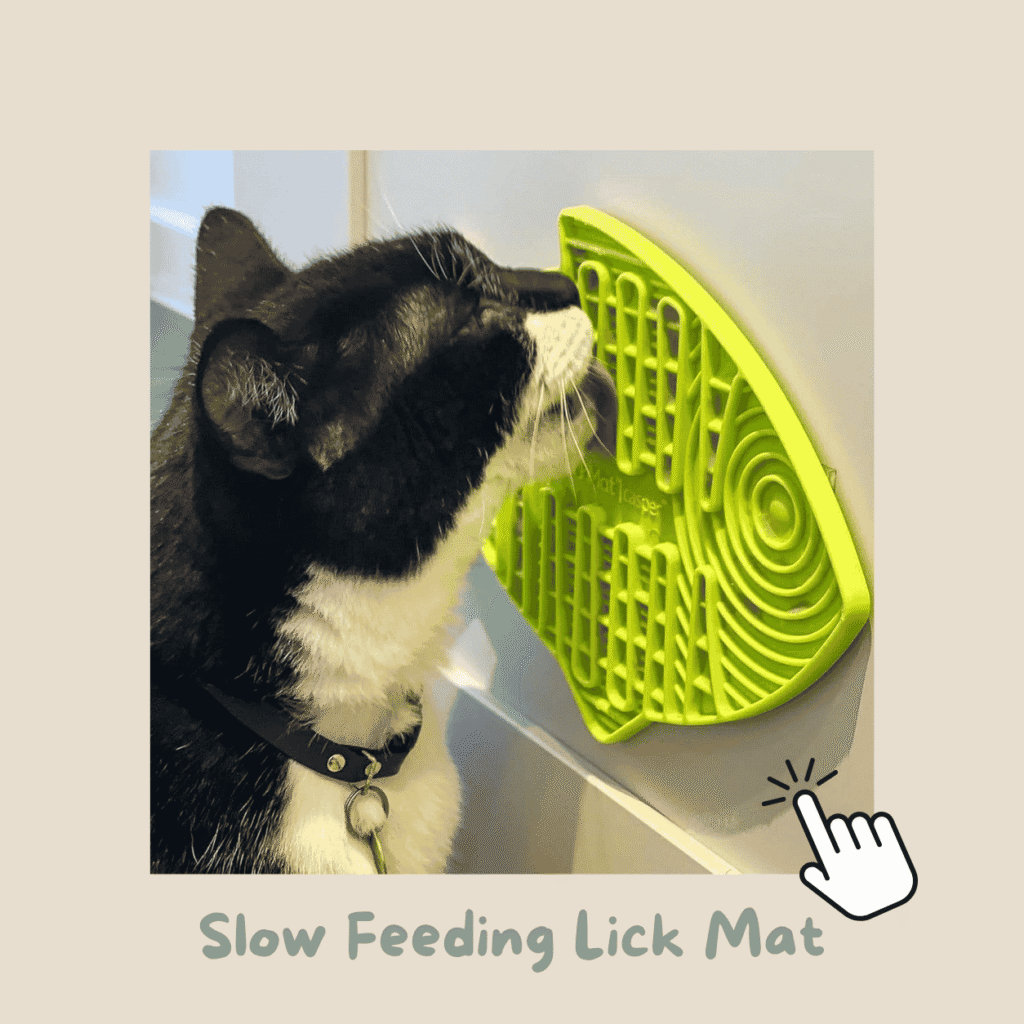
You can:
- smear a small portion of wet food or softened kibble onto a lick mat and let your cat explore it slowly
- use a slow feeder bowl for the main meals so eating feels more like a puzzle and less like a chore
- pair these tools with a quiet, safe feeding area away from loud noises
This is most helpful for cats who seem nervous at mealtimes and whose zoomies look more like restless pacing than playful sprints.

How To Tell Playful Zoomies From Hidden Anxiety
Putting everything together, look at your cat’s whole picture. Zoomies are likely just fun energy when
- your cat’s body is loose and springy
- their tail is up or relaxed, not tucked or puffed
- ears are forward or gently sideways
- they can be easily distracted by a toy or your voice
- they settle and groom or sleep after a short burst
Zoomies may be linked to anxiety when
- your cat’s tail is low, puffed or tucked
- ears are flat back against the head
- eyes are wide with large pupils
- they pace for long periods rather than sprint in short bursts
- they cry, scratch doors or cling to you at night
- you notice changes in appetite, litter box use or grooming
If behaviour has changed quickly after a big life event such as a move, a new pet or building works, stress is even more likely.
Did You Know
- Zoomies are most common in younger cats but can appear at any age.
- Short, daily play before bed often reduces zoomies more effectively than ignoring them.
- Cats with access to vertical spaces, such as trees and shelves, usually cope better with high energy periods.
- A consistent feeding and play routine gives many anxious cats more confidence at night.
- Calm environments and hiding spots can be just as important as toys when you are trying to lower stress.
How To Choose The Right Product For Your Cat
Here is a simple way to match products to behaviour. If your cat:
- Sleeps most of the day but explodes at night start with an interactive wand toy and a clear evening play ritual.
- Eats fast then zooms add a puzzle feeder to make dinner more engaging.
- Loves climbing, jumping and scratching set up a cat tree or activity station away from your bedroom.
- Do they look nervous, cries or hides during zoomies combine enrichment with a pheromone diffuser and calmer resting spaces.
- Incase your cat wakes you for food and then races around use an automatic feeder for a small night snack while keeping main meals structured.
- Your cat seems anxious near the bowl itself try lick mats or slow feeders to turn eating into a slower, more comforting process.
- You do not need to buy every product.
- Pick the one change that best fits your cat right now, give it a couple of weeks, then adjust if you need to.
When To Get Extra Help
There are times when zoomies are more than just a behavioural puzzle.
Call your vet if your cat
- is losing weight
- has diarrhoea, vomiting or ongoing stomach issues
- avoids the litter box, strains or seems in pain
- refuses most food for more than a day or two
- shows aggression or severe distress at night
Your vet can
- check for medical problems
- recommend specific diets or calming aids
- refer you to a behaviour specialist if needed
For some cats, the best solution is a blend of medical support, structured routine and the same tools you have seen in this guide.
Final Thoughts
Night time cat zoomies can be loud, inconvenient and sometimes worrying, but they are also a window into how your cat feels.The more you watch their body language, routine and environment, the easier it becomes to tell fun energy from hidden anxiety.
With
- better play opportunities
- smarter feeding setups
- dedicated spaces for climbing and resting
- calm, predictable evenings
you can protect your sleep and give your cat a life that feels safer, richer and more satisfying. If you wanna learn more about cat anxiety read this blog