
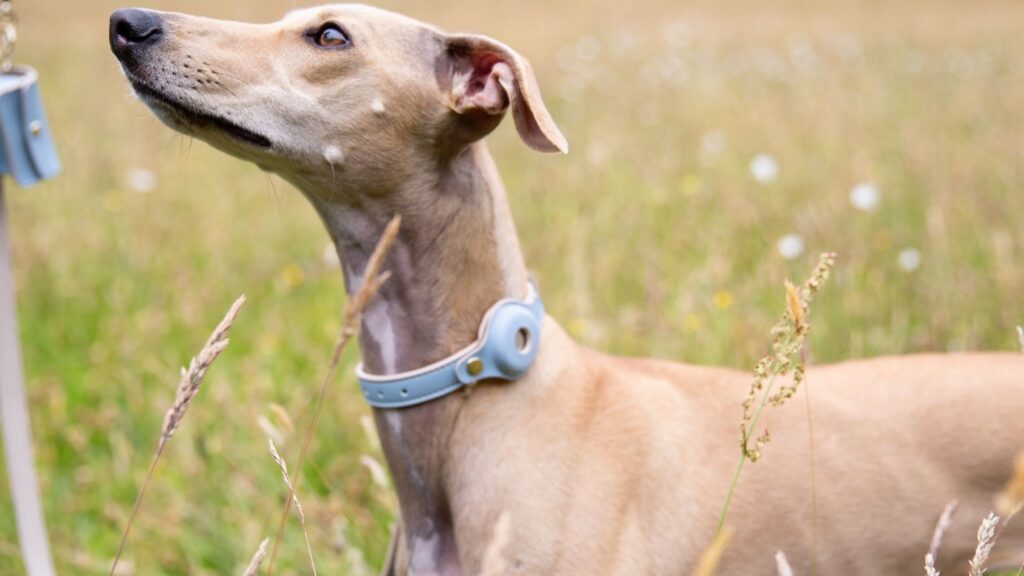
Using an AirTag on your dog is basically a modern “just in case” plan for when real life gets messy: doors get left ajar, gates don’t latch properly, fireworks spook even the calmest dogs, and off‑lead walks don’t always go to script.
In the UK, where dogs are often walked off leash in parks, beaches and moorland, having a small tracker attached securely to a collar or harness can be a genuine safety net alongside ID tags and microchips.
Why An AirTag Holder For Dogs Is Worth Considering
An AirTag on its own is tiny and easy to lose; the holder is what makes it dog‑proof.
A good holder helps when:
- Your dog is walked off‑lead in open areas (beaches, Highlands, moors) where they can cover a lot of ground quickly if they bolt.
- You live in busier towns or city centres where a loose dog could disappear round a corner before you realise.
- You’ve got an escape‑artist dog who’s already tested fences, gates or front doors more than once.
Vets and pet‑safety experts still see microchipping and ID tags as the first line of defence, but they increasingly mention GPS and tracking accessories as helpful extra layers for dogs that roam, travel or are easily spooked.
What To Look For In An AirTag Holder For Dogs
Most UK AirTag holder guides highlight a few key features that matter specifically for pets.
- Security: The AirTag should sit snugly so it can’t pop out if your dog runs, rolls or shakes.
- Durability: Holders made from silicone, TPU or rugged plastic cope better with mud, rain and zoomies.
- Water and impact resistance: Helpful in UK weather, puddles, streams and surprise swims.
- Comfort and fit: Low‑profile designs that sit flat on the collar or harness reduce rubbing and snagging.
With that in mind, let’s look at four different styles of holder and which dogs and routines they suit best.
1. Slim Collar‑Mounted Holder (Everyday City & Suburb Walks)
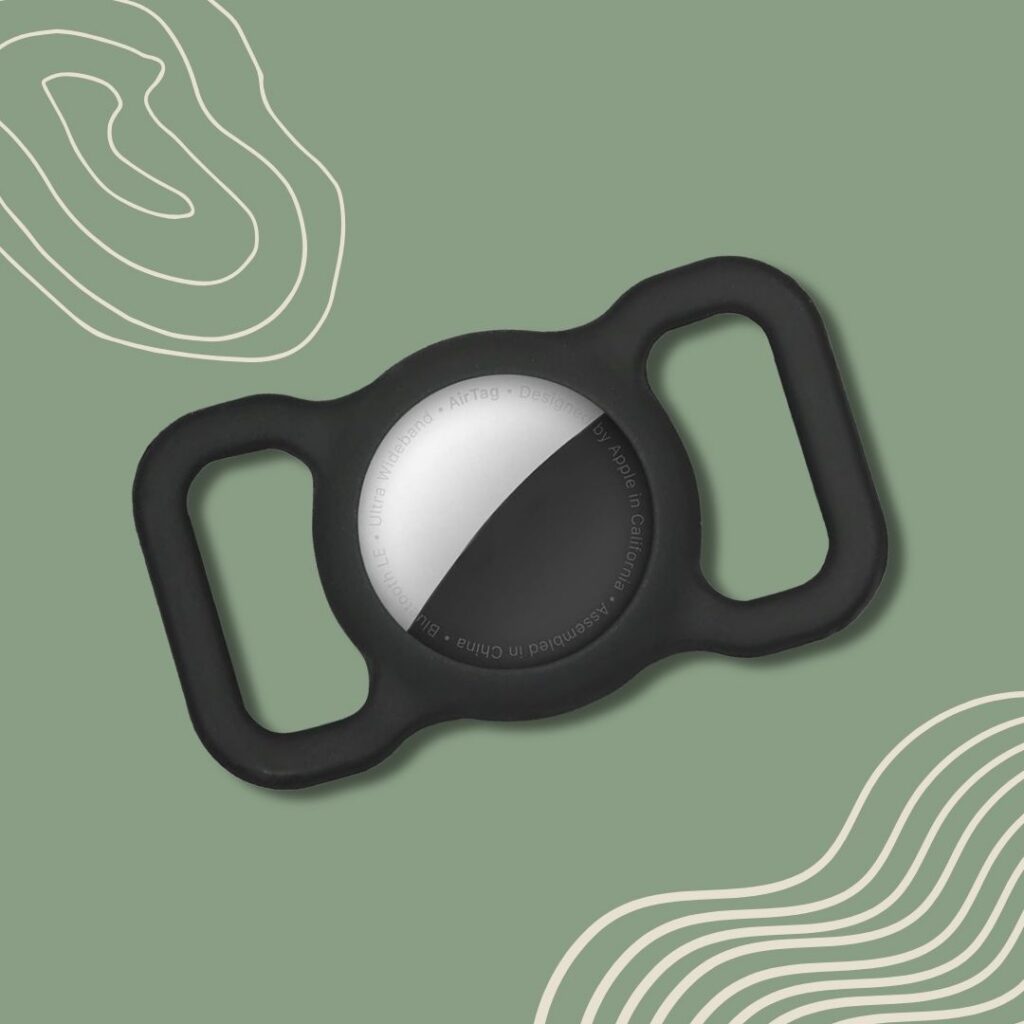
This type of holder clips directly onto a flat collar and sits low against the strap, which makes it a good all‑round choice for most everyday UK dogs.
Why a slim collar-mounted holder works:
- Low‑profile design: Less likely to catch on hedges, furniture or harness straps, ideal for dogs who weave through undergrowth or play in parks.
- Secure fit around the AirTag: The snug silicone/TPU shell helps absorb bumps and stops the tag from popping out during zoomies.
- Simple to move between collars: Handy if you swap between a “walks” collar and a “stay at home” one.
They are best for:
- Small to medium dogs in residential areas or town parks.
- Dogs who mainly walk on‑lead but you want backup for the “if they slip their collar” scenario.
- Owners who want something discreet that doesn’t scream “gear” on a slim collar.
This style is often recommended by comparison sites as a solid default pick because it balances security, comfort and everyday practicality.
2. Heavy‑Duty, Waterproof Holder (Highlands, Coasts & Mud Lovers)
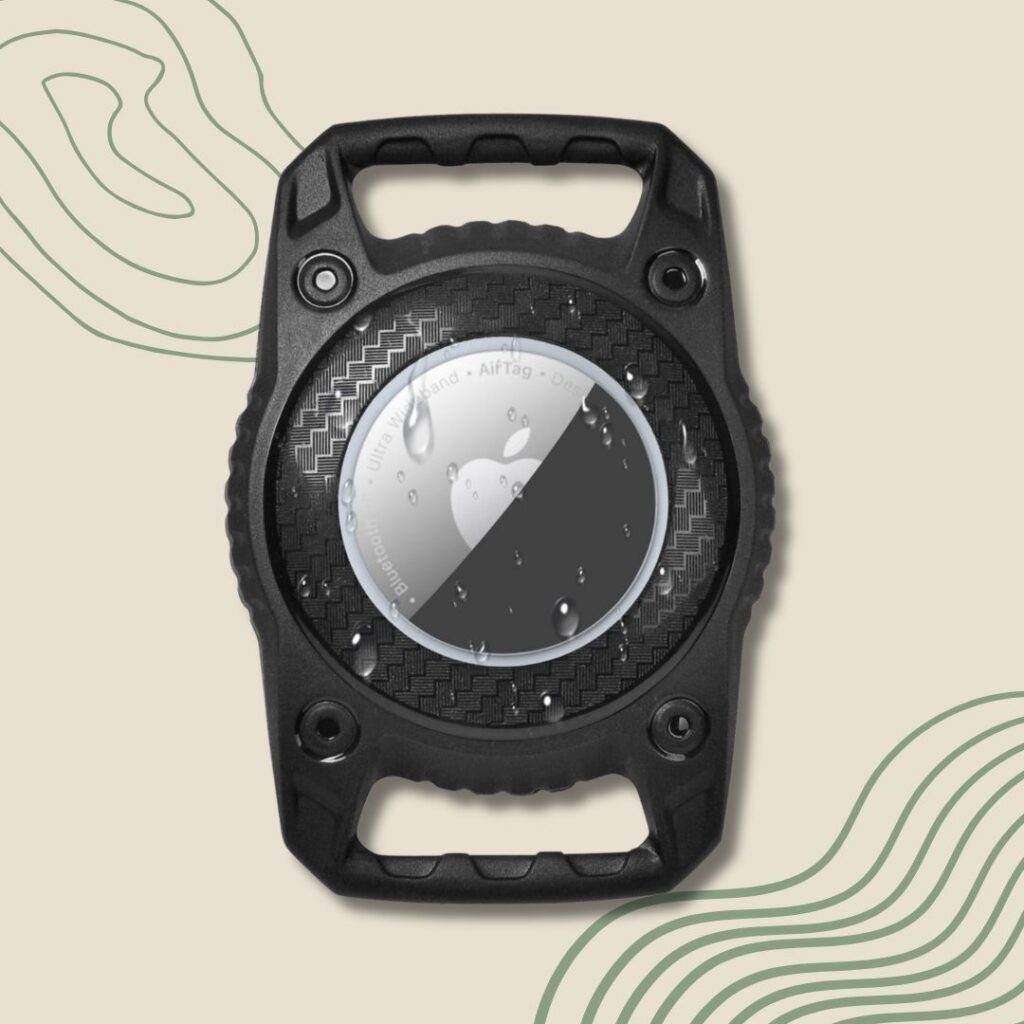
If your dog’s happy place is the Highlands, the beach, or any route that involves mud, bog and streams, a more rugged, waterproof AirTag holder is the better match.
Why a heavy-duty waterproof holder works:
- IP‑rated or high‑protection design: These cases are built to keep water, grit and mud away from the AirTag itself.
- Shock‑resistant casing: Helpful for big dogs who barrel through heather, scrub or rocky ground.
- Often attaches firmly to a wide collar: Spreads the weight and keeps the holder stable during off‑lead sprints.
They are best for:
- Medium to large dogs who hike in the Highlands, Lakes, or coastal paths.
- Dogs that love swimming, paddling or rolling in every puddle.
- Rural owners who want the best possible chance of tracking a dog across open land.
UK guides specifically call out waterproof and robust holders as a smart upgrade for outdoor‑adventure dogs, because standard, open AirTags can quickly get clogged or damaged in those conditions.
3. Multi‑Use Clip Holder (Swapping Between Dog, Bag & Keys)
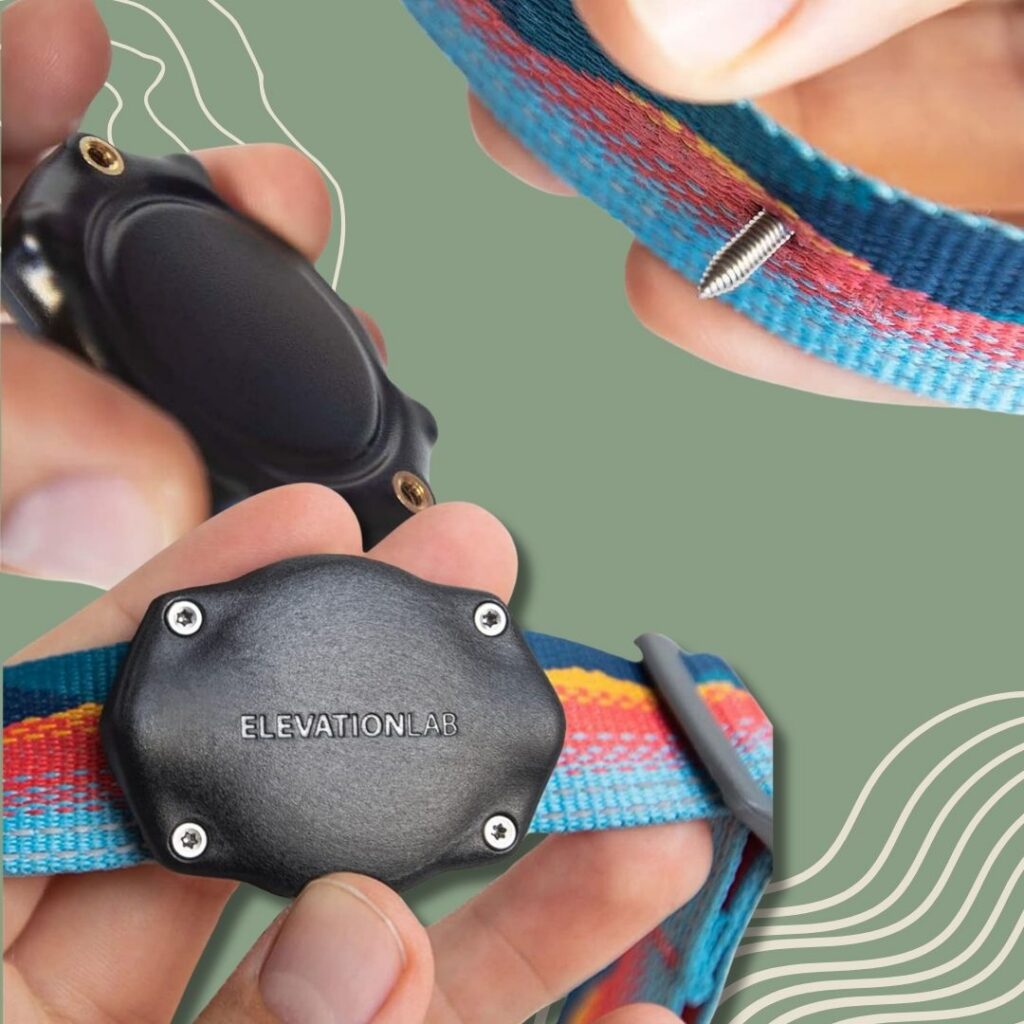
If you like the idea of one AirTag doing double duty -sometimes on your dog, sometimes on your bag or keys- a clip‑style holder with a carabiner or keyring is often the most flexible option.
Why a multi-use clip holder works:
- Quick clip on/off: You can move the AirTag from your dog’s harness to your rucksack or keys without wrestling it out of a tight silicone sleeve.
- Versatile attachment points: Works on D‑rings, harness loops, crate doors, travel bags and more.
- Harder shell options: Many of these use metal or rigid plastic for extra knock protection.
They are best for:
- Owners who want one AirTag to cover “dog mode” and “luggage/keys mode.”
- People in flats/city centres who don’t need 24/7 pet tracking but like extra security on walks or trips.
- Dogs whose harnesses don’t have a great spot for a flat, slide‑on holder.
Expert round‑ups often highlight these multi‑use holders as cost‑effective for people just dipping their toe into tracking, as long as you remember to clip back onto the dog before walks.
4. Harness‑Friendly / Slide‑On Holder (Active, Collar‑Sensitive Dogs)
Some dogs wear harnesses more often than collars, or they have sensitive necks and skin, so a slide‑on holder that can thread onto a harness strap is a nicer fit.
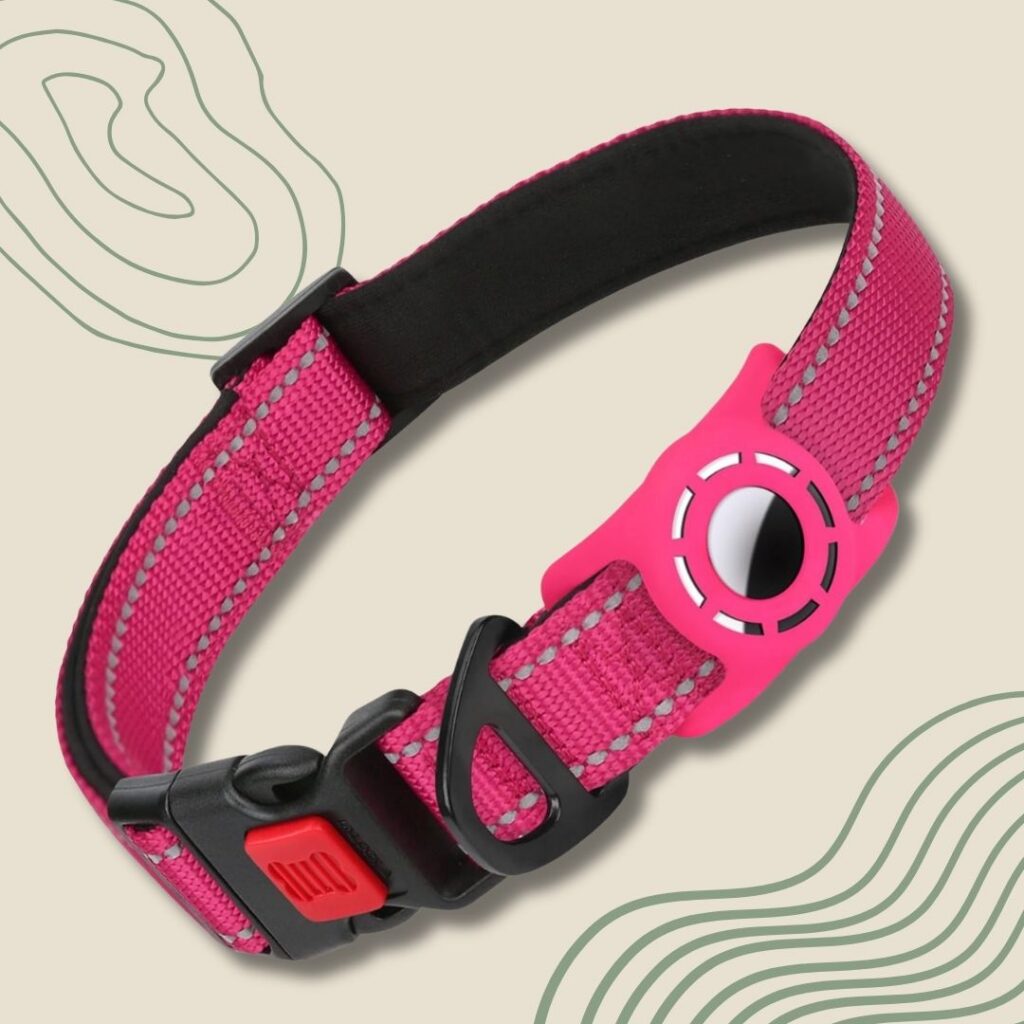
Why a slide-on holder works:
- Threads directly onto a strap: Sits flat against the harness, reducing bounce and twist.
- Less movement = less rubbing: Helpful for short‑coated breeds or dogs prone to chafing.
- Good for active routines: Stays centred on the back or chest, which can make signal consistency better while they move.
They are best for:
- Dogs who always walk in a harness rather than a collar.
- Active dogs who run, canicross, or do long hikes where gear movement gets annoying fast.
- Owners who want a “fit it and forget it” option that doesn’t dangle or swing.
UK reviewers often recommend slide‑on designs specifically for harness users because they distribute weight better and are less likely to snag than dangling tags.
AirTag holders aren’t a replacement for solid training, a reliable recall, secure fences or legal basics like microchipping and ID tags—but they can be a genuinely useful extra layer.
Think of them as:
- A digital backup if your dog slips a lead, panics at fireworks or goes missing on a walk.
- A way to narrow down where to look in those first stressful minutes, especially in busy or open areas.
- A small piece of gear that can be tailored to your dog’s size, coat, walking style and favourite places.
If this helps you match the right holder to your actual routine -city pavements, suburban parks, Highlands trails or weekend trips- then your AirTag setup will do more than just look clever on paper. It’ll quietly sit there, ready for the day you really need it.
Quick FAQs: AirTags & Dogs In The UK
1. Are AirTags enough on their own to track a lost dog?
Not really. AirTags rely on nearby Apple devices to update their location, which can work well in cities and towns but may be patchy in very remote areas. They’re best used alongside microchips, ID tags and, for real‑time rural tracking, dedicated GPS dog trackers.
2. Is it safe to put an AirTag on a dog’s collar?
Used with a low‑profile, secure holder, AirTags can be attached safely to collars or harnesses for most dogs. Avoid cheap, dangling holders that might break or snag, and always check for rubbing or irritation, especially on short‑coated dogs.
3. Should I choose an AirTag or a dedicated GPS dog tracker?
AirTags are great for budget‑friendly, low‑maintenance tracking in more populated areas and everyday routines. Dedicated GPS trackers tend to offer live tracking, longer range, geofencing and activity stats, which can be better for rural dogs, working dogs or serial escape artists; but they usually come with subscriptions and need more charging.
If you’re also rethinking what your dog actually wears on walks, our Complete Comfort Dog Harness Guide For Every Breed And Size walks you through choosing the right harness for their body shape and daily routine.
⚠️ Affiliate Disclosure: This post contains Amazon affiliate links. If you purchase through these links, we may earn a small commission at no extra cost to you.