

Right then. If you own an Alabai, German Shepherd, Rottweiler, Doberman, Cane Corso, or any other guard breed, you already know the drill. You buy dog beds. It looks sturdy in the photos. Three weeks later it’s a flat pancake of foam dust, a chewed-up crater, or a pile of stuffing your dog is now proudly wearing like a snow cape. Then you buy another one. And another.
This isn’t bad luck, and it isn’t your dog being “naughty.” Guard breeds are simply built differently to the average bed’s design brief that is heavier, stronger-jawed, more territorial, and often more physically driven than the labradors and lapdogs most beds are tested on. This guide breaks down exactly why standard dog beds fail these breeds, what to look for instead, and the specific Amazon UK products that are actually built to survive them.
Why Do Guard Breeds Destroy Dog Beds So Fast?
Most dog beds on the market are designed around an “average” dog which is somewhere in the 15-25kg range, without particularly strong jaws or a habit of digging, scratching, or patrolling before they settle. Guard breeds break almost every one of those assumptions. There are four main reasons a bed that works fine for most dogs won’t survive a guard breed.
🦷 Jaw Strength and Chewing Behaviour
Breeds like Alabai, Rottweilers, German Shepherds, and Cane Corsos have significantly higher bite force than most companion breeds, and many guard breeds retain strong chewing and mouthing instincts well into adulthood, particularly when anxious, under-stimulated, or teething as puppies. A standard polyester or canvas cover simply isn’t engineered to resist repeated chewing at the seams or corners.
Signs: Torn seams, exposed stuffing, chunks missing from corners or edges.
Solution: A bed with a genuinely chew-resistant cover (ballistic nylon or reinforced canvas) and double- or triple-stitched seams.
💪 Bodyweight and Compression
A 40-50kg Cane Corso or Mastiff exerts far more sustained pressure on foam and stuffing than a 15kg dog. Standard fibre-fill or thin foam compresses permanently within weeks under that kind of repeated weight, leaving a bed that offers no real support and can contribute to joint discomfort in large breeds already prone to hip and elbow issues.
Signs: A visible flattened crater in the middle of the bed within a month of use. Bed no longer “bounces back” after your dog gets up.
Solution: High-density orthopaedic foam (minimum 7-10cm thick) rather than fibre-fill or cheap foam.
🐾 Scratching and “Nesting” Behaviour
Digging and turning before lying down is instinctive in most dogs, but guard breeds, many of which were bred for outdoor or working environments which tend to do it with real force. Claws catch on loosely woven fabric and pull threads, and repeated scratching at a corner can unravel a seam in days.
Signs: Snagged threads, small holes that grow larger with each use, loose fabric pulling away from the base.
Solution: Tightly woven, ripstop, or ballistic-grade fabric that claws can’t easily catch or pull.
🏋️ Undersizing
This is the single most common also most avoidable cause of premature bed failure. Guard breeds are large to giant-sized, and a bed that’s even slightly too small forces the dog to sleep with limbs hanging off the edge, putting constant uneven strain on the fabric and seams at the bed’s perimeter, which are its weakest points.
Signs: Paws, tail, or head consistently hanging off the bed’s edge. Wear concentrated at the corners rather than the centre.
Solution: Size up. As a rule of thumb, measure your dog lying fully stretched out (nose to tail) and add 15-20cm to that length when choosing a bed.
Quick Diagnosis Guide : Dog Beds for Guard Dogs
| What You’re Seeing | Likely Cause | Fix |
| Chewed corners, missing stuffing | Chewing behaviour, thin cover fabric | Ballistic nylon or reinforced canvas cover |
| Flattened, saggy middle | Low-density foam, dog’s bodyweight | High-density orthopaedic foam (7-10cm+) |
| Snagged threads, small growing holes | Scratching/nesting, loose weave | Ripstop or tightly woven fabric |
| Wear concentrated at corners, limbs hanging off | Bed too small | Size up: add 15-20cm to stretched-out length |
| Bed smells damp, mould around base | Non-waterproof liner, outdoor/kennel use | Waterproof or water-resistant base liner |
| Bed slides across floor during use | No grip base, hard flooring | Non-slip rubberised base |
How to Choose a Dog Beds That Actually Survives a Guard Breed: Step-by-Step
What you’ll need to know before buying:
- Your dog’s weight and stretched-out body length
- Whether the bed will be used indoors, outdoors, or in a kennel/crate
- Whether your dog is a known chewer, digger, or “nester”
- Your dog’s age (puppies chew more; seniors need more orthopaedic support)
Step 1: Measure properly, not by breed averages Measure your dog lying fully stretched out from nose to tail, then add 15-20cm. Breed weight charts are a rough guide only, a lean 35kg Doberman and a stocky 35kg Staffordshire Bull Terrier need different bed shapes.
Step 2: Match the cover material to the behaviour, not just the size If your dog chews, scratches, or has ever destroyed bedding before, treat that as the deciding factor over price or looks. A “large breed” label means nothing if the cover is standard polyester.
Step 3: Check the foam density, not just the thickness A thick bed made of low-density foam will still flatten fast. Look for listings that specify high-density or orthopaedic-grade foam, ideally with a stated density (kg/m³) rather than just a thickness in cm.
Step 4: Consider the base and environment Kennel or outdoor use calls for a waterproof or water-resistant base. Hard flooring calls for a non-slip rubberised underside so the bed doesn’t slide and bunch up during use, which accelerates wear at the seams.
Step 5: Check the washability Guard breeds shed heavily and get muddy often. A removable, machine-washable cover isn’t a luxury, it’s what keeps the bed hygienic and extends its working life.
Step 6: Break it in gradually Introduce a new bed in a calm, low-stimulation moment rather than right after exercise or excitement, when digging and chewing behaviours tend to peak. This reduces the chance of the bed being tested to destruction on day one.
What NOT to Do while choosing good dog beds for big guard dogs
🚫 Don’t buy based on “large breed” labelling alone as many “large breed” beds are simply bigger versions of a standard soft bed, using the same thin fabric and low-density filling that will fail just as fast, only over a bigger surface area.
🚫 Don’t ignore foam density in favour of thickness. A 15cm-thick bed of poor foam will flatten faster than a 7cm-thick bed of proper orthopaedic foam.
🚫 Don’t use human mattress toppers or sofa cushions as a workaround. These aren’t designed for repeated clawing, chewing, or heavy sustained weight, and often contain materials unsafe if ingested.
🚫 Don’t leave a known chewer unsupervised with a new bed for the first few uses. Even a well-reviewed chew-resistant bed benefits from initial supervision to confirm it suits your individual dog.
🚫 Don’t assume outdoor/kennel beds are interchangeable with indoor ones. A bed without a proper waterproof base will develop mould and mildew fast in a kennel or utility room environment.
The Best Amazon UK Dog Beds for Guard Breeds
Big Barker 7″ Pillow Top Orthopedic Dog Bed – Large (High-Density Foam)
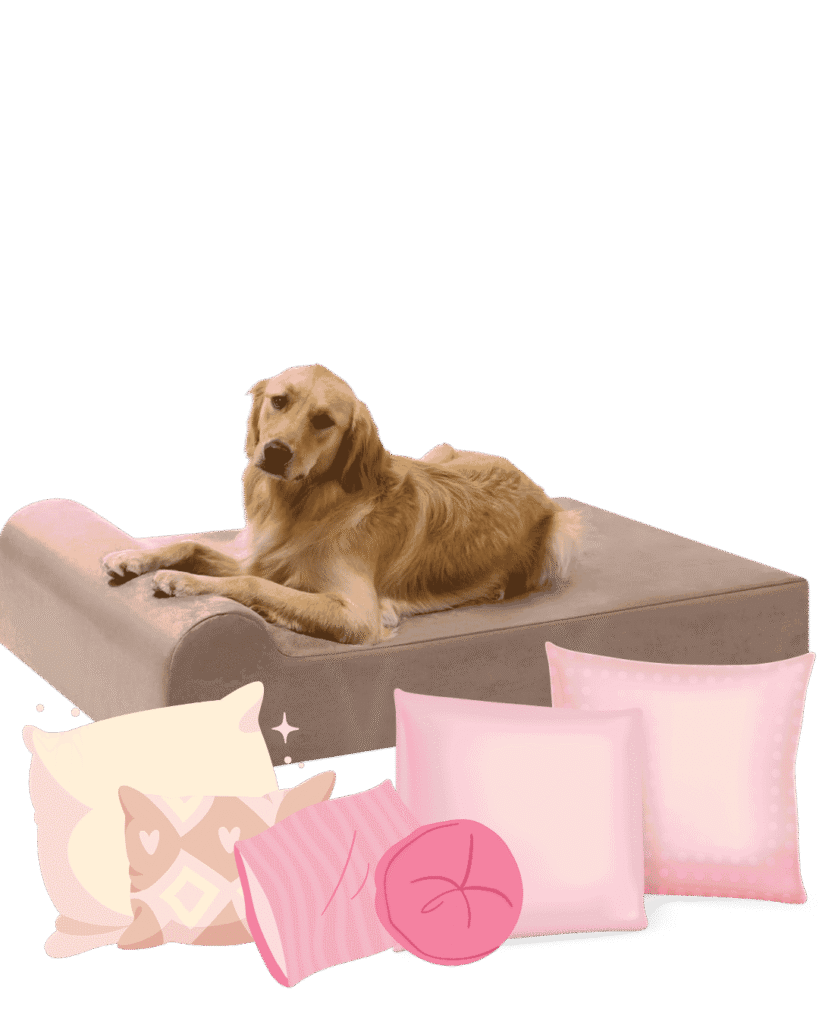
Built specifically around genuinely high-density orthopaedic foam rather than standard fill, this bed is designed to support the joints of large, heavy breeds without flattening within weeks. The cover is a tough, tightly woven fabric that resists snagging from scratching and nesting behaviour far better than standard polyester.
Best for: Rottweilers, German Shepherds, Cane Corsos, and other large breeds prone to hip and elbow strain.
KONG Comfort Dog Bed – Large (Reinforced Chew-Resistant Cover)
Kong’s reputation for chew-resistant products extends into their bedding line, with a reinforced cover built to withstand determined chewers far better than a standard soft bed. A solid mid-range option for guard breeds that mouth or chew bedding out of habit rather than severe destructive anxiety.
Best for: Moderate chewers, puppies teething into adulthood

Kuranda Walnut PVC Chewproof Dog Bed – Ballistic Nylon (XL) (Kennel/Outdoor Rated)

Ballistic nylon is the same fabric family used in military kit bags and is dramatically more resistant to claws and teeth than canvas or polyester. This raised, chew-proof frame pairs a ballistic nylon bed sling with a PVC frame, making it a strong choice for guard breeds housed outdoors or in a kennel setting.
Best for: Outdoor/kennel dogs, severe chewers and scratchers
Bedsure Waterproof Dog Bed – Large (Oxford Fabric) (Large Breed)
For dogs prone to mud, drooling, or accidents, a fully removable, machine-washable cover over a waterproof base liner keeps the bed hygienic without the foam soaking through and developing odour or mould over time.
Best for: Muddy, drooly, or senior guard breeds; multi-dog households
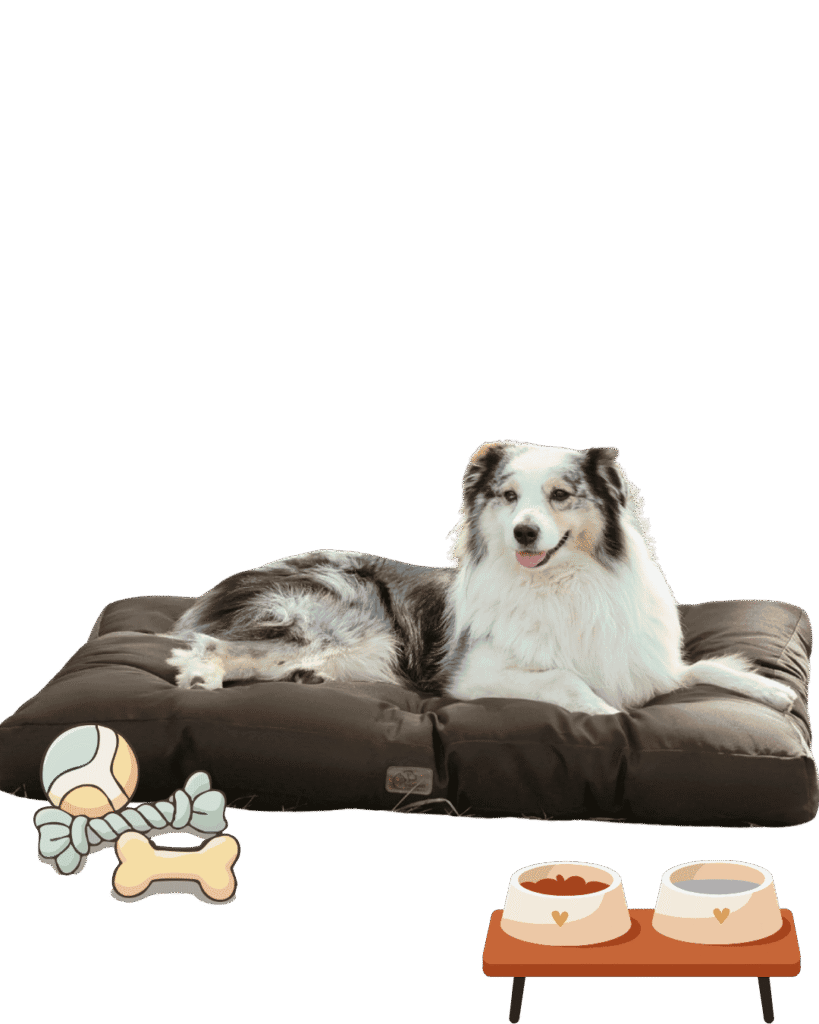
Kuntrust Elevated Outdoor Dog Bed – Fits up to 70lbs (Cot-Style Frame)
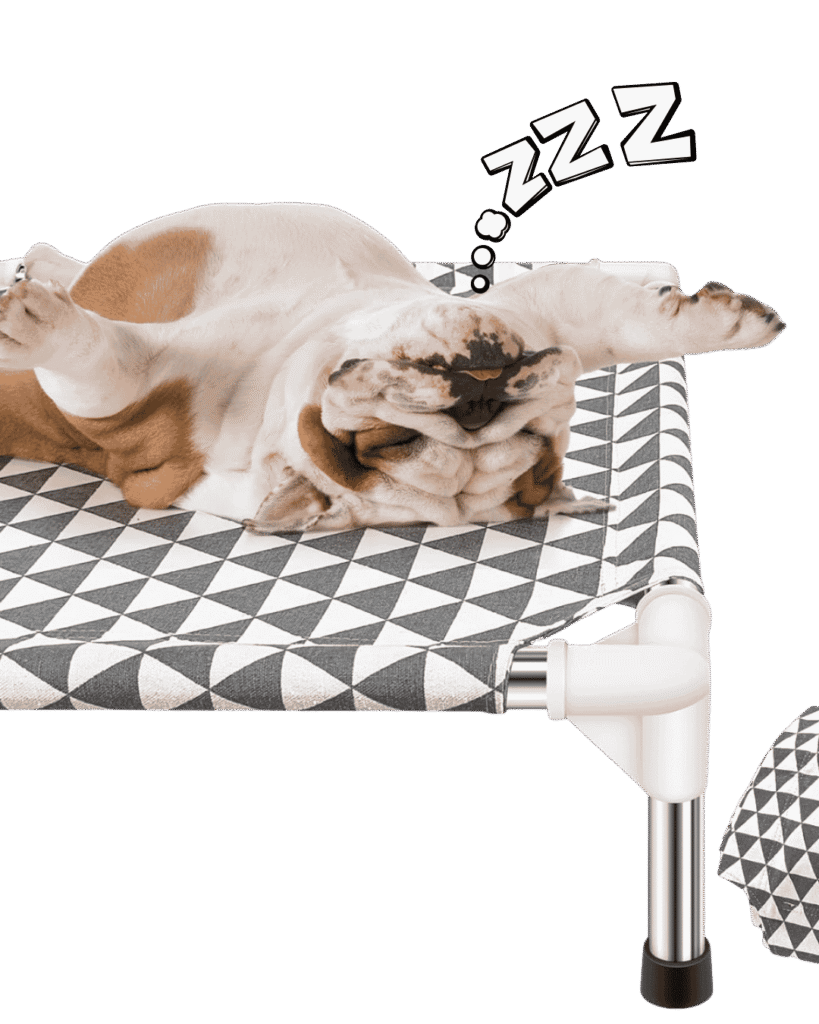
A raised, cot-style bed with a taut, double-layer fabric bed suspended on a stainless steel frame removes foam from the equation entirely, eliminating the flattening problem. It also keeps dogs off cold or damp floors, which suits outdoor or garage/kennel setups particularly well.
Best for: Warm-climate use, dogs who dig at soft bedding, kennel and outdoor settings
Amazon UK Guard Breed Dog Beds Kit: Quick Reference Table
| Product | What It’s For | Guard Breed Suitable | Amazon UK |
| Big Barker 7″ Pillow Top Orthopedic Bed – Large | Joint support, large/giant breeds | ✅ Yes | View Product |
| KONG Comfort Dog Bed – Large | Moderate chewers | ✅ Yes | View Product |
| Kuranda Walnut PVC Chewproof Bed – Ballistic Nylon (XL) | Severe chewers/scratchers, outdoor use | ✅ Yes | View Product |
| Bedsure Waterproof Dog Bed – Large | Mud, drool, hygiene | ✅ Yes | View Product |
| Kuntrust Elevated Outdoor Dog Bed | Diggers, warm climates, outdoor/kennel | ✅ Yes | View Product |
How to Make Any Dog Beds Last Longer: Long-Term Tips
🧠 Address the root behaviour: If chewing or digging is driven by anxiety or boredom rather than habit, more exercise, enrichment toys, and professional training advice (wherever needed) will do more for bed longevity than any fabric ever will.
🪮 Manage shedding and dirt at the source: Regular brushing reduces the amount of fur, mud, and debris worked into the bed’s fibres, which speeds up wear.
🧺 Rotate two beds if budget allows: Alternating between two beds halves the daily wear on each and gives you a spare while one is being washed.
📏 Reassess sizing as your dog grows or ages: A bed sized correctly for an 8-month-old guard breed puppy may be undersized within a year; likewise, senior dogs often benefit from moving to a larger, more supportive bed as mobility changes.
🏡 Match the bed to the environment, not just the dog: A bed suited to a centrally heated living room may not hold up in a garage, kennel, or unheated outbuilding, regardless of how tough its fabric is.
FAQs: Dog Beds for Guard Breeds
Q: Are “chew-proof” dog beds really chew-proof?
No dog bed is completely indestructible against a sufficiently determined, powerful-jawed dog. “Chew-resistant” is the more accurate term, these beds significantly outlast standard beds against normal chewing and mouthing behaviour, but severe destructive chewing usually points to an underlying behavioural or anxiety issue worth addressing directly.
Q: What size dog bed does a German Shepherd or Rottweiler need?
Measure your dog lying fully stretched out from nose to tail and add roughly 15-20cm. Most adult German Shepherds and Rottweilers need a large or extra-large bed (typically 100-130cm in length), though individual dogs vary significantly.
Q: Is orthopaedic foam actually necessary for guard breeds?
For breeds prone to hip dysplasia, elbow dysplasia, or arthritis, which includes most large and giant guard breeds a supportive, high-density foam meaningfully reduces pressure on joints during rest, particularly as the dog ages.
Q: My dog destroys every bed within days, what should I do?
This level of destruction usually indicates anxiety, boredom, or a specific behavioural driver rather than a bed quality issue alone. A ballistic-nylon or reinforced kennel-style bed will outlast a standard bed, but it’s worth discussing the underlying behaviour with a vet or qualified trainer alongside any bed upgrade.
Q: Can I just use a crate pad instead of a full dog bed?
Crate pads work well for confined spaces but tend to use the same thin foam and fabric as budget beds, so they’re just as vulnerable to chewing and compression. Look for the same chew-resistant, high-density criteria in a crate pad as you would a standalone bed.
Q: Do raised cot-style beds suit all guard breeds?
They suit most guard breeds well, particularly diggers and dogs kept outdoors or in warmer climates, but check the weight rating carefully, some cot-style beds aren’t rated for giant breeds like Mastiffs or Cane Corsos at the upper end of their weight range.
When to Rethink the Dog Beds (Not Just Replace It)
Most bed failures are fixable with the right product, but consider looking beyond the bed itself if:
- Your dog destroys every bed within days regardless of material or price
- Chewing or digging is accompanied by other signs of anxiety, such as pacing, whining, or destructive behaviour elsewhere in the home
- Your dog seems to be avoiding lying down altogether, which can indicate joint pain rather than a bedding preference
- A vet has flagged existing joint issues that a standard bed won’t adequately support
Always speak to your vet if you notice reluctance to lie down, stiffness, or any change in mobility alongside bedding issues, this can point to a health concern rather than a product one.
Final Thoughts
A dog bed built for an average-sized, easy-going dog was never going to survive a 40kg guard breed with a strong bite and a habit of turning three circles before lying down, and that’s not a reflection on your dog, just a mismatch between product and breed. The fix is straightforward: size up properly, prioritise chew-resistant fabric and high-density foam over soft, cheap fill, and match the bed to the environment it’ll actually live in.
Our top picks? The Big Barker 7″ Pillow Top Orthopedic Dog Bed – Large for genuine joint support in large and giant breeds, and the KONG Comfort Dog Bed – Large for anyone dealing with a determined chewer or an outdoor setup. Get the fundamentals right once, and you’ll stop replacing beds every few weeks.
Looking for more guard breed advice? Read our comparison page on the best dog beds, or browse our full dog care and product section on FetchStop.
⚠️ Affiliate Disclosure: This post contains Amazon affiliate links. If you purchase through these links, we may earn a small commission at no extra cost to you.