

Bringing a new dog home, or just trying to do better for the one already snoring on your sofa – often starts with one big question: what on earth should I be feeding them every day? The shelves are full of bright bags, shiny tins, and comforting words like “natural”, “gourmet”, and “premium”. But none of that tells you what is actually inside the bowl.
The good news is that everyday dog food does not need to be confusing. Once you know how to read a UK dog food label properly, it becomes much easier to spot the quiet, sensible options and walk straight past the marketing tricks. This guide breaks it all down, using real‑world examples and five product ideas to show you what “good” actually looks like.
Why Dog Food Labels Feel So Confusing

Dog food labels in the UK have to follow specific rules, but companies still have plenty of room to make things sound better than they are. The front of the bag is pure marketing. The real story is always on the back.
Three things to focus on first:
- Is it “complete” or “complementary”? Only “complete” foods are designed to be fed as a full diet every day. “Complementary” foods (including many wet pouches and toppers) must be mixed with something else.
- What are the first three ingredients? They tell you more than any marketing slogan.
- Are the ingredients clearly named, or are they vague categories like “cereals” and “meat and animal derivatives”? Clear, specific naming usually means better transparency.
Once you get used to flipping the bag over and starting there, label reading gets much less scary very quickly.
Start With One Word: “Complete”
If you take nothing else from this guide, take this: your dog’s main food should clearly say “complete” on the label.
- “Complete” means the recipe meets minimum nutritional requirements when fed on its own.
- “Complementary” means it is only part of a diet – for example, a mixer biscuit, topper, or treat.
A lot of owners accidentally feed mostly complementary foods because they look like full meals. Always look for that one word near the product description. If it says “complete”, it can be used as the main diet. If it doesn’t, you should treat it as an extra, not the base of your dog’s meals.
How To Read The Ingredient List (Without A Headache)
Ingredients on UK pet food labels must be listed in order of weight before cooking. That means the first ingredient is the one present in the largest amount.
For everyday dog food, there are some simple rules that make label reading far easier:
- The first ingredient should be a clearly named animal protein, like “fresh chicken”, “chicken meal”, “lamb”, or “salmon”, not just “meat” or “meat and animal derivatives”.
- Avoid foods where the first ingredient is “cereals”, “maize”, “wheat”, or other vague carb sources. Those are classic signs of filler‑heavy recipes.
- Shorter ingredient lists with clear names are usually better than very long lists full of vague categories and additives.
You may also notice two different styles of ingredient listing:
- Category listing – for example “cereals”, “meat and animal derivatives”, “oils and fats”. This is allowed and legal, but it gives you less detail.
- Individual listing – for example “brown rice, oats, barley” or “chicken (fresh 20%, dried 18%)”. This is much more transparent and easier to understand.
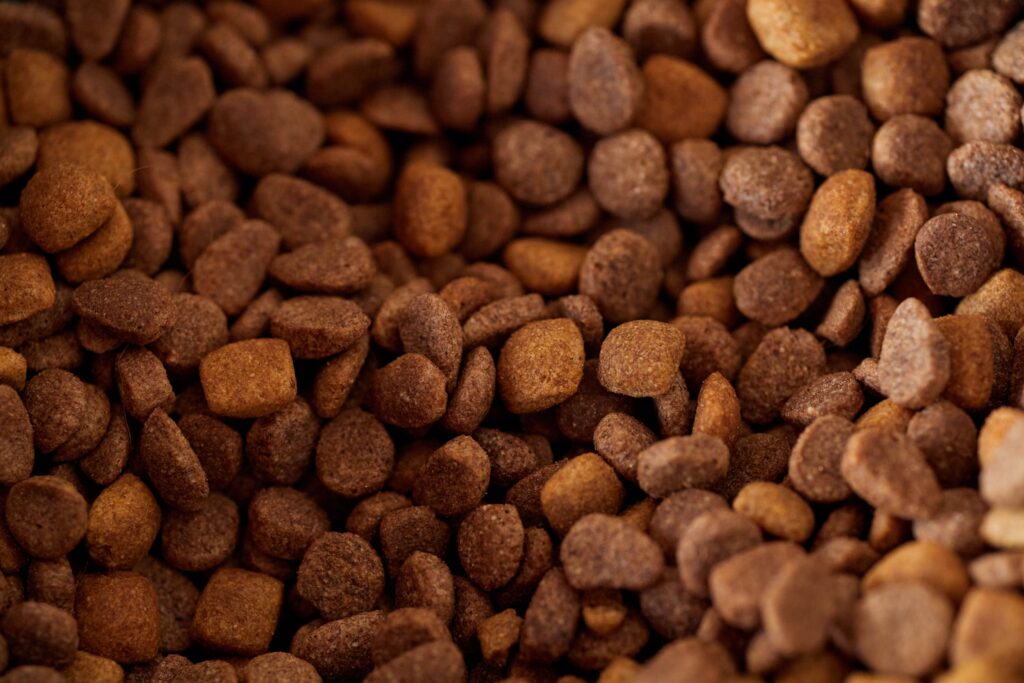
When you can, choose foods that tell you exactly which ingredients are being used rather than hiding behind broad categories.
Watch Out For Ingredient Splitting
One clever trick you will see often is ingredient splitting. This is when similar ingredients are broken into several smaller entries so they appear lower on the list.
For example: “Fresh chicken (20%), peas, pea protein, pea fibre, pea starch, potato”
All those pea ingredients added together might actually outweigh the chicken, but they are split into separate items so chicken stays in first place. Anytime you see the same ingredient name repeated in different forms, know that the total amount is higher than it looks.
Common Label Tricks And Hidden Junk To Avoid
Once you start spotting these, you will see them everywhere:
- “With chicken” (4% rule) – When a label says “with chicken”, UK rules often only require as little as 4% of that meat in the recipe. The rest can be other meats or even mostly cereal.
- “Meat and animal derivatives” – This can legally include many parts of an animal, not just clean muscle meat. It is not automatically bad, but it is vague. Clear, named ingredients are preferable.
- “Cereals” as a single word – This could be anything from rice to wheat to maize. Again, not automatically evil, but you simply do not know which or how much.
- Buzzwords like “premium”, “gourmet”, “natural” – These words are mostly marketing. They do not have strict, standardised definitions and are not a guarantee of quality.
- Artificial colours and sugar – Dogs do not care what colour their food is. If a label is full of artificial dyes or caramel colouring, those are there for you, not them. Likewise, unnecessary sugar has no place in everyday food.
The more a label relies on vague words and colourful claims, the more important it becomes to read the small print carefully.
How To Read The Analytical Constituents Panel
That little table labelled “Analytical constituents” often looks more intimidating than it really is. Here is what the main numbers mean:
- Crude protein – Roughly how much protein is in the food. Everyday complete foods for healthy adult dogs are often somewhere in the mid‑20s or higher on a dry‑matter basis.
- Crude fat – Energy source. Higher fat means more calories per gram, which can be good for very active dogs but too much for couch potatoes.
- Crude fibre – A measure of fibre. Very high fibre can mean a lot of cheap filler; very low fibre can sometimes mean the diet is too rich for sensitive tummies.
- Ash – Mineral content. It sounds odd, but “ash” basically means everything left after burning off water and protein in a lab test. Very high ash can suggest a lot of bone or mineral content; most quality foods sit in a moderate range.
If two foods look similar on the ingredient list, try comparing these numbers. It is a quick way to spot when one is much richer, fattier, or more filler‑heavy than the other.
Did You Know?
Dog foods with higher moisture levels, like wet tins or trays, will always look lower in protein and fat on the label than dry foods – simply because water dilutes the percentages. To compare fairly, you would technically look at protein “on a dry‑matter basis”. A simple shortcut is to remember that good wet foods can look like they have lower percentages but still be excellent options once you consider the water content.
Harringtons Complete Dry Dog Food – Chicken & Rice
A good everyday dry food needs two things if you want it to perform well in the real world: clear labelling and enough real‑world feedback to know what other owners actually think. Harringtons Complete Dry Dog Food – Chicken & Rice ticks both boxes.
It is one of the most widely available everyday kibbles in the UK, with a large number of reviews and a clear “complete” declaration, which makes it a useful reference point when you are learning to read labels. The ingredients list names chicken and rice, rather than hiding everything behind vague “cereals” and “meat derivatives”, and the feeding guide is straightforward.
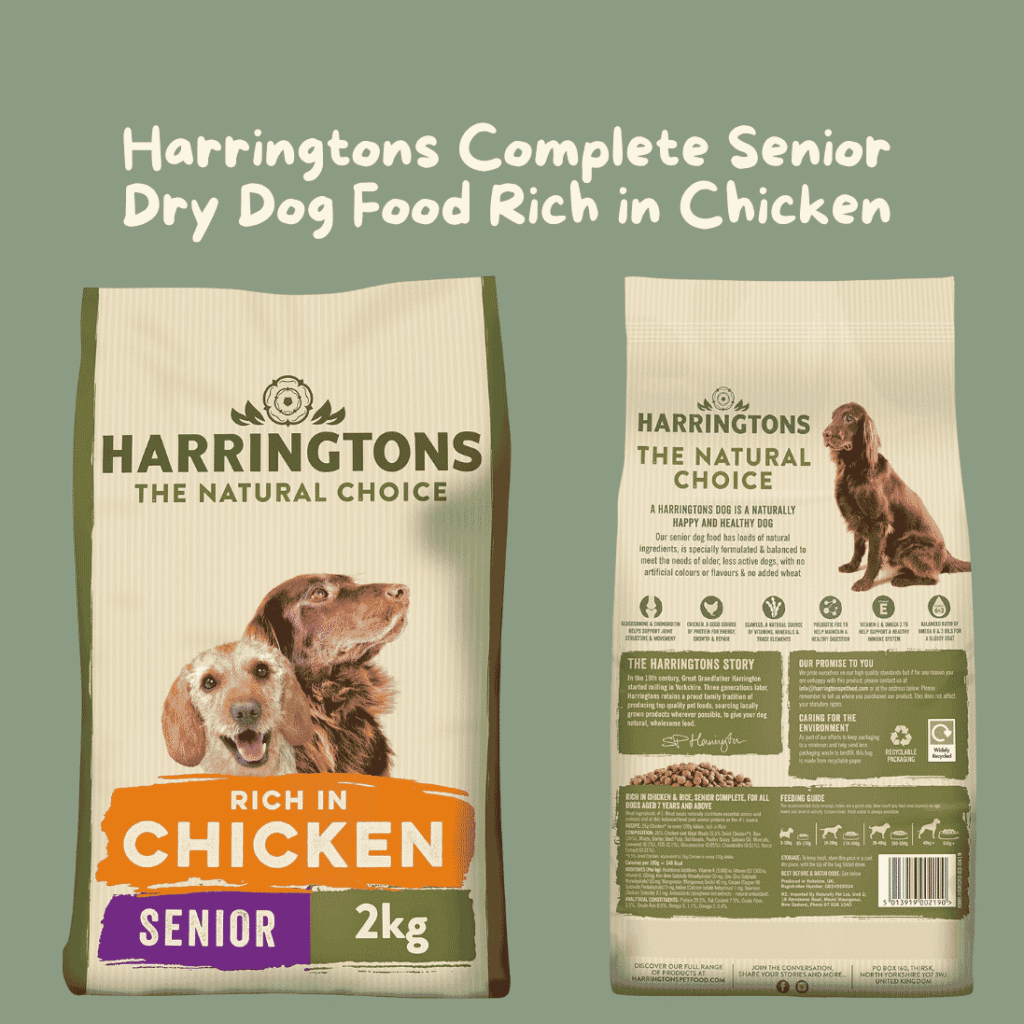
Look for:
- “Complete dry dog food” clearly stated on the front or back of the bag
- Chicken plus rice near the top of the ingredients list
- Transparent ingredient naming instead of just “cereals”
- No artificial colours in the version you choose
You can check out Harringtons Complete Dry Dog Food – Chicken & Rice on Amazon UK.
AATU 80/20 Chicken Grain Free Dry Dog Food
If your dog does better on grain‑free formulas or you simply want a high‑meat recipe with clear numbers, AATU 80/20 Chicken Grain Free Dry Dog Food is a strong UK option. The brand makes things very easy to understand by putting the 80/20 split right on the front of the bag: 80% animal ingredients, 20% vegetables, herbs, and botanicals.
The ingredient list backs that up with named meats and individual vegetable sources rather than vague overall categories. This makes it much easier to see how much of the recipe is actually delivering useful protein versus just padding out the bag with starch.
You can find AATU 80/20 Chicken Grain Free Dry Dog Food on Amazon UK.
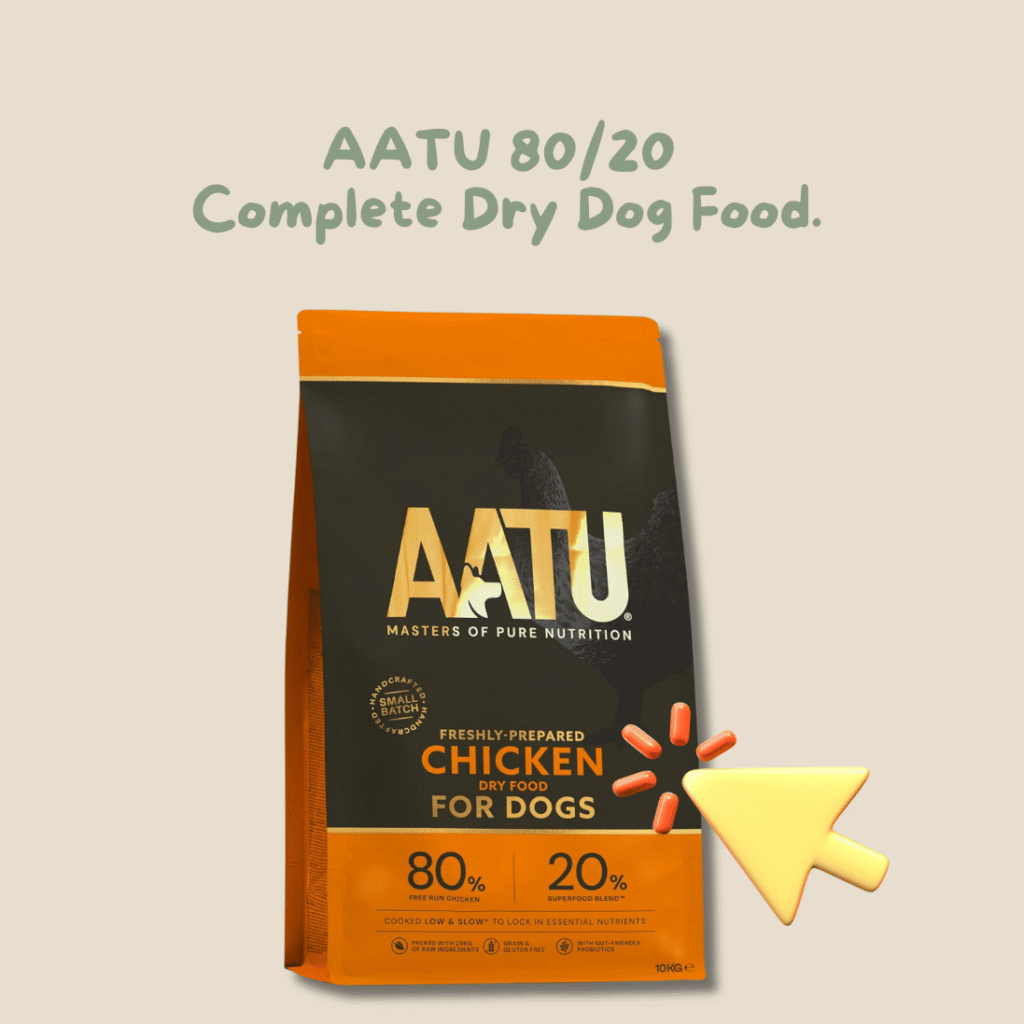
Look For:
- “80/20” clearly printed on the packaging
- Named chicken and other meats in the first few ingredients
- Grain‑free formulation using sweet potato and veg instead of wheat or maize
- A short ingredient list without unnecessary fillers or sugar
Arden Grange Adult – Salmon & Rice
For sensitive dogs, hypoallergenic formulas with simple ingredient lists are worth their weight in gold. Arden Grange Adult Dry Dog Food – Salmon & Rice is a well‑known UK option that focuses on a single main animal protein and a gentle carbohydrate source.
Salmon and rice are clearly named at the top of the ingredient list, and the recipe avoids common triggers such as wheat, dairy, and soya. That simplicity is exactly what you want when you are trying to reduce the number of variables in your dog’s diet and find something their stomach and skin can genuinely tolerate long term.
You can search for Arden Grange Adult – Salmon & Rice on Amazon UK.
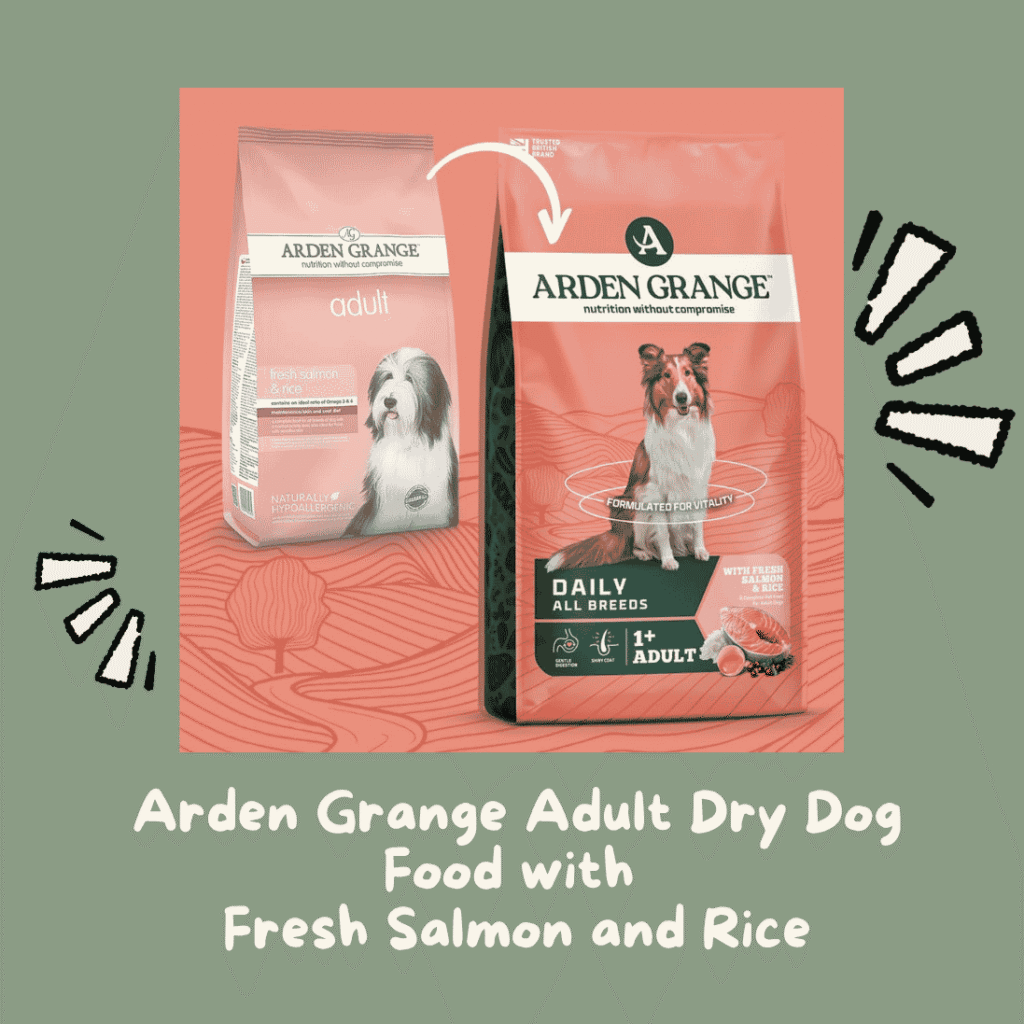
Look for:
- Salmon and rice listed clearly as main ingredients
- “Hypoallergenic” and “complete” printed on the packaging
- No wheat, dairy or soya in the formula
- Lots of real‑world reviews from owners of sensitive dogs
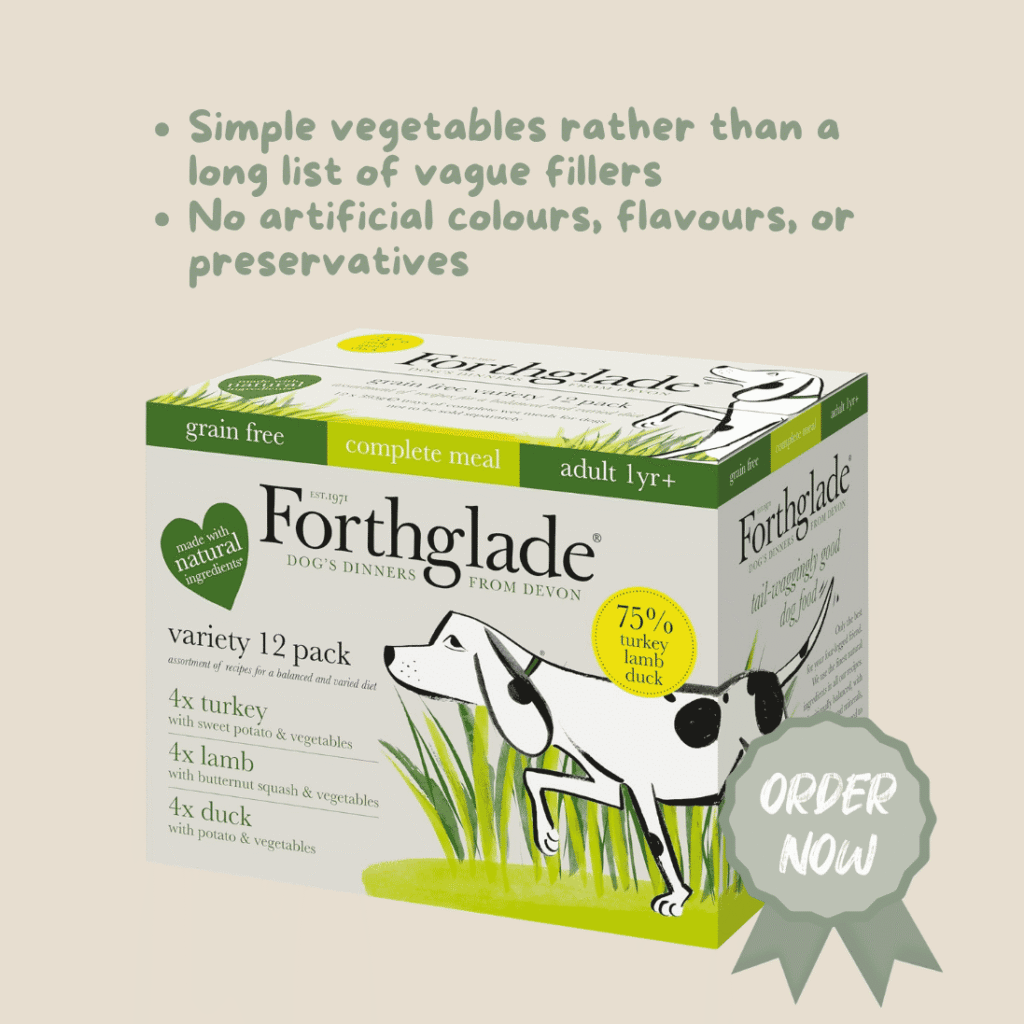
Forthglade Complete Grain Free Wet Dog Food
Wet dog food can be brilliant for dogs that prefer softer textures or need more moisture in their diet, but it is vital to know whether you are buying a full meal or just a topper. Forthglade Complete Grain Free Wet Dog Food (Adult) makes that distinction easy by putting the word “complete” and “grain free” right on the front of the tray.
Each recipe uses named meats and simple vegetables, with clear percentages and no grains or artificial colours. The ingredient lists are short and understandable, which is exactly what you want when you are starting to compare different wet foods and trying to spot which ones are genuinely suitable as everyday meals.
You can find Forthglade Complete Grain Free Wet Dog Food multipacks on Amazon UK.
Look for:
- “Complete grain free” prominently displayed on the label
- Named meats with percentage figures listed
- Simple vegetables rather than a long list of vague fillers
- No artificial colours, flavours, or preservatives

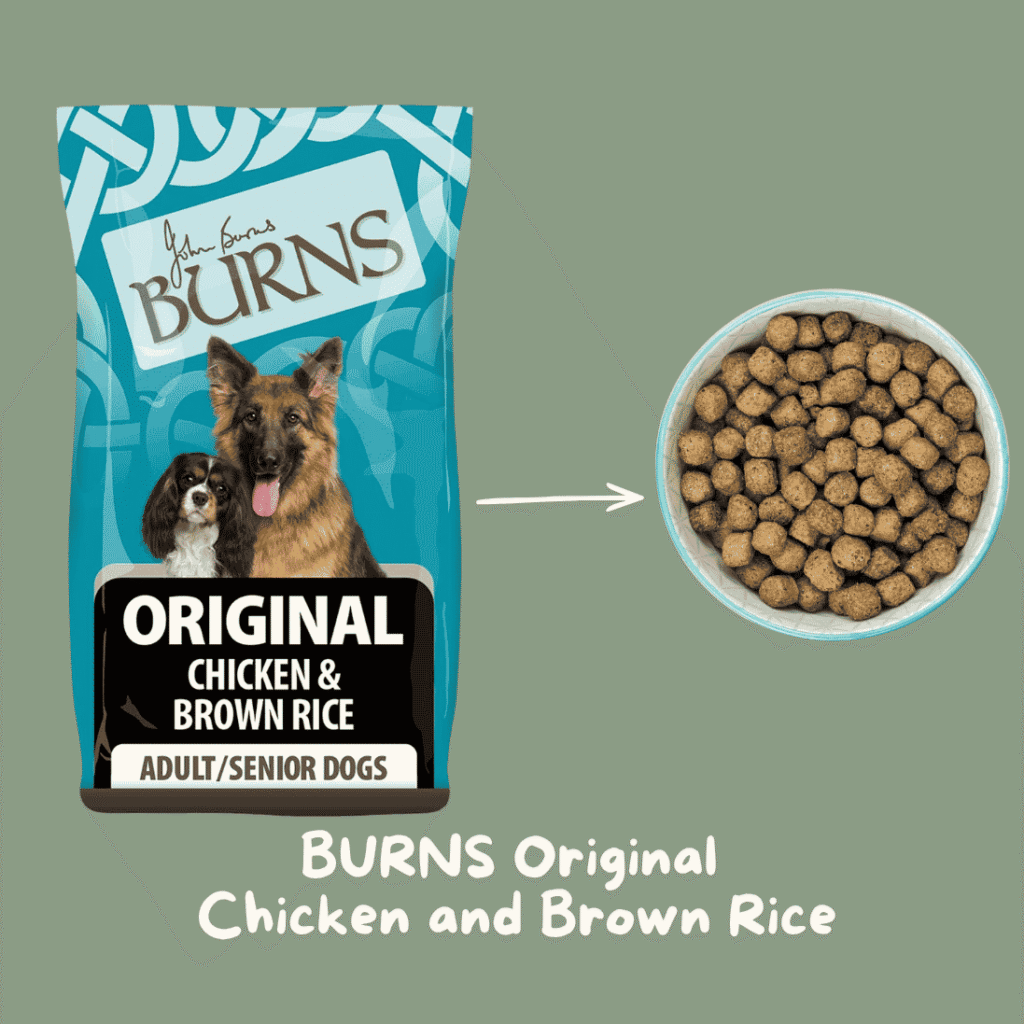
Burns Original – Chicken & Brown Rice (Everyday Food And Training Treats)
If you want to keep your dog’s treats aligned with their main diet, a high‑quality kibble that doubles as training rewards is one of the smartest choices you can make. Burns Original Adult Dog Food – Chicken & Brown Rice is a long‑standing UK favourite with a short, honest ingredient list and small kibble pieces that work perfectly in treat pouches.
By weighing out your dog’s daily portion and moving some of it into a training pot, you can reward generously without adding lots of sugary, filler‑heavy snacks that undo all your careful label reading. Burns has a strong reputation among vets and behaviour professionals, which adds extra reassurance if you are trying to keep things simple and gentle.
You can find Burns Original – Chicken & Brown Rice on Amazon UK.
Look for:
- Named chicken and brown rice near the top of the ingredient list
- Hypoallergenic, vet‑endorsed reputation
- No artificial colours, flavours, or preservatives
- Small kibble size that works in both bowls and treat bags
Everyday Rules To Keep Things Simple
Once you start focusing on the back of the pack instead of the front, everyday dog food choices become much easier. A few straightforward rules will keep you on solid ground:
- Make sure your main food clearly says “complete” so you know it can be fed on its own.
- Choose recipes where named animal proteins appear near the top of the ingredient list.
- Be cautious with foods that lean heavily on “cereals”, “meat and animal derivatives”, and artificial colours.
- Use better‑quality kibble as part of your treat routine so you are not undoing the good work with junky extras.
Get those basics right, and you are already doing far more for your dog’s daily meals than most marketing slogans ever will.
To know about what are the best product picks for your furry friend check out this blog.
Affiliate Disclosure: This post contains Amazon affiliate links. If you purchase through these links, we may earn a small commission at no extra cost to you.