
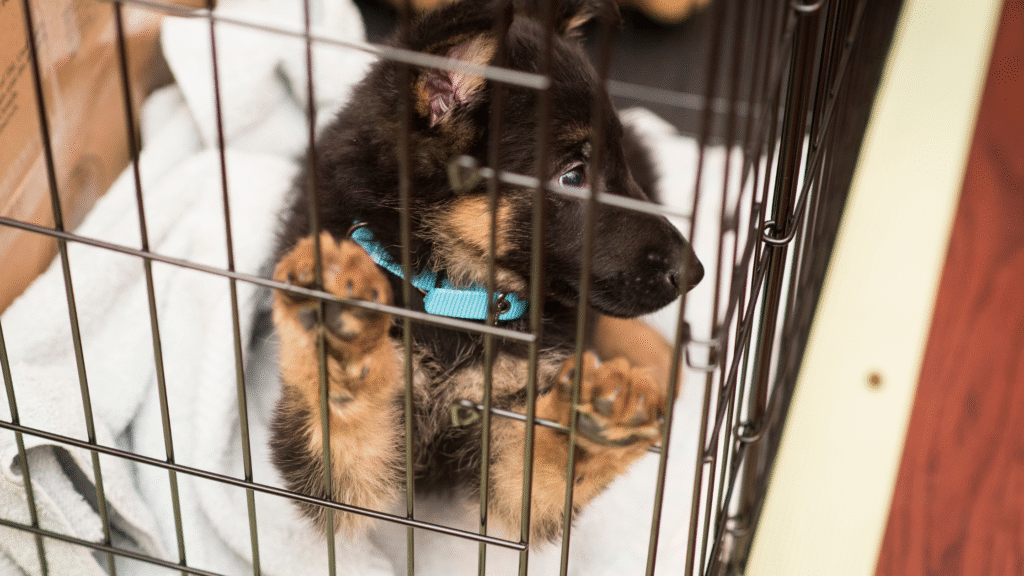
Help, my puppy won’t stop crying at night! You’ve done everything right. You’ve puppy-proofed the house, bought the cutest little puppy crate, and set up the cosiest bedding. Still, the moment the lights go off, your new pup turns into a tiny, heartbroken siren. You’re not alone. Millions of new puppy parents go through exactly this, and the good news? It gets better, much faster than you think.
Let’s break down why puppies cry at night, what vets and trainers actually recommend, and the products that can genuinely help.
Why Is My Puppy Crying in the Crate?
Before you can fix it, it helps to understand what kind of crying you’re hearing.
- Early-night crying (right when you put them in) is almost always anxiety and stress. Your pup misses their mum, their littermates, and the warmth of everything familiar.
- Middle-of-the-night crying is usually a signal that they need a toilet break. At this age, that’s completely normal.
Understanding which type you’re dealing with changes everything about how you respond, so it’s worth paying attention to the timing.
What Vets Recommend
Vets and trainers agree that helping a puppy settle comes down to addressing the root cause of their distress:
- The sudden absence of warmth
- Familiar scents
- The comfort of their littermates
The following vet-recommended strategies each target one of those needs.
Mimic the Warmth of Their Littermates
One of the most effective things you can do for a newly rehomed puppy is recreate the physical sensation of being close to their mum and siblings. Vets often recommend placing something warm and rhythmically soothing in the crate; a heartbeat toy is one option designed specifically for this.

It features a gentle heat pack and a “Real-Feel” heartbeat. In studies, 2 out of 3 anxious puppies showed meaningful improvements in how peacefully they slept in the crate when one was present.
A couple of things worth knowing:
- These toys should only be used under supervision, the battery compartment can be a chewing hazard.
- If your pup starts gnawing on it, swap it out for a safe chew toy and reintroduce it later.
Recreate the Calming Signals of a Nursing Mum
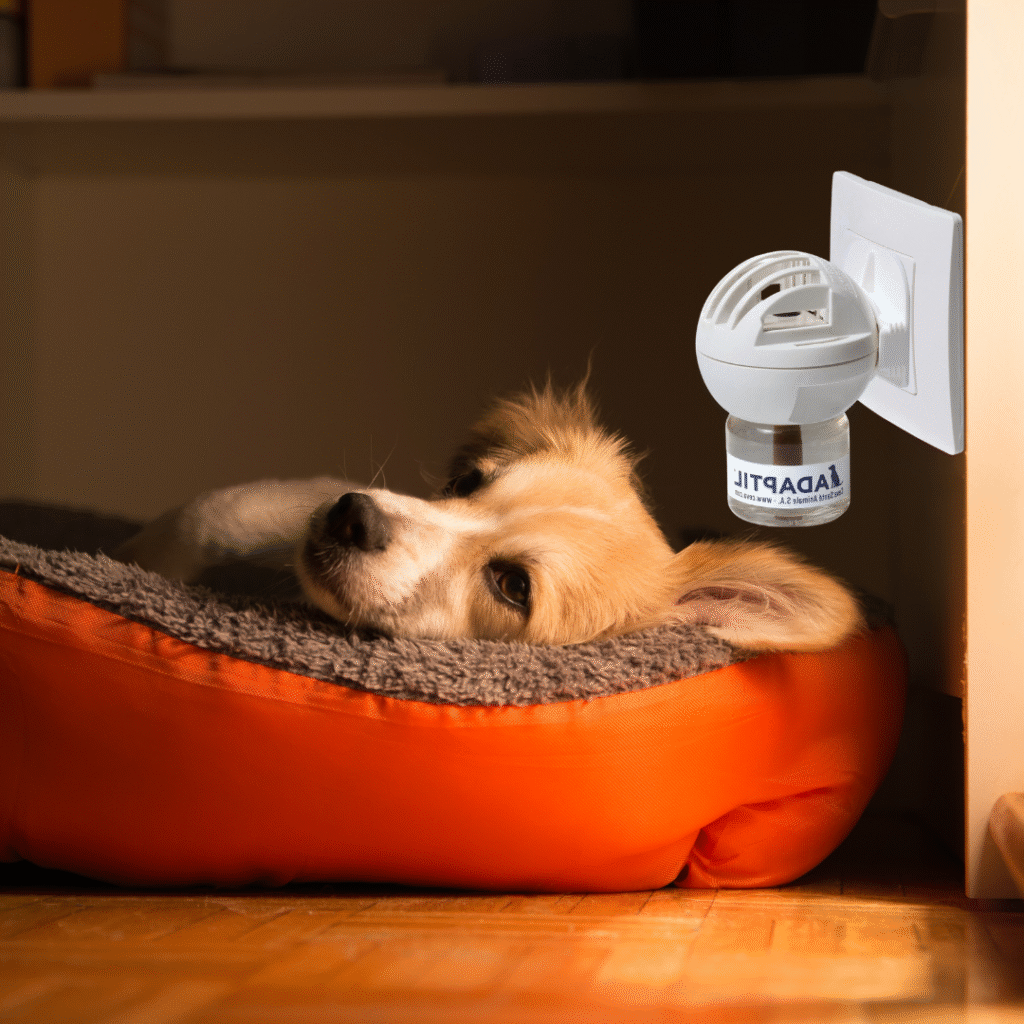
Vets explain that mother dogs naturally release a pheromone while nursing, called Dog-Appeasing Pheromone (DAP), that signals to puppies that they’re safe and protected. When a puppy is rehomed, that signal disappears overnight.
A DAP diffuser like Adaptil releases a synthetic version of this same pheromone into the room.
You plug it in near the crate and it works in the background, covering up to 700 square feet. It’s one of the more science-backed options available, and many vets recommend it as a first step for anxious settling.
Give Them a Healthy Outlet for Anxiety
Chewing is one of the ways dogs, especially young ones, naturally regulate stress. Vets often encourage owners to lean into this rather than discourage it.
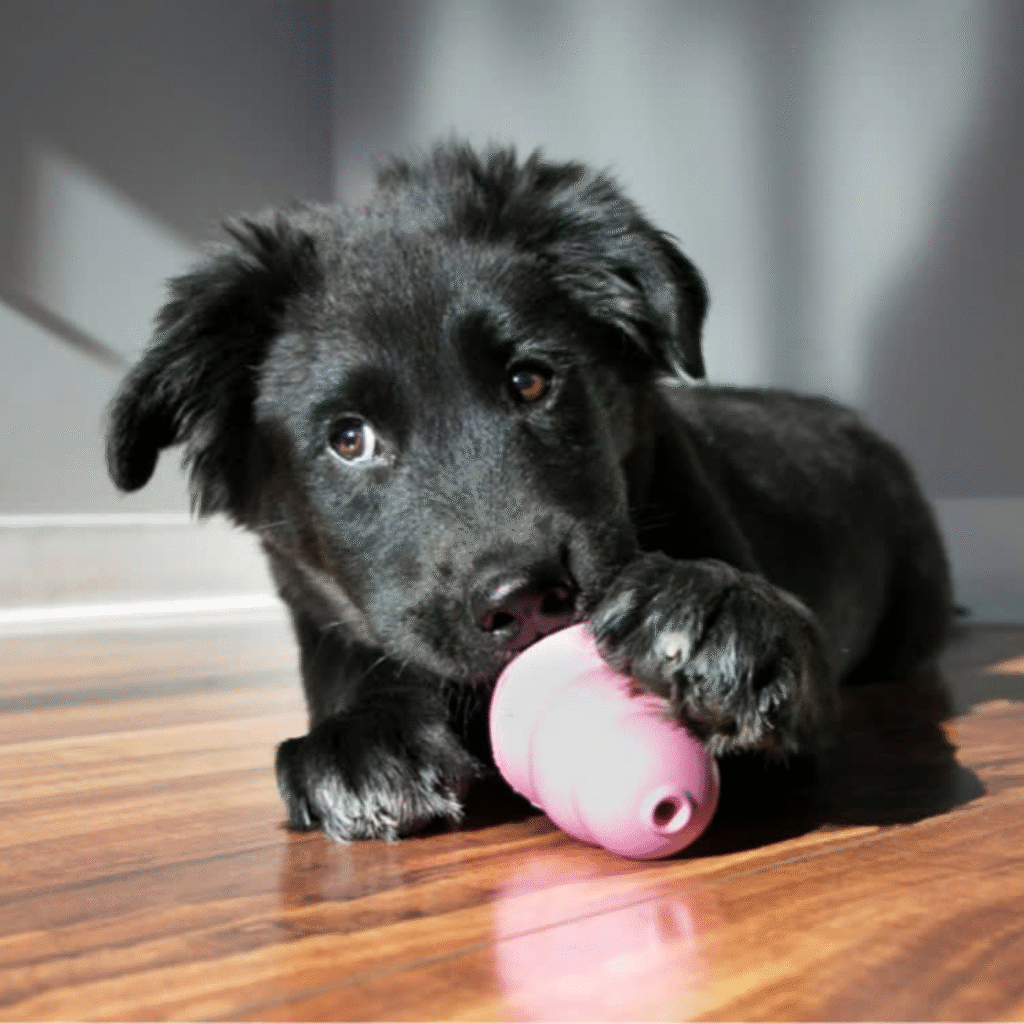
Leaving a dog-safe chew toy or a stuffed KONG in the crate at night gives your puppy something constructive to turn to if they wake up feeling unsettled.
Small tip:
A frozen KONG stuffed with kibble or a small amount of peanut butter works particularly well.
The slow, repetitive licking action is calming, and over time it helps your puppy build a positive association with being in the crate.
Reduce Environmental Disturbances
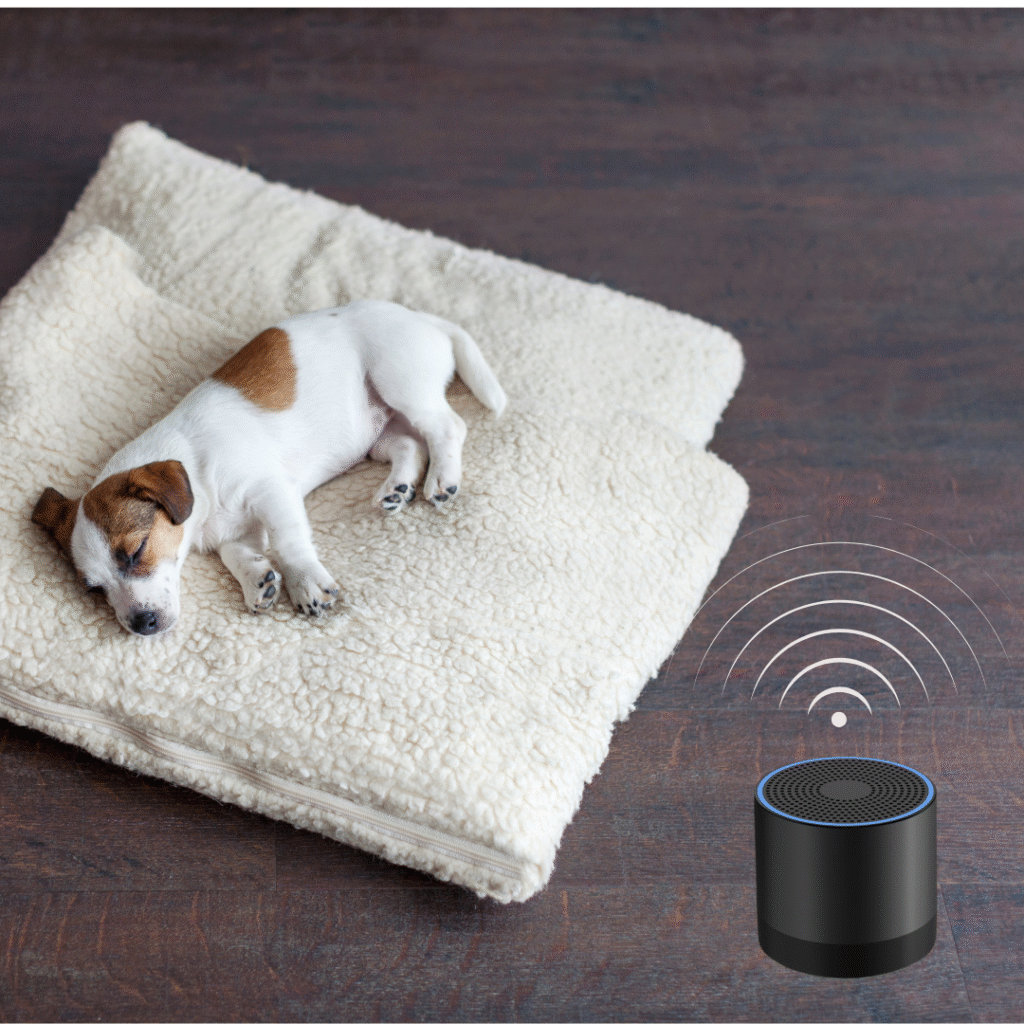
Vets note that environmental noise is a common, and often overlooked, trigger for night waking in puppies who are much lighter sleepers than adult dogs. Before anything else, simply reducing noise disruption can make a real difference.
A white noise machine near the crate helps mask unpredictable sounds that might startle a sleeping pup like traffic, hallway creaks, or a door closing somewhere in the house.
Use Scent as a Source of Comfort
Smell is a puppy’s most powerful sense, and vets frequently suggest using familiar scents to ease the transition into a new home.

Lining the crate with a soft blanket and an unwashed t-shirt that carries your scent can reduce anxiety. Your smell tells your puppy they’re close to someone safe.
If you’re collecting your puppy from a breeder, it’s worth asking if you can bring a small blanket to pick up the mother’s scent beforehand. For those very first nights, that familiarity can make a significant difference.
What More Can You Do
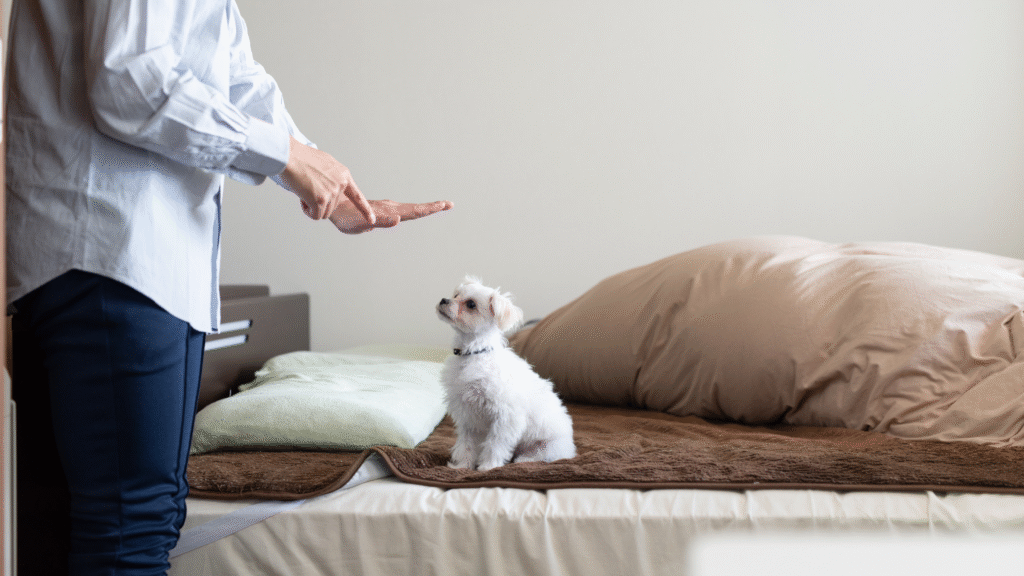
Building a routine can make a great difference! Here’s what my vet consistently recommends:
- Put the puppy crate in your bedroom. Your presence is genuinely comforting, and you’ll hear when they need a midnight toilet trip.
- Tire them out before bed. An evening play or short training session works brilliantly! Just avoid high-intensity games like tug in the final 30 minutes. You want them winding down, not wired up.
- Time their last meal right. Feed your puppy their last meal at least three hours before bedtime so they have time to digest and go to the toilet before you all turn in.
- Stick to a consistent bedtime routine. Dogs are creatures of habit. A predictable cue (“bedtime!”), a final toilet trip, and then a treat as they go into the crate. The more consistent, the faster they’ll adapt.
- Don’t do “cry it out” cold turkey. Responding with calm reassurance actually supports your puppy’s emotional development. Sit near the crate for a few minutes, then move to your bed. A gentle hand on the crate or a soft word can work wonders. Just avoid lifting them out unless it’s been at least 2–3 hours since their last toilet break.
- Keep middle-of-the-night toilet trips boring. A 2-month-old puppy typically needs a break every 3 hours overnight. Take them out quietly, no play or treats, toilet only! Then straight back to the crate.
- Build positive associations during the day. Feed meals inside the crate, toss in treats, and keep the door open so your puppy can wander in and out freely. The more they choose the crate voluntarily during the day, the less of a drama it feels at night.
How Long Does This Take?
Most puppies adjust within 2 to 4 weeks of consistent crate training, usually settling into a solid sleep routine by around 12 to 16 weeks of age. If your puppy is still crying intensely beyond that window, it’s worth a vet visit. Persistent distress can sometimes point to an underlying issue like a urinary tract infection or tummy discomfort.
The key takeaway from every vet and trainer? Consistency, patience, and making the crate feel like a safe, cosy den. Not a punishment. That’s what makes the real long-term difference.
You’ve absolutely got this!
For a deeper dive into what should actually go in your puppy’s bowl, check out our Ultimate Beginner’s Guide to Puppy Nutrition.
⚠️ Affiliate Disclosure: This post contains Amazon affiliate links. If you purchase through these links, we may earn a small commission at no extra cost to you.